



 Arguments







2013 SkS Weekly Digest #2
Posted on 14 January 2013 by John Hartz
SkS Highlights
The YouTube video, 16 ^ more years of global warming by Kevin C clarifies how the interplay of natural and human factors have affected the short-term temperature trends, and demonstrates that underneath the short-term noise, the long-term human-caused global warming trend remains as strong as ever. In other words, the video throroughly debunks the myth that global warming magically stopped 16 years ago.
Toon of the Week
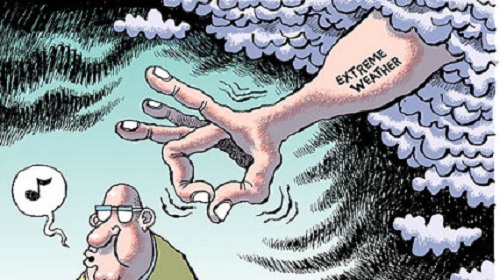
Rob Rogers/Pittsburgh Post-Gazette
Quote of the Week
"Not every summer will be hotter than the one before. In fact this year is markedly hotter than the last couple of years when we had relatively milder and wetter conditions.
"But what we are going to find on average is more of the hot extremes and faster increases in the future, over the next 10 and 30 years, that we have seen over the last 30 years - more hot extremes, more heatwaves and more extreme fire conditions.
"Climate scientists have been talking about these increases for more than 20 years in Australia. We are now seeing exactly what was predicted more than 20 years ago."
- Prof David Karoly. The University of Melbourne
Heatwave exacerbated by climate change: Climate Commission by Simon Lauder, ABC Radio Australia, Jan 12, 2013
The Week in Review
- 2012: The Year Climate Change Got Real by Greenman
- Nature Confirms Global Warming and Temperature Record Accuracy by Dana
- 2013 SkS Weekly News Roundup #2 by John Hartz
- Met Office decadal forecasting explained: the reality by John Mason
- Resolving Confusion Over the Met Office Statement and Continued Global Warming by Dana
- 16 more years of global warming by Kevin C
- Observed Warming of the Ocean and Atmosphere is Incompatible with Natural Variation by Rob Painting
- A Brief Note on the Latest Release of Draft IPCC Documents (Dana)
- Temperatures Continue Up the Escalator by Dana
- Dark matter for Greenland melting by Jason Box
Coming Soon
- 2012 Shatters the US Temperature Record. Fox, Watts, and Spencer Respond by Denying Reality (Dana)
- Ocean Heat Came Back to Haunt Australia (Rob Painting)
- Ridley and Murdoch Attempt to Greenwash Global Warming (Dana)
- Accumulated Cyclone Energy Questions and Answers (Klaus Flemløse)
- Skeptical Science and social media - Ask not what SkS can do for you but what you can do for SkS (Anne-Marie Blackburn)
- No alternative to atmospheric CO2 draw-down (Andrew Glikson)
- 2013 SkS News Roundup #3 (John Hartz)
- Skeptical Science Upgrade (Sphaerica)
- Subcap Methane Feedbacks. Part 4: Speculations (Andy S)
- Lukewarmerism, a.k.a. Ignoring Inconvenient Evidence (Dana)
- Non-English climate science (Ari Jokimäki)
- Drost, Karoly, and Braganza Find Human Fingerprints in Global Warming (Dana)
- Grace under Pressure (Doug Bostrom)
- How We Know Cosmic Rays are Not Causing Global Warming, In One Simple Graph (Dana)
- Climate Scientists Erring on the Side of Least Drama (Dana)
SkS in the News
Kevin C's awesome 16 more years of global warming video went viral, with re-posts on The Guardian, New York Times Dot Earth, Climate Progress, Scholars and Rogues, Planet 3.0, Climate Crocks, Earth the Operators Manual, DeSmogBlog, Carbon Brief, Open Mind, Hot Topic, New Anthropocene, The Earth Story, and Class: M.
The Huffington Post referenced the SkS Advanced climate sensitivity rebuttal in an excellent article on the subject.
Greg Laden, Australian science communicator Dr. Karl, and Southern Humanist endorsed SkS as the go-to climate myth debunking resource.
Several SkS blog posts were referenced as rebuttals to the 2012 Golden Horseshoe Awards (formerly the BS awards).
SkS Spotlights
The Australian Climate Commission was established to provide all Australians with an independent and reliable source of information about:
- the science of climate change,
- the international action being taken to reduce greenhouse gas emissions, and
- the economics of a carbon price.
The Commission is made up of experts from a range of fields relevant to climate change and is not subject to Government direction. The Commission is also supported by a Science Advisory Panel. Read our full Terms of Reference.


 0
0  0
0






Comments