



 Arguments








Skeptical Science New Research for Week #44 2026
Posted on 29 October 2026 by Doug Bostrom, Marc Kodack
Open access notables

Are Modern Droughts Unprecedented?, Helpap et al., AGU Advances
Global drought variability of past centuries remains poorly understood due to sparse instrumental records and limited paleoclimate reconstructions. Yet, quantifying long-term forced and unforced variability is key for assessing the extremeness of modern (2000–2024) drought events. Here, we combine 20 ensemble members from a 600-year climate simulation (ModE-Sim, 1420–2009) and modern reanalysis data (ERA5-Land, 1950–2024) to place recent droughts in a multi-century context. Drought magnitude and timing are measured using the annual maximum potential cumulative water deficit (PCWD), which integrates atmospheric moisture demand and supply, the daily timing of precipitation events, snow melt, and radiation. We analyze the deviation of modern annual, multi-year mean, and 30-year extreme PCWD from alternative reference periods that sample forced and unforced variability to a variable extent. We find a strong decline in the number of regions with unprecedented modern (2000–2024) single-year and 25-year mean PCWD as the reference is extended into the past and with the additional consideration of unforced atmospheric variability. This is not the case for extreme droughts. 30-year extreme PCWD has increased beyond the range of variability of the last 600 years in over half of all regions globally. This suggests that drought extremes are intensifying more rapidly beyond the range experienced in the past than mean conditions. While individual droughts in the modern era may not appear unprecedented when viewed against a century-long record, the shift in their frequency distribution indicates a rising risk of damaging impacts and an increasing likelihood of droughts reaching unprecedented magnitudes in the near future.
Declining spring production in the Barents Sea ice zone under climate forcing, Zhang et al., Nature Communications
Under anthropogenic forcing, Barents Sea greening and increased annual production are well-documented, yet seasonal differences in production trends are less clear. Here, using satellite ocean color data, we report a 45% decline in spring (April-May) primary production in the nitrate-limited Barents Sea ice zone between 1998 and 2023, corresponding to a reduction of 90.43 mg C m−2 day−1 per decade (p < 0.05). This decline is driven by reduced spring nitrate availability, resulting from slower winter nitrate replenishment rates, increased upstream consumption, and net nitrate export linked to Atlantification. Moreover, a North Atlantic-Arctic atmospheric wave train and reduced freshwater input have deepened the mixed layer, lowering light availability and further limiting production. These findings indicate that continued warming will likely suppress spring production in the Barents Sea ice zone, triggering nutrient-driven cascading effects on Arctic food webs and biodiversity.
Future Decline of Ice-Algal Primary Productivity in the Arctic Ocean: Model Intercomparison, Zhang et al., Journal of Geophysical Research Oceans
In polar oceans, ice algae grow within and beneath sea ice, supporting marine food web and contributing to the marine carbon cycle. This study compares three sea ice–ocean models developed in Japan, Canada, and Australia to estimate the changes in Arctic ice-algal primary production (ice-PP) from the mid-20th century to the end of the 21st century under a high greenhouse-gas emission scenario. All three models show that ice-PP is high in shelf seas, such as the Chukchi and Laptev Seas, and lowest in the central Arctic Ocean. Two models project an overall ice-PP decline in all Arctic sub-regions, because reductions in sea ice and nutrient availability outweigh the benefits of increased light penetration. However, one model projects a temporary increase in ice-PP in Pacific-side and central Arctic regions during the mid-21st century, when the improved light condition dominates. Additional model experiments demonstrate that inter-model differences are strongly influenced by the representation of light utilization. These results highlight the need for improved observations and experiments to better constrain future Arctic ice algae projections.
Accounting for global carbon dioxide production from human metabolism between 1985 and 2015: a modelling study, Gonzalez et al., The Lancet Planetary Health
Human activity is a dominant driver of global carbon emissions, yet one universal source–human metabolism–has never been quantified using free-living measurements of carbon dioxide (CO2) production at scale. We aimed to describe the contribution of human metabolism to global CO2 emissions between 1985 and 2015. In this modelling study, we used the largest available database of doubly labelled water (DLW) measurements from 1986 to 2019. The other data sources comprised WHO Global Health Observatory, United Nations Department of Economic and Social Affairs, and Non-communicable Disease Risk Factor Collaboration. We first allometrically modelled human CO2 production (kg per year) using measurements available for 4479 female and 2277 male participants from the International Atomic Energy Agency DLW database to derive predicted estimates of human CO2 production adjusted for differences in body mass and sex. Second, by combining predicted estimates based on allometric scaling of CO2 production for body mass with available population demographic information, generalised additive models were used to describe the 30-year progression of human body mass and per capita and global CO2 production. We used the time-series country-specific measurements from 1985 to 2015 with population-level global human metabolic CO2 production summarised as cumulative sum for the progression analyses. Data were collected between 1986 and 2019. Mean ± SD (range) participant age was 40 ± 26 (0 to 101) and body mass was 63.3 ± 27.8 (2.4 to 101.9). 9006 measurements from 6756 participants (4479 women and 2277 men) from the DLW database were used to derive estimates of human CO2 production adjusted for differences in body mass and sex. We observed that human metabolic CO2 production approximately doubled over a 30-year period, from 1·18 Gt per year to 2·05 Gt per year. This increase was driven mostly by population growth (>60%) with a minor contribution from increases in body mass. Per capita sex differences equalised at the population level, and continental differences reflect population shifts rather than physiological differences, with Asia accounting for the majority of human metabolic CO2 production among all continents. Our findings suggest that human metabolism is a quantitatively important component of the fast carbon cycle and should be accounted for in carbon system modelling to enhance precision and fidelity. With a projected peak global population in the mid-to-late 21st century, metabolic CO2 production will increasingly contribute to global carbon fluxes.
Right-wing populist (RWP) parties increasingly oppose climate policies, framing them as economically costly or imposed by an out-of-touch elite. Yet, little is known about the impact of such rhetoric on individuals or whether counter-frames can mitigate its effects. Using a pre-registered, UK-based survey experiment, we test whether exposure to either of these anti-climate frames influences attitudes and behaviour towards the UK’s ‘net-zero’ goal. We also test whether a counter-frame could alleviate these effects. We find both negative frames reduce support for net zero, with the economic frame showing stronger, more robust effects than the socio-cultural frame, and the counter-frame was ineffective. Still, even among those exposed to the negative economic frame, a majority supported the net zero goal (58%) and related policies (55%). Nonetheless, this study highlights the challenge to climate policy posed by RWP parties and suggests mere promises of compensatory benefits may be insufficient to build popular support.
Compulsory climate policies, including carbon taxes and regulations, have been framed in terms of threats to employment. The ‘job-killing’ narrative has been particularly strong in Canada, where economic concerns have been tied to the consumer carbon tax, leading to its elimination in April 2025. Using a representative web-based survey of communities with fossil fuel-dependent employment in Western Canada (n?=?1665), our study aims to: (1) introduce and validate an empirical measure of the perceptions gap between perceived and measured job risk from climate policy, (2) identify the socio-economic, political, and regional determinants of the perceptions gap, and (3) assess how measured risk, perceived risk, and the perceptions gap are associated with support for specific climate policies. We find that perceived and measured job risk are positively correlated, but respondents systematically overestimate risk. Perceived job risk is highest in oil- and gas-producing Alberta, Saskatchewan, and northeastern British Columbia. Sectoral emissions intensity is the strongest predictor of perceived risk. The perceptions gap narrows with higher education and trust in scientists, but widens with income insecurity, right-leaning ideology, and especially engagement with climate delay discourses, which has the largest association. Both measured and perceived risk, and the gap between them, reduce support for most climate policies, particularly industry-focused policies. In contrast, perceived risk and the gap are not significantly associated with support for the fossil fuel consumption tax, suggesting industry policies are seen as more direct threats to employment. The study helps support climate-energy communication and decision-making.
From this week's government/NGO section:
Protecting Health in the Age of Climate Disinformation: Safeguarding information integrity in the context of climate change and health, Schran et al., WHO Civil Society Working Group on Climate and Health
The authors discuss how climate disinformation directly and indirectly harms human health around the world, from undermining emergency warnings and public-health guidance to delaying policies on air pollution, clean energy and fossil fuels. Case studies highlighted in the report show that climate disinformation interacts with existing inequalities and power structures. The case studies include wildfire misinformation in Canada and Maui, backlash against London’s Ultra Low Emission Zone, cascading climate and information risks during floods in South Sudan, fossil fuel greenwashing, development narratives affecting Indigenous Peoples in Indonesia, and attacks on scientists, journalists and environmental defenders. Those trying to provide evidence can also become targets.
The 2026 report of the Lancet Countdown on health and climate change: a decade of escalating health harms and a decisive moment for all, Romanello et al., Lancet
The authors found that health effects are escalating faster than climate action with experts calling for climate change to be declared a global health emergency. While progress has been made to deliver real health gains through clean energy investment, health system leadership and health-protecting legislation, these positive signs are not enough to offset the harm from the impacts of fossil-fuel driven climate change. The report represents the work of 146 experts from 71 collaborating institutions, monitoring progress across 54 indicators, including four new indicators introduced this year, providing the most comprehensive assessment yet of the links between climate change and health.
214 articles in 80 journals by 1137 contributing authors
Physical science of climate change, effects
Atmospheric Adjustments Drive Long-Term Weakening of the Zonal Sea Surface Temperature Gradient in the Tropical Atlantic, Liu et al., Journal of Geophysical Research Atmospheres Open Access pdf 10.1029/2026jd046795
Drivers of Compound Marine Heatwaves and Acidity Extremes in the Southern Ocean, Wong et al., Global Biogeochemical Cycles Open Access 10.1029/2026gb009430
Earth’s east–west albedo symmetry, Zhang et al., Nature Open Access 10.1038/s41586-026-10624-2
Inter-hemispheric contrast in the sensitivity of polar amplification to sea-ice coverage conditions, Chung et al., Communications Earth & Environment Open Access pdf 10.1038/s43247-026-04185-5
Responses of extreme fire weather to CO2 emission reductions and underlying mechanisms, Kim et al., Science Advances Open Access pdf 10.1126/sciadv.adw4705
The circulation and water mass (trans)formations in the Arctic Mediterranean Sea and their implications for the deep ocean circulation: a narrative, Rudels & Carmack, Ocean science Open Access 10.5194/os-22-3287-2026
Towards a theory for Earth’s albedo stability and hemispheric symmetry in the 21st Century, Feldman et al., Communications Earth & Environment Open Access pdf 10.1038/s43247-026-03817-0
Tropospheric Ozone Assessment Report II: ozone interactions with climate change: drivers and long-term trends, Szopa et al., Philosophical Transactions of the Royal Society A Mathematical Physical and Engineering Sciences Open Access 10.1098/rsta.2025.0272
Why was the mid-to-late summer precipitation variability in the Yangtze River abnormally enlarged since late 1990s?, WANG et al., Advances in Climate Change Research Open Access 10.1016/j.accre.2026.10.005
Most cited from this section, published 2 years ago: In silico modelling of radiative efficiencies of anthropogenic greenhouse gases, Atmospheric Environment, 10.1016/j.atmosenv.2024.120839 14 cites.
Observations of climate change, effects
Are Modern Droughts Unprecedented?, Helpap et al., AGU Advances Open Access 10.1029/2026av002536
Changes in Climatic Seasons and Climate Comfort in the Tibetan Plateau and Its Eastern Adjacent Regions Under Global Warming, Shang et al., International Journal of Climatology 10.1002/joc.70633
Climate Change Impacts on Wind Extremes: What Are the Trends and What Should Wind Engineers Do?, Turner & Wu, Bulletin of the American Meteorological Society 10.1175/bams-d-26-0193.1
Extensive glacier loss in the coterminous United States, Fountain et al., Proceedings of the National Academy of Sciences Open Access pdf 10.1073/pnas.2600941123
Late Holocene reexpansion of the Laurentide Ice Sheet, Young et al., Science 10.1126/science.aed3379
Recent Trends of Utah’s Changing Wintertime Weather and Climate Characteristics, Meyer et al., Journal of Climate 10.1175/jcli-d-25-0543.1
Sharp rise of autumn heat extremes over southern China in a warmer climate, Wang et al., Atmospheric Research 10.1016/j.atmosres.2026.109406
Most cited from this section, published 2 years ago: The fastest-growing and most destructive fires in the US (2001 to 2020), Science, 10.1126/science.adk5737 108 cites.
Instrumentation & observational methods of climate change, effects
Choosing the Right Sea Surface Temperature Datasets: Benchmarking and Guidance for Climate Applications, Chan et al., Bulletin of the American Meteorological Society pdf 10.1175/bams-d-25-0210.1
Inconsistency in assessments of fire frequency and severity dynamics across Canada’s boreal ecosystems, Fu et al., Agricultural and Forest Meteorology Open Access 10.1016/j.agrformet.2026.111372
Most cited from this section, published 2 years ago: Characterizing heatwaves based on land surface energy budget, Communications Earth & Environment, 10.1038/s43247-024-01784-y 22 cites.
Modeling, simulation & projection of climate change, effects
AMOC weakening across latitude and time in CMIP6 future scenarios, Ashton-Key et al., Ocean science Open Access 10.5194/os-22-3245-2026
Circulation Pattern Associated With Record 2025–26 North American Winter May Become More Common, Johnson et al., Earth s Future Open Access pdf 10.1029/2026ef009943
Does the Evolution of Indian Ocean Acidification Follow CMIP6 Projections Under a High-Emission Scenario?, Ghoshal et al., Journal of Geophysical Research Oceans 10.1029/2026jc024515
Increased southward swings of the South Indian convergence zone under greenhouse warming, Wang et al., Nature Climate Change 10.1038/s41558-026-02767-x
Quantifying Projected Hydroclimate Changes per Degree of Global Warming over the Contiguous United States, Stebbins & McCrary, Journal of Hydrometeorology 10.1175/jhm-d-26-0057.1
Tropical Cyclone Activity in the Vicinity of Hawai‘i in Present and Future Climates, Murray et al., Journal of Applied Meteorology and Climatology 10.1175/jamc-d-25-0198.1
Two components underlie the mixed-type El Niño: quantification and future projection, Lianyi et al., Frontiers in Climate Open Access 10.3389/fclim.2026.1969365
Most cited from this section, published 2 years ago: Historical and Future Asymmetry of ENSO Teleconnections with Extremes, Journal of Climate, 10.1175/jcli-d-23-0619.1 20 cites.
Advancement of climate & climate effects modeling, simulation & projection
Does the Beaufort Gyre Freshwater Storage Directly Respond to Changes in Bering Strait Inflow? Insights From NEMO Modeling Experiments, Fu et al., Journal of Geophysical Research Oceans Open Access 10.1029/2025jc023782
Emulating absent land processes reduces carbon budgets in CMIP6 models, Liddicoat et al., Communications Earth & Environment Open Access pdf 10.1038/s43247-026-04111-9
Evaluation of Dust Optical Depth in CMIP6 Simulations over the Middle East–North Africa Region, Dayanandan et al., Atmospheric Environment 10.1016/j.atmosenv.2026.122431
Stratospheric aerosol forcing for CMIP7 – Part 2: Volcanic sulfur dioxide emissions, Aubry et al., Geoscientific model development Open Access pdf 10.5194/gmd-19-10155-2026
Most cited from this section, published 2 years ago: Evaluating the phase evolution of CMIP GCMs for agricultural climate-change impact assessments in China, Agricultural and Forest Meteorology, 10.1016/j.agrformet.2024.110282 6 cites.
Cryosphere & climate change
Can a simple geoengineering approach restore dwindling Arctic ice?, Irfan, Proceedings of the National Academy of Sciences Open Access pdf 10.1073/pnas.2630778123
Extensive glacier loss in the coterminous United States, Fountain et al., Proceedings of the National Academy of Sciences Open Access pdf 10.1073/pnas.2600941123
Inter-hemispheric contrast in the sensitivity of polar amplification to sea-ice coverage conditions, Chung et al., Communications Earth & Environment Open Access pdf 10.1038/s43247-026-04185-5
Regime shift in high arctic fjord signals the vulnerability of the Arctic’s Last Ice Area, Bonneau et al., Scientific Reports Open Access pdf 10.1038/s41598-026-68201-6
What Is the Observed Sensitivity of Arctic Sea Ice?, Rauschenbach et al., Geophysical Research Letters Open Access pdf 10.1029/2026gl124943
Most cited from this section, published 2 years ago: Review article: Retrogressive thaw slump characteristics and terminology, The Cryosphere, 10.5194/tc-18-4787-2024 62 cites.
Sea level & climate change
Enhanced risk to India’s west coast: Bias-corrected high-resolution CMIP6 projections of regional sea level rise, Joseph & Manoj, Dynamics of Atmospheres and Oceans 10.1016/j.dynatmoce.2026.101696
Paleoclimate & paleogeochemistry
A transient global warming event during Earth’s penultimate icehouse, Yao et al., Proceedings of the National Academy of Sciences Open Access 10.1073/pnas.2601643123
Assessing the MIS 5.3 and MIS 5.1 sea-levels along the Tyrrhenian Sea coast of central Italy: A challenge for ice volume models?, Bulian et al., Global and Planetary Change 10.1016/j.gloplacha.2026.105585
Impact of Ocean Physical Conditions on Oceanic Carbon Pumps and Atmospheric Carbon Dioxide at the Last Glacial Maximum, Nishida et al., Paleoceanography and Paleoclimatology Open Access pdf 10.1029/2026pa005487
Net Carbon Transfer From Ocean to Land During the Last Deglaciation Synchronous With Sea Level Rise and Lagging Atmospheric CO2 by Several Millennia, Köhler & Mulitza, Geophysical Research Letters Open Access 10.1029/2026gl123828
Ocean carbon sequestration during glacial climates due to combined Antarctic sea ice expansion and ocean circulation change, Grégorio et al., Science Advances Open Access pdf 10.1126/sciadv.ady6777
Past abrupt changes in Atlantic Ocean currents controlled the Earth’s energy balance, [authors did not process], Nature Geoscience 10.1038/s41561-026-02086-y
The Franks Model CO2 Proxy: Do Assimilation Rate Values or Isotopic Corrections Optimize CO2 Reconstruction Accuracy?, Morck et al., Paleoceanography and Paleoclimatology Open Access 10.1029/2025pa005350
Most cited from this section, published 2 years ago: Artificial intelligence reveals past climate extremes by reconstructing historical records, Nature Communications, 10.1038/s41467-024-53464-2 27 cites.
Biology & climate change, related geochemistry
Can oxygen supersaturation enhance thermal resilience in marine organisms?, D'Aniello et al., Marine Environmental Research Open Access 10.1016/j.marenvres.2026.108358
Changes in species composition of South Georgia seabirds and mammals 1985–2023: decrease in opportunities for local enhancement?, Monier et al., Philosophical Transactions of the Royal Society B Biological Sciences Open Access pdf 10.1098/rstb.2025.0363
Climatic variability and trends in Sudan’s savannah woodlands: implications for ecosystem resilience, Saeed et al., Frontiers in Forests and Global Change Open Access pdf 10.3389/ffgc.2026.1863836
Declining spring production in the Barents Sea ice zone under climate forcing, Zhang et al., Nature Communications Open Access pdf 10.1038/s41467-026-79272-4
Elevated CO2 Increases the Canopy Temperature of Mature Quercus robur (Pedunculate Oak), Brown et al., Global Change Biology Open Access pdf 10.1111/gcb.70565
Environmental stress amplifies midday depression of photosynthesis across global ecosystems, Liu et al., Agricultural and Forest Meteorology 10.1016/j.agrformet.2026.111540
Functional restructuring of kelp forest macroinvertebrate communities under tropicalisation, Attlan et al., Marine Environmental Research Open Access 10.1016/j.marenvres.2026.108465
Future Decline of Ice-Algal Primary Productivity in the Arctic Ocean: Model Intercomparison, Zhang et al., Journal of Geophysical Research Oceans Open Access pdf 10.1029/2026jc024067
Has drought limitation on Larix principis-rupprechtii growth expanded to higher altitudes in semiarid northern China?, Yang et al., Agricultural and Forest Meteorology 10.1016/j.agrformet.2026.111547
How is climate change affecting conifers and their ability to sequester carbon?, Abraham, Nature 10.1038/d41586-026-02847-0
Marine heat waves in vulnerable coral reef regions are skillfully predictable on multi-year timescales, Karwat et al., Nature Communications Open Access 10.1038/s41467-026-78279-1
Net primary productivity in the Gulf of California: spatio-temporal patterns and drivers in a warming climate (2003–2024), González-Rodríguez et al., Ocean science Open Access pdf 10.5194/os-22-3385-2026
Persistent seasonal deoxygenation alters benthic metabolic processes and accelerates hypoxia feedbacks in the Baltic Sea, Alampalli et al., Communications Earth & Environment Open Access pdf 10.1038/s43247-026-04120-8
Putting a time scale on emerging climate change stressors: a Vulnerability Index for Atlantic Ocean marine ecosystem services, Loveridge et al., Global Environmental Change Open Access 10.1016/j.gloenvcha.2026.103251
Recovery without resilience? Contrasting benthic recovery trajectories six years after a mass coral bleaching event, Elma et al., Marine Environmental Research Open Access 10.1016/j.marenvres.2026.108223
Shrinking windows: Asymmetric climatic drivers shorten phenological intervals in subtropical plants, Zhang et al., Agricultural and Forest Meteorology 10.1016/j.agrformet.2026.111514
The future of tanner’s sumac (Rhus coriaria) in a warming world, Ç?v?a, Scientific Reports Open Access pdf 10.1038/s41598-026-72862-8
Vegetation increasingly controlled by atmospheric dryness rather than soil moisture, Williams, Journal of Geophysical Research Atmospheres Open Access pdf 10.1029/2008jd009930
What Does the Future Hold? Habitat Suitability and Conservation Implications for Rare and Widespread Plant Species Under Climate Change, Lopes et al., Diversity and Distributions Open Access pdf 10.1111/ddi.70252
What’s cooking? The effect of temperature on the immune response, Lied, Journal of Gastrointestinal & Digestive System 10.4172/2161-069x-c1-061
Will the Mediterranean Sea Be a Cul-de-Sac for Marine Gastropods Under Climate Change?, Giannini et al., Ecology and Evolution Open Access 10.1002/ece3.73677
Most cited from this section, published 2 years ago: No Future Growth Enhancement Expected at the Northern Edge for European Beech due to Continued Water Limitation, Global Change Biology, 10.1111/gcb.17546 57 cites.
GHG sources & sinks, flux, related geochemistry
A hybrid artificial neural network approach to forecasting CO? emissions in the United States under policy uncertainty and energy consumption, Athari et al., Scientific Reports Open Access pdf 10.1038/s41598-026-77197-y
Are ghost forest trees a substantial source of methane from reservoirs?, Dittmann et al., Biogeosciences Open Access pdf 10.5194/bg-23-4893-2026
Assessment of methane emissions from European countries using satellite and surface observations, Sun et al., Atmospheric chemistry and physics Open Access pdf 10.5194/acp-26-14981-2026
Can radon help to improve methane emission estimates? Results from a dual-tracer inversion, Maier et al., Atmospheric chemistry and physics Open Access pdf 10.5194/acp-26-14699-2026
Can the Carbon Storage Function of a Degraded Mountain Wet Meadow Be Restored?, Cooper et al., Journal of Geophysical Research Biogeosciences Open Access pdf 10.1029/2026jg009823
CH4 emissions from Northern Europe wetlands: compared data assimilation approaches, Monteil et al., Atmospheric chemistry and physics Open Access pdf 10.5194/acp-25-14251-2025
China’s lake expansion amplified rapid CO2 emissions, Feng et al., Science Advances Open Access pdf 10.1126/sciadv.aea4657
China’s lakes remain carbon sources: Insights from the balance between intrinsic carbon sequestration and emissions, Wang et al., Science Advances Open Access pdf 10.1126/sciadv.aed7393
Combined water table and temperature dynamics control CO2 emission estimates from drained peatlands under rewetting and climate change scenarios, Denager et al., Biogeosciences Open Access pdf 10.5194/bg-23-441-2026
Constraining African Fire CO2 Emissions During 2015–2016 Using Satellite XCO2 Retrievals, Lv et al., Geophysical Research Letters Open Access pdf 10.1029/2025gl117400
Dark CO2 fixation in soils: A meta-analysis of mechanisms and controlling factors, Maree et al., Animal Frontiers Open Access 10.1093/af/vfae050
Development of a parametrised atmospheric NOx chemistry scheme to help quantify fossil fuel CO2 emission estimates, Schooling et al., Atmospheric chemistry and physics Open Access 10.5194/acp-25-15631-2025
Diel variability affects the inorganic carbon system in the sea-surface microlayer and influences air-sea CO2 flux estimates, Lopéz-Puertas et al., Ocean science Open Access pdf 10.5194/os-21-3471-2025
Drivers of CO2 emissions during the dry phase in Mediterranean and Temperate ponds, Aragón et al., Biogeosciences Open Access pdf 10.5194/bg-23-181-2026
Dynamics and burial of sedimentary organic carbon in the changing Arctic shelf seas, Hu et al., Earth-Science Reviews 10.1016/j.earscirev.2026.105737
Enhanced Carbon Sink Through Medium-Level Tropical Cyclones in the Offshore East China Sea, Ma et al., Global Biogeochemical Cycles 10.1029/2026gb009070
Fine-scale spatial variability of winter CO2 and CH4 fluxes in Arctic tundra derived from snowpack gradient measurements, Gosselin et al., Biogeosciences Open Access 10.5194/bg-23-7447-2026
How is climate change affecting conifers and their ability to sequester carbon?, Abraham, Nature 10.1038/d41586-026-02847-0
Intertidal mussel–symbiont associations act as CO2 sinks during daily emersion, Spilmont et al., Biology Letters 10.1098/rsbl.2025.0498
Partitioning Methane Sources and Diffusive Flux Along the US Cascadia Margin Reveals Dominant Influences of Localized and Ephemeral Features, Dugan et al., Global Biogeochemical Cycles 10.1029/2026gb009143
Quantifying European SF6 emissions from 2005 to 2021 using a large inversion ensemble, Vojta et al., Atmospheric chemistry and physics Open Access 10.5194/acp-25-15197-2025
Reforestation dominated China’s forest carbon sink from 1986 to 2019, Xu et al., Nature Geoscience 10.1038/s41561-026-02074-2
Regionalized greenhouse gas emissions and infrastructure requirements for future global iron and steel production, Terlouw et al., Communications Earth & Environment Open Access pdf 10.1038/s43247-026-04129-z
Response of the Southern Ocean Air-Sea CO2 Flux to Positive and Negative Emissions, Keppler & Landschützer, Scientific Reports Open Access pdf 10.1038/s41598-019-43826-y
Restoration-induced litter accumulation caused a CO2 leakage in a Tibetan alpine steppe, Qi et al., Agricultural and Forest Meteorology 10.1016/j.agrformet.2026.111530
Seasonal trends in China’s net ecosystem productivity: Offset characteristics and shifts in driving forces against the background of abrupt changes, Zhang & Xia, Agricultural and Forest Meteorology 10.1016/j.agrformet.2026.111428
Silent Alarms? Unveiling Destabilization Risk in Terrestrial Ecosystem Carbon Fluxes, Andrade et al., Global Change Biology Open Access pdf 10.1111/gcb.71100
Source or Sink? Precipitation Shapes Future Terrestrial Carbon Uptake in Australia, Bennett et al., Journal of Geophysical Research Biogeosciences Open Access pdf 10.1029/2026jg009820
Spatial Variation of Post-Fire Aboveground Carbon Accumulation Rates in Young Forests North of 45°N, Zhou et al., Global Biogeochemical Cycles Open Access pdf 10.1029/2026gb009207
Synoptic Features Driving the CO2 Sink in the Mediterranean Sea in Winter, Reale et al., Journal of Geophysical Research Atmospheres Open Access pdf 10.1029/2025jd044310
Tropospheric Ozone Assessment Report II: ozone interactions with climate change: drivers and long-term trends, Szopa et al., Philosophical Transactions of the Royal Society A Mathematical Physical and Engineering Sciences Open Access 10.1098/rsta.2025.0272
Unexpected Inter-Annual Variability in Methane Emissions From Western Siberia’s Oil and Gas Sector, Taguchi et al., Geophysical Research Letters Open Access pdf 10.1029/2026gl122886
[Articles] Accounting for global carbon dioxide production from human metabolism between 1985 and 2015: a modelling study, Gonzalez et al., The Lancet Planetary Health Open Access 10.1016/j.lanplh.2026.101546
Most cited from this section, published 2 years ago: Spatio-temporal effects of urbanization on CO2 emissions: Evidences from 268 Chinese cities, Energy Policy, 10.1016/j.enpol.2023.113569 77 cites.
CO2 capture, sequestration science & engineering
Artificial upwelling via Stommel pipes under present and future climate conditions: an Earth system model assessment, Jürchott & Kemper, Frontiers in Climate Open Access pdf 10.3389/fclim.2026.1938661
Co–Cu Bimetallic–Modified ATP Catalysts for Efficient and Low-Energy CO2 Capture, Jiang & Han, Greenhouse Gases Science and Technology 10.1002/ghg.2391
Distinguishing the gas and water sides of the gas–water interface: Where do amines capture CO2 in microdroplets?, Zhang et al., Atmospheric Environment 10.1016/j.atmosenv.2026.122261
Vortex Flow: A Green Process Intensification Strategy for Absorption-Based CO2 Capture, Zhao et al., Greenhouse Gases Science and Technology 10.1002/ghg.70010
Wellbore Interface and Cement Defects in CO2 Geological Storage: A Review, Citalingam et al., Greenhouse Gases Science and Technology 10.1002/ghg.70012
Most cited from this section, published 2 years ago: Comprehensive review of CO2 geological storage: Exploring principles, mechanisms, and prospects, Earth-Science Reviews, 10.1016/j.earscirev.2023.104672 413 cites.
Decarbonization
Against all odds? Explaining the new clean hydrogen strategy of the European Union, Eikeland et al., Energy Research & Social Science 10.1016/j.erss.2026.104921
Analysis of low carbon transformation strategy and CO2 emission metabolism in the steel industry, Li et al., Journal of Industrial Ecology 10.1111/jiec.70110
Beyond degrees Celsius: Mapping competing justice scenarios in Australia's energy transition, Velge et al., Energy Research & Social Science Open Access pdf 10.1016/j.erss.2026.105040
From least cost to more just: Exploring the ability of optimisation models to represent energy justice considerations in low-carbon transitions, Laes et al., Environmental Science & Policy 10.1016/j.envsci.2026.104514
Green energy transition in China’s primary aluminum industry: economic evaluation and pathways, ZHANG et al., Advances in Climate Change Research Open Access pdf 10.1016/j.accre.2026.06.031
How has the public in the United States supported renewable energy? ?A longitudinal study from 2010 to 2023, Hao, Environmental Sociology 10.1080/23251042.2026.2711921
Is there enough trust for a low carbon transition in the Arctic? Exploring public expectations for renewable energy in Longyearbyen, Julsrud & Standal, Climate Policy Open Access pdf 10.1080/14693062.2026.2691435
Leveraging existing grid infrastructure for rapid US renewable and storage deployment, Chojkiewicz et al., Proceedings of the National Academy of Sciences Open Access 10.1073/pnas.2603919123
Where to charge? A data-driven national framework for locating and sizing electric freight charging infrastructure in Colombia, Gil et al., Energy Sustainable Development/Energy for sustainable development Open Access 10.1016/j.esd.2026.102044
Wind Energy Futures: Which Locations Across the Western U.S. Are Most Resilient to Environmental Change?, Liu et al., Earth s Future Open Access 10.1029/2026ef008184
Would you let your car feed the grid? Comparing vehicle-to-grid smart charging preferences across six European countries, Jensen et al., Energy Research & Social Science Open Access 10.1016/j.erss.2026.104855
Most cited from this section, published 2 years ago: Transition to zero-net emissions for Qatar: A policy based on Hydrogen and CO2 capture & storage development, Energy Policy, 10.1016/j.enpol.2022.113256 30 cites.
Geoengineering climate
Impacts of water advection and CO2 exchange on the carbon dioxide removal potential of ocean alkalinity enhancement, Moras et al., Biogeosciences Open Access pdf 10.5194/bg-23-7523-2026
Lethal by Design? Resolving Differences Between Experimental and Real-World Alkalinity Perturbations in Ocean Alkalinity Enhancement, Bach et al., Journal of Geophysical Research Oceans Open Access 10.1029/2025jc023598
Most cited from this section, published 2 years ago: Ocean alkalinity enhancement approaches and the predictability of runaway precipitation processes: results of an experimental study to determine critical alkalinity ranges for safe and sustainable application scenarios, Biogeosciences, 10.5194/bg-21-4587-2024 46 cites.
Black carbon
Black carbon aerosols intensified India’s 2015 mega heatwave and expanded heat stress exposure, Tiwari et al., Communications Earth & Environment Open Access 10.1038/s43247-026-04157-9
The Hidden Health and Climate Burden of Black Carbon under China’s Dual Carbon Strategy, Xu et al., Nature Communications Open Access pdf 10.1038/s41467-026-77632-8
Aerosols
Aerosol–cloud interactions influence the climate response to AMOC weakening, Vella & Lohmann, Atmospheric chemistry and physics Open Access pdf 10.5194/acp-26-14939-2026
Stratospheric aerosol forcing for CMIP7 – Part 2: Volcanic sulfur dioxide emissions, Aubry et al., Geoscientific model development Open Access pdf 10.5194/gmd-19-10155-2026
Most cited from this section, published 2 years ago: Increasing cross-border dust storm from Mongolia to China during 1987–2022, Global and Planetary Change, 10.1016/j.gloplacha.2024.104578 23 cites.
Climate change communications & cognition
Assessing the integration of climate change education in Sri Lanka’s secondary education system, Senavirathna, Climate Policy 10.1080/14693062.2026.2725470
Can Moral Framing Reduce Climate Change Polarization? Textual and Experimental Evidence from Norway, Enstad & Thorbjørnsrud, Environmental Communication Open Access 10.1080/17524032.2026.2623481
Climate Change Perception and Eco-Anxiety among Young Adults in Sub-Saharan Africa: Does Environmental Literacy Play a Role?, Odo et al., Global Social Welfare 10.1007/s40609-026-00468-z
Do climate change knowledge and risk perceptions drive flood preparedness? Evidence from New Orleans, Jayasinghe et al., Climate Risk Management Open Access pdf 10.1016/j.crm.2026.100852
Do climate emotions matter? Investigating their role in pro-environmental behavior, Blumenschein et al., Journal of Environmental Psychology Open Access 10.1016/j.jenvp.2026.103092
Do weather-related extreme events influence climate-related opinions? The case of the 2019–2020 Australian Black Summer bushfires, Andreotta et al., Royal Society Open Science Open Access 10.1098/rsos.251450
Does populist anti-climate rhetoric drive public opposition to climate policy? Testing socio-cultural and economic frames, Bolet et al., Environmental Politics Open Access pdf 10.1080/09644016.2026.2731598
Engaging through enraging: Does inciting anger about climate change increase support for climate action?, Stanley et al., Journal of Environmental Psychology Open Access 10.1016/j.jenvp.2026.103074
Framing Climate Change in Children’s Picture Books: A Qualitative Study of Authors and Illustrators, Shelford, Environmental Communication Open Access 10.1080/17524032.2026.2716354
Global warming and the National Cattlemen’s Association 1986–1996, Jacquet & Loy, PLOS Climate Open Access pdf 10.1371/journal.pclm.0001061
Greenwashing the future? Computational text analysis of environmental reporting from the fossil fuel industry, Rauner, Climate Policy 10.1080/14693062.2025.2603031
Hacking adaptation: What role can policy hackathons play in understanding and adapting to climate change impacts?, McEvoy et al., Environmental Science & Policy Open Access 10.1016/j.envsci.2026.104516
What Makes Climate Change Feel Distant? Evidence from Eight Countries in the Global North and South, Ejaz et al., Journal of Environmental Psychology Open Access pdf 10.1016/j.jenvp.2026.103180
What’s next? How arts-based and creative participatory methods can address the problem of climate assembly follow-up, Carrick et al., Climate Policy Open Access 10.1080/14693062.2026.2685651
Whispers of Change: Positive Climate Communication Through ASMR and Its Potential for Climate Engagement, Blessing & Kalch, Environmental Communication Open Access 10.1080/17524032.2026.2753498
Most cited from this section, published 2 years ago: Demographics shape public preferences for carbon dioxide removal and solar geoengineering interventions across 30 countries, Communications Earth & Environment, 10.1038/s43247-024-01800-1 13 cites.
Agronomy, animal husbundry, food production & climate change
A bottom-up quantification of greenhouse gas emissions and mitigation potential in Kenya's crop and livestock systems, Kakai et al., Frontiers in Climate Open Access pdf 10.3389/fclim.2026.1920404
Advancing agricultural risk assessment through entropy-weighted TOPSIS and the IPCC framework: Insights from the Eastern Himalayas, Sonowal & Malakar, Environment Development and Sustainability 10.1007/s10668-026-08204-5
Can seaweed mitigate methane from cows on a global scale?, DiCorato, Proceedings of the National Academy of Sciences Open Access 10.1073/pnas.2626533123
CO2 Rise Directly Impairs Crop Nutritional Quality, Kakaraparthi et al., Frontiers in Public Health Open Access pdf 10.3389/fpubh.2025.1674328
Heterogeneous impacts of fire-sourced ozone (O3) pollution on global crop yields in the future climate scenarios, Li et al., Atmospheric chemistry and physics Open Access pdf 10.5194/acp-25-14501-2025
How much climate-smart agriculture is enough? A dose-response analysis of technology adoption effects on farmer welfare in Ghana, Prah et al., PLOS Climate Open Access pdf 10.1371/journal.pclm.0000886
Potential distribution of the cashew tree (Anacardium occidentale) in the Caatinga under CMIP6 climate projections from EC-Earth3-Veg and MIROC6, Vieira et al., Frontiers in Earth Science Open Access pdf 10.3389/feart.2026.1751554
Quantifying the contribution of cultivar parameter variation to uncertainty in future warming impacts on wheat yields across China's major winter wheat regions, Liujun et al., Agricultural and Forest Meteorology 10.1016/j.agrformet.2026.111559
Spain’s seafood futures to 2050 under climate change and contrasting transition scenarios, Saralegui-Díez et al., Scientific Reports Open Access pdf 10.1038/s41598-026-60217-2
Sustainable or maladaptive? A systematic review of climate adaptation strategies among smallholder farmers in SADC and South India, Wynsberghe, AI and Ethics Open Access pdf 10.1007/s43681-021-00043-6
Towards realistic representation of forest management and stand age dynamics in a terrestrial biosphere model (DLEM): impacts on forest carbon dynamics in the Southeastern United States, Li et al., Agricultural and Forest Meteorology 10.1016/j.agrformet.2026.111539
Win-win or window dressing? Opportunity and opposition to agrivoltaics in the United States, Donnison et al., Energy Research & Social Science Open Access pdf 10.1016/j.erss.2026.104940
Most cited from this section, published 2 years ago: Long-term carbon storage in shelf sea sediments reduced by intensive bottom trawling, Nature Geoscience, 10.1038/s41561-024-01581-4 54 cites.
Hydrology, hydrometeorology & climate change
Anthropogenic groundwater declines may exert far-reaching climatic impacts, Paldor & Paldor, Scientific Reports Open Access pdf 10.1038/s41598-026-75635-5
Are Modern Droughts Unprecedented?, Helpap et al., AGU Advances Open Access 10.1029/2026av002536
Attribution of Changes in European Flood and Drought Magnitudes to Climatic and Socioeconomic Drivers, Tilloy et al., Earth s Future Open Access 10.1029/2025ef007858
Disentangling climate change and urbanization effects on future tropical cyclone compound flood hazards, Liu et al., Urban Climate Open Access 10.1016/j.uclim.2026.103199
Enhanced extremes without intensification of South America’s water cycle from 1980 to 2010, Zarei & Destouni, Communications Earth & Environment Open Access pdf 10.1038/s43247-026-03661-2
Improved climate services in Hawai‘i: the collaborative development of drought-related decision support tools, Longman et al., Frontiers in Climate Open Access pdf 10.3389/fclim.2026.1768549
Integrating machine learning to assess climate risks on reservoir’s inflow and hydropower generation across West African basins, Akaffou et al., PLOS Climate Open Access pdf 10.1371/journal.pclm.0000986
On the Stability and Sensitivity of Climate-Informed Flood Frequency Models, Bae et al., Geophysical Research Letters Open Access pdf 10.1029/2026gl124039
Quantifying Projected Hydroclimate Changes per Degree of Global Warming over the Contiguous United States, Stebbins & McCrary, Journal of Hydrometeorology 10.1175/jhm-d-26-0057.1
Tropical Cyclone Activity in the Vicinity of Hawai‘i in Present and Future Climates, Murray et al., Journal of Applied Meteorology and Climatology 10.1175/jamc-d-25-0198.1
Why Does a Shallow Land Model Underestimate the Dryland Drying Trends?, Zhang et al., Journal of Geophysical Research Atmospheres 10.1029/2026jd046571
Why was the mid-to-late summer precipitation variability in the Yangtze River abnormally enlarged since late 1990s?, WANG et al., Advances in Climate Change Research Open Access 10.1016/j.accre.2026.10.005
Most cited from this section, published 2 years ago: Strong Linkage Between Observed Daily Precipitation Extremes and Anthropogenic Emissions Across the Contiguous United States, Geophysical Research Letters, 10.1029/2024gl109553 5 cites.
Climate change economics
Balancing climate ambition and price stability: The case of South Africa’s carbon tax, Lartey, Energy Policy Open Access 10.1016/j.enpol.2026.115483
Bridging innovation and investment: the Paris Agreement’s effect on green and brown US-listed energy stocks, Barrales-Ruiz & Neudörfer, Climate Policy 10.1080/14693062.2026.2713884
Climate at what cost? A survey experiment on trade-offs between decarbonization ambitions and socioeconomic costs, Duin et al., Energy Research & Social Science Open Access pdf 10.1016/j.erss.2026.104877
Climate finance and women’s employment in the CEMAC region: a catalyst for gender equality?, Zitou & Zitou, Climate and Development Open Access pdf 10.1080/17565529.2026.2691368
Closing the climate–economics communication gap, Rosenthal, ISLE Interdisciplinary Studies in Literature and Environment 10.1093/isle/isz105
Does climate policy kill jobs? Assessing the gap between the measured and perceived job transition risk in Western Canada, Rhodes et al., Energy Policy Open Access pdf 10.1016/j.enpol.2026.115628
Obstacles to Sub-Saharan Africa’s clean energy transition: the ‘tyranny of sovereign ratings’, Kruger et al., Climate Policy Open Access pdf 10.1080/14693062.2026.2719104
Sustainable finance taxonomies – Designed to support the transition to a net-zero economy?, Marchewitz et al., Climate Policy Open Access pdf 10.1080/14693062.2026.2703374
The clean energy trade war: assessing the climate costs of U.S. solar tariffs on China’s PV sector, Yuan & Zheng, Frontiers in Environmental Science Open Access pdf 10.3389/fenvs.2026.1835650
Undermining climate action? Challenges of public-private co-financing of carbon removal in the Global North, Christiansen et al., Environmental Science & Policy Open Access pdf 10.1016/j.envsci.2026.104447
Unmasking the dark side: how does fossil fuel financing hurt the carbon neutrality targets?, Anwar et al., Environmental Sciences Europe Open Access 10.1186/s12302-026-01509-2
Most cited from this section, published 2 years ago: Analysis of decoupling between CO2 emissions and economic growth in China's provincial capital cities: A Tapio model approach, Urban Climate, 10.1016/j.uclim.2024.101885 55 cites.
Climate change mitigation public policy research
A stochastic policy assessment of Spain’s 81% renewable electricity target for 2030, Orive & Blanco, Energy Sustainable Development/Energy for sustainable development Open Access 10.1016/j.esd.2026.102068
China’s petrochemical plants’ CO2 emissions and high-impact contributors for carbon-neutrality production, chen et al., Science Advances Open Access pdf 10.1126/sciadv.adx7784
Coordinated development of the “water-energy-land-carbon” system in nine provinces and regions of the Yellow River Basin and analysis of obstacle factors, Wang et al., Frontiers in Ecology and Evolution Open Access pdf 10.3389/fevo.2026.1932520
Do credible climate transition plans matter for carbon performance? Evidence from Fortune Global 500 firms, Silvia et al., Frontiers in Environmental Science Open Access pdf 10.3389/fenvs.2026.1907357
How can energy policy support a just transition for countries in the global South? Insights from South Africa's renewables procurement, Taylor et al., Energy Policy Open Access 10.1016/j.enpol.2026.115443
How could the government support the spread of alternative energy projects?, Czipf, Energy Policy Open Access 10.1016/j.enpol.2026.115513
How does knowledge utilization influence climate policy innovation? Energy modelling and the legitimization of the 55% target in the European Union, Huber et al., Energy Research & Social Science Open Access pdf 10.1016/j.erss.2026.104947
Spatial governance of China’s data-center expansion as a climate-action lever under resource and digital lock-in, Chen et al., Frontiers in Environmental Science Open Access pdf 10.3389/fenvs.2026.1990264
Strategic discharge or full reuse? Circular water economy assessment under WEFE-Climate Change Nexus, Yapan et al., Environmental Science & Policy 10.1016/j.envsci.2026.104442
The double materiality of Norway's Sovereign Wealth Fund: An irreconcilable case of aligning the ‘oil fund’ with Net Zero?, Jackson, Energy Research & Social Science Open Access pdf 10.1016/j.erss.2026.104730
The double-edged sword of carbon offsets: Can it cut in favor of health and energy equity?, Tzankova et al., Energy Research & Social Science Open Access 10.1016/j.erss.2026.104798
What money can’t buy: Company experience and community resistance to renewable energy infrastructure, Ratan & Vega-Araújo, Energy Policy Open Access pdf 10.1016/j.enpol.2026.115473
Who is who? Competing coalitions in climate-AFOLU politics in Argentina, Ryan & Laguna, Climate Policy 10.1080/14693062.2026.2636026
“Inward efficiency gains” or “carbon leakage”? regional carbon emission efficiency effects and spatial spillovers of China’s emissions trading system, Kong et al., Frontiers in Environmental Science Open Access pdf 10.3389/fenvs.2026.1932454
Most cited from this section, published 2 years ago: Study on the synergistic effect of air pollution prevention and carbon emission reduction in the context of "dual carbon": Evidence from China's transport sector, Energy Policy, 10.1016/j.enpol.2022.113370 194 cites.
Climate change adaptation & adaptation public policy research
A Proof of Concept for Rapid Evaluation of Urban Climate Adaptations Using Simplified Simulations over an Indian City, Brousse et al., Bulletin of the American Meteorological Society Open Access 10.1175/bams-d-25-0197.1
Adapting to the risk of Atlantic circulation change, Jongman & Hall, Nature Sustainability 10.1038/s41893-026-01961-1
Are communities in a cyclone-prone area more vulnerable than those in a flood-prone area? towards a climate vulnerability index for rural households in Bangladesh, Ahmed et al., Figshare Open Access 10.6084/m9.figshare.33282103
Beyond climate migration: the right to remain and the right to development as complementary frameworks for climate mobility governance in Africa, Addaney, Frontiers in Climate Open Access pdf 10.3389/fclim.2026.1928809
Distributive effects of climate change: How does rising temperatures affect energy allocation between cities?, Dong et al., Urban Climate 10.1016/j.uclim.2026.103183
Do climate-Adaptive City pilot policy effectively mitigate climate risks? — a quasi-natural experiment from Chinese prefecture-level cities, Cheng & fang, Climate Risk Management Open Access 10.1016/j.crm.2026.100867
Engaged research and its implications for transformation in climate adaptation sciences, Cann, PLOS Climate Open Access 10.1371/journal.pclm.0001093
FEMA phase-out? Catastrophic extremes challenge decentralization of US flood insurance, Nayak et al., Proceedings of the National Academy of Sciences Open Access 10.1073/pnas.2537388123
Heatwave-induced capacity bottlenecks in European electricity grids, Liang et al., Nature Energy Open Access pdf 10.1038/s41560-026-02151-1
How Do Adaptation Practices Become Climate Maladaptive? A Scoping Review of Empirical Scholarship, Shah et al., Wiley Interdisciplinary Reviews Climate Change Open Access 10.1002/wcc.70074
Managing climate risks through adaptation policy: Evidence from China’s climate-adaptive city pilots, Gao et al., Climate Risk Management Open Access 10.1016/j.crm.2026.100823
Reviving connections: Dene wellbeing and climate adaptation in Tthets'éhk'edél??, Ireland et al., Frontiers in Climate Open Access pdf 10.3389/fclim.2025.1694811
Systemic collapse emergence from climate-induced perturbations in transportation networks, Faccin et al., Proceedings of the National Academy of Sciences Open Access 10.1073/pnas.2532180123
The production of adaptation results: how does the Green Climate Fund turn adaptation projects into impact?, Barnes & Fisher, Figshare Open Access 10.6084/m9.figshare.33269217
Translating national climate policies to resilience actions at the subnational level in low resource settings: Lessons from Ghana’s health systems, Abugnaba-Abanga et al., PLOS Climate Open Access pdf 10.1371/journal.pclm.0000779
What leads to equitable adaptation intentions in city practitioners?, Goto et al., Climate Risk Management Open Access 10.1016/j.crm.2026.100819
Most cited from this section, published 2 years ago: Effects of ocean acidification and polystyrene microplastics on the oysters Crassostrea gigas: An integrated biomarker and metabolomic approach, Marine Environmental Research, 10.1016/j.marenvres.2024.106434 26 cites.
Climate change impacts on human health
Climate change and malaria in west Africa: a review of strategies to handle one of the world’s most prominent anthroponoses, Filho et al., The Lancet Planetary Health Open Access 10.1016/j.lanplh.2026.101484
Heatwave-attributable Parkinson’s mortality is projected to increase by the 2080s in China under a high-emissions scenario, (13940) et al., Communications Earth & Environment Open Access 10.1038/s43247-026-03589-7
Heatwaves have killed millions. Here’s how scientists tally lives lost, Glickman, Nature 10.1038/d41586-026-02430-7
Most cited from this section, published 2 years ago: A framework for ageing and health vulnerabilities in a changing climate, Nature Climate Change, 10.1038/s41558-024-02156-2 52 cites.
Climate change & geopolitics
When diversification fails: Geopolitical contagion and hidden vulnerabilities in Europe’s energy transition, Pokou & Kamdem, Energy Policy 10.1016/j.enpol.2026.115520
Most cited from this section, published 2 years ago: The politics of countering climate change in Southeast Asia, Frontiers in Environmental Science, 10.3389/fenvs.2024.1486796 9 cites.
Other
Canadian lakes show contrasting phosphorus trends across climatic regions, Guo et al., Communications Earth & Environment Open Access pdf 10.1038/s43247-026-04113-7
Fires in Europe are breaking records: here’s what the future holds, Schwab, The Journal of Trauma: Injury, Infection, and Critical Care 10.1097/ta.0b013e31802f734a
Is Deep-Sea Mining the New “Green Frontier”? A Corpus-assisted Discourse Analysis of Arguments on the Climate Crisis and Deep-Sea Mining in the Pacific, Skiveren et al., Environmental Communication Open Access pdf 10.1080/17524032.2026.2723746
Navigating while contesting COP28’s paradoxes with international solidarity actions: a youth delegation’s collaborative and feminist auto-ethnography, Robitaille et al., Climate and Development Open Access pdf 10.1080/17565529.2026.2718467
Repurposing Illegal Coca Cultivation in Colombia to Unlock Large Climate Benefits and Support Legal Livelihoods, Rodríguez-Martínez & Cherubini, Earth s Future Open Access pdf 10.1029/2026ef008712
Three Decades of Scientific Debate on the Additionality of Forest Carbon Offsets: Are We Going in Circles?, Christiansen et al., Wiley Interdisciplinary Reviews Climate Change Open Access 10.1002/wcc.70085
What comes after social tipping? Perspectives from transitions towards net-zero, Binder et al., PLOS Climate Open Access pdf 10.1371/journal.pclm.0000982
What is energy literacy? From prerequisite for participation to social practice, Kools & Höffken, Energy Research & Social Science Open Access pdf 10.1016/j.erss.2026.105020
Most cited from this section, published 2 years ago: Long-term variabilities in thermal structure, CO2 concentration and associated cooling rates in the Earth's middle atmosphere: Observations and model simulations, Journal of Atmospheric and Solar-Terrestrial Physics, 10.1016/j.jastp.2023.106070 7 cites.
Informed opinion, nudges & major initiatives
Colloquium: Manabe’s legacy of simulating and understanding global warming, Shaw, Reviews of Modern Physics 10.1103/mfpg-3th9
Europe’s record heatwave: does the continent have a new climate?, Chen, Nature 10.1038/d41586-026-02046-x
Future-proofing interpretations of the Paris Agreement’s limit of well below 2 °C, Lamboll & Rogelj, Nature Climate Change Open Access pdf 10.1038/s41558-026-02685-y
Nepal’s disaster is an urgent wake-up call, Huggel et al., Nature 10.1038/d41586-026-03314-6
The fragility of splendid isolation: Imminent global threat for the world’s island life, Lomolino, Proceedings of the National Academy of Sciences Open Access 10.1073/pnas.2623374123
The worst El Niño in recorded history is brewing — here’s how governments must prepare, Hausfather, Nature 10.1038/d41586-026-02939-x
We Are in the Anthropocene—Now What?, Rockström et al., Earth s Future Open Access 10.1029/2025ef007730
[Comment] Different futures ahead: why does 1·5°C matter?, Tong et al., The Lancet Planetary Health Open Access 10.1016/j.lanplh.2025.101388
[Editorial] Climate overshoot, Schleussner et al., Nature Open Access 10.1038/s41586-024-08020-9
Most cited from this section, published 2 years ago: Forest definitions require a re-think, Communications Earth & Environment, 10.1038/s43247-024-01779-9 23 cites.
Book reviews
Sustainability or dystopia? What past patterns tell us about where society is heading, Wynsberghe, AI and Ethics Open Access pdf 10.1007/s43681-021-00043-6
Why climate policy misses the forest for the trees, Fleischman et al., BioScience Open Access pdf 10.1093/biosci/biaa094
Articles/Reports from Agencies and Non-Governmental Organizations Addressing Aspects of Climate Change
Water Year 2026 In Review (Colorado River), Mazurek et al., Colorado Climate Center and the Department of Atmospheric Science, Colorado State University
Water Year 2026 was one for the record books in Colorado. It was the warmest on record by a substantial margin, and it was also one of the driest. Colorado also recorded its lowest snowpack, which strained water resources and contributed to widespread drought. This year’s climatic conditions had substantial effects across numerous sectors: from agriculture and wildlife to human health and recreation. The researchers found that, statewide, temperatures were 4.5 degrees Fahrenheit above the averages seen between 1991-2020. The 2026 average was also more than 2 degrees warmer than the previous record-warm water year of 1934. Overall, Colorado saw its warmest December, February, March and August on record. Those temperatures contributed to the state’s record-low mountain snowpack totals. The 2026 snowpack-peak was just 51% of the average usually seen statewide, and the high point arrived about a month earlier in the cycle than average. The total snowpack also faded away faster because of unprecedented early season melting in the March heat. The authors explain how the low snowpack totals resulted in record-low streamflow for parts of Colorado. The limited supply there ultimately clashed with high demand for water by users and mandatory storage reductions across the state’s reservoirs. The largest, Blue Mesa Reservoir located on the upper reaches of the Gunnison River, reported summertime storage well below the previous record minimum. Meanwhile, Lake Powell and Lake Mead – both crucial reservoirs for storing water from the Colorado River – also reported record-low levels this year.
State of the Park, Adirondack Council
The 45th annual Adirondack Council State of the Park tracks the decisions and actions taken by public officials at every level over the past year — and their potential to help or harm the Adirondack Park. For example, the Governor rolled back provisions of the Climate Leadership and Community Protection Act and the State Environmental Quality Review Act, eroding the state’s national leadership on climate action and environmental oversight. The Governor imposed a one-year moratorium on new state-authorized data centers due to concerns about energy use, water consumption, and impacts on natural resources. The New York State Department of Environmental Conservation created a new roadmap to help lake associations identify, prevent, and address harmful algal blooms, supporting cleaner water throughout the Adirondacks.
Key findings from fall 2026 poll among Black and Latino registered voters in battleground states, HIT Strategies, Climate Equity Action Fund and the League of Conservation Voters
The authors found that overwhelming majorities of Black and Latino voters in seven battleground states want candidates to address climate change, pollution and energy costs, even though those issues are not necessarily what voters name first when deciding who to support. 72% of respondents selected the cost of living as one of their top three voting issues, followed by access to healthcare (42%) and discrimination (30%). The findings show that Black and Latino voters overwhelmingly want candidates to address climate change. With household costs and health taking priority, the poll underscores the importance of talking about climate policy in terms of what matters most to voters, including affordable energy, clean air and safe drinking water.
Rising Incidents, Lax Oversight. Ohio Oil and Gas Incidents, Inspections, and Enforcement, 2015–2025, Gwen Klenke, FracTracker Alliance and the Buckeye Environmental Network
Ohio’s oil and gas incident records document spills, leaks, equipment failures, and other potentially harmful events. These incident reports should help the public understand where these incidents occur, the risks to safety, health, and the environment, and how regulators and operators respond. But the author's analysis of Ohio Department of Natural Resources (ODNR) records from 2015 through 2025 found that, even as ODNR has improved some aspects of its data collection, major gaps remain. Incident classifications are often unclear, key details are buried in narrative descriptions, and records do not consistently show whether an event led to inspection, cleanup, enforcement, or corrective action. These gaps are particularly notable amid growing problems with oil and gas wastewater disposal, including releases and oil and gas wastewater migration associated with injection wells. However, one thing is clear: incidents are increasing in frequency on an annual basis. Without an understanding of the severity and complexity of these increasing oil and gas incidents, the public and policymakers may be lulled into a false sense of complacency and may be less likely to address serious problems until they threaten to become a crisis. 2,529 oil and gas incidents were recorded in Ohio from 2015 through 2025. Incidents are generally increasing, rising from 103 in 2015 to 268 in 2025, despite year-to-year variation.
The Community and Economic Impacts of Data Centers, US. Chamber of Commerce
Data centers are economic engines powering America's future. They are long-term community investments creating permanent jobs and tax revenue that support community schools, roads, and parks without increasing taxes on residents. A single facility delivers thousands of jobs; hundreds of millions in local tax revenue that fund schools, roads, and public safety; and sustained economic growth for decades. Data center growth and community interests are not competing goals. Communities deserve transparency, early engagement, and confidence that developers will pay for the infrastructure needed to support new growth. When that happens, data centers become a powerful source of jobs, investment, and long-term economic opportunities.
Vermont Climate Assessment 2025, Galford et al., Climate Measurements Center of Excellence, Gund Institute for Environment at the University of Vermont
Vermont is experiencing unprecedented weather extremes. Vermont’s climate is becoming warmer, wetter, and more variable. Shifting seasons are transforming how Vermonters live, work, and play/ A hotter Vermont increases risks to people, farms, and infrastructure. Water is a central climate challenge for Vermont, across all seasons and sectors. Climate risks are interconnected and compounding—requiring action now.
The Debt Discount: A study evaluating the financial track record of companies with transition plans, McGlynn et al., International Transition Plan Network and SCS Consulting Network
The International Transition Plan Network (ITPN) was launched at COP29 to support the development of global norms for private sector climate transition plans and drive climate policies that leverage the full potential of these plans. The research presented here is, to the best of the authors knowledge, the most comprehensive analysis undertaken to date of the financial implications of private sector climate transition plans. The authors found that companies that develop and disclose transition plans experience a lower cost of debt, and that investors appear to reward companies that implement their transition plans. They also found that disclosing a transition plan does not negatively effect profits or stock outperformance over the long run, addressing one of the key concerns for companies weighing the decision to publish.
Reducing green gas costs with bioCO2, Cadent Gas Limited
While the biomethane sector currently requires Government subsidy to scale, early evaluations suggest that selling bioCO2 greenhouse has removals (GGRs) to the private sector could reduce the level of Government support for biomethane by up to one-third compared to today. BioCO2 lowers the costs of renewable energy for consumers while encouraging new investment in domestic green gas production. The technology to capture, liquefy, transport and store bioCO? exists, but policy and infrastructure access have not yet been designed around smaller, geographically dispersed biomethane producers which require their CO2 to be transported by road rather than pipe. The Government’s recently launched Non-pipeline transport (NPT) Pathfinder process is an important first step, but there is more work to do to fully evaluate this opportunity and how it links to the current regulatory landscape. The sector and Government can work together to unlock bioCO2 capture and storage at scale.
Enhancing Ocean-Climate Resilience in Asia and the Pacific, Jeon et al., United Nations Economic and Social Commission for Asia and the Pacific
Strengthen ocean science, data and observing systems by expanding ocean monitoring networks, integrating satellite, on-ground equipment and climate models to promote science based decision-making. Strengthen early warning systems for marine heatwaves, coastal flooding, storm surges, high waves and tsunamis to enhance preparedness, protect marine ecosystems, and reduce economic losses and disaster effects. Improve coastal hazard assessments and zoning by incorporating high-resolution topographic data, locally observed sea levels, sand intrusion and land subsidence to support effective coastal planning and adaptation. Develop risk-informed guidelines and build community resilience by identifying risk hotspots, developing a framework for climate-induced human mobility and relocation, developing evacuation plans and conducting regular emergency drills, improving emergency shelter and services, and improving community-based risk management and public awareness.
Climate stress reshapes youth migration in Ethiopia, Sørensen et al., Danish Institute for International Studies
Ethiopia’s rural economy and livelihoods depend on seasonal rainfall. When rains fail or fall out of season, crops fail, livestock die and household income collapses. For young people watching this unfold, migration may seem the immediate solution. Understanding locally specific climate vulnerabilities and young people’s mobility aspirations is therefore key to developing adequate policy responses.
Offshore Wind: Status and Issues, Comay et al., Congressional Research Service
During the second Trump Administration, federal policies toward U.S. offshore wind have shifted from those in place during the Biden Administration. President Trump halted Outer Continental Shelf (OCS) wind leasing and permitting and has directed other actions to reverse prior federal support for offshore wind. Also, in P.L. 119-21, the FY2025 budget reconciliation law, Congress limited offshore wind tax credits and rescinded unobligated balances for federally funded activities related to interregional and offshore wind electricity transmission. The industry has also faced economic challenges in recent years related to rising costs and supply chain delays, as well as lawsuits from coastal homeowners, the fishing industry, tribes, and those concerned about potential impacts to marine wildlife. Congress continues to consider issues related to offshore wind leasing, permitting, transmission, tax credits, and related matters through oversight and legislation.
Taking the temperature of EU climate policy, Colli et al., Trans European Policy Studies Association
A debate is raging in Europe about the European Green Deal. Launched with broad political support in 2019, it shaped the mandate of the first von der Leyen Commission. Seven years later, that consensus has eroded. Competitiveness, economic security and defense have moved up the political agenda, while increasingly difficult questions are being asked about who should bear the costs of the green transition. This edition of TEPSA Experts’ Debrief wants to take a fresh look at the debate and make sense of what is happening. Ten experts were invited to give their assessment of the European Green Deal and their ideas on the way ahead. None is complacent about the difficulties confronting Europe. But, with one exception, they argue for staying the course and pressing ahead with the Green Deal, while adapting its implementation to the obstacles encountered and to a profoundly changed political and economic environment.
Breaking the Cycle: Making Somaliland’s Rural Water Systems Climate Resilient, Nasir Ali and Kedir Jemal, Toda Peace Institute
The authors examine Somaliland’s water crisis, which reflects a policy gap between the scale of climate and demographic pressures and the capacity of current institutions to plan, finance and maintain rural water services. It will not be solved by emergency water delivery alone. The Government should treat rural water access as a climate adaptation and local governance priority, with groundwater protection, service standards and accountable financing implemented together. The authors present three key messages, and concludes with policy recommendations and implementation priorities.
AI Data Center Siting on Federal Lands. An Energy View, Rueda et al., RAND
The U.S. government, spurred by a 2025 executive order, is moving quickly to open federal land for artificial intelligence (AI) data center development and directing agencies to identify suitable sites. But energy availability—not just available acreage—is a binding constraint that will determine which sites can realistically support large-scale AI infrastructure. The authors evaluated 12 U.S. Department of Defense sites offered for data center leases, compared them with 17 U.S. Department of Energy sites, and developed a cost model to estimate energy infrastructure expenses across 31 candidate locations. A stakeholder workshop stress-tested these findings and informed public-private partnership guidance.
Connecting capital to capability: An energy security investment framework to optimize the NATO 1.5 percent investment commitment, Dockery et al., Atlantic Council
NATO’s 1.5 percent commitment can be the catalyst that connects capital to capability across the alliance. This broad mandate, applying across thirty-two member states with differing political considerations and priorities, requires a capability-based framework grounded largely in lessons from Ukraine’s defense of its energy system but also in other recently exposed vulnerabilities. Meeting this mandate will require building an energy system that can serve civilian and military energy demands and is resilient to physical and digital threats. This undertaking will be a generational challenge requiring long-term investment.
Dry, dark, and empty, Dunn et al., Atlantic Council
Growing threats to US national interests make a comprehensive review of installation infrastructure and power, fuel, and water systems increasingly urgent. This review could identify the tools needed to keep military departments ready for the next conflict and guide strategic investments in force-multiplying capabilities that strengthen mission readiness. Because US forces operate in combined and joint environments with allies, partners, and host nations, this effort should also integrate additional evaluation tools, funding resources, and long-term strategic planning to sustain military capabilities.
From Climate Science to Climate Governance, Joseph Ingram and Augusto Lopez-Claros, Canadian Global Affairs Institute
The authors argue that climate change has evolved from primarily a scientific and technological challenge into one of governance, requiring governments such as Canada’s to mobilize finance, align market incentives and strengthen international institutions capable of accelerating the green transition at the scale and speed required to meet this challenge.
Climate Mobility, Rights and Resilience in Africa, Jegede et al., International Organization for Migration
This special collection brings together policy briefs examining recent developments in climate mobility research and governance across the continent. The collection reflects the diversity and complexity of climate mobility, covering themes including community resilience, mobility dynamics, food security and agroecological transitions, green sovereignty, governance, human rights and climate finance. Together, the briefs highlight the importance of understanding mobility not only as a consequence of environmental change, but also as a potential adaptation and development strategy. They examine persistent challenges, including data gaps, fragmented policy responses, limited implementation capacity and protection gaps, while identifying opportunities to strengthen evidence-based and inclusive approaches.
Distributed Capacity Procurement Framework. Addressing Grid Needs, Affordably and Reliably with Distributed Energy Resources, McDonnell et al., Solar Energy Industries Association
Utility regulators, grid operators, and energy policy leaders around the country broadly agree that distributed energy resources (DERs) like solar and storage are important for developing a reliable and affordable electric grid. The real question is: what’s the best way to procure and deploy DERs to maximize their benefits to utility customers and the grid? The authors provide a practical roadmap for regulators and policy leaders working to build a 21st-century grid that can meet the needs of the 21st-century economy. The authors outline three procurement pathways that can bolster available resources, respond to growing loads, and provide a faster, more cost-effective response to infrastructure needs.
Asleep at the Switch: How the ACC (Arizona Corporation Commission) is Letting Utilities Fleece Ratepayers, Sierra Club
It can be hard to imagine that a five-person commission can dictate the future of Arizona’s energy landscape, but that is exactly the case. The Arizona Corporation Commission (ACC) has the power to regulate public utilities, set rates for service, and ensure reliability. It’s an incredibly important job and one that affects every Arizonan in some way, despite how little its role is recognized. What Arizonans do notice, however, are the rising costs of their utility bills. Behind those increases is the Commission, whose job is to act as a check on monopoly utilities to protect customers. But over the past several years, the ACC has done the opposite, siding with utilities at the expense of ratepayers, and making decisions that result in significant rate increases and threaten our air, our drinking water, and Arizona families’ health. Rather than acting in the best interest of customers, the ACC has fast-tracked utility projects and side-stepped established processes in its effort to prioritize utility profits over people.
Disaster Divide. How climate chaos deepens inequality and enriches the few,, Lawson et al., Oxfam
Billionaires and the super-rich are burning carbon at an extraordinary rate — the richest 0.1%, or 8 million people, have more emissions than the bottom 3.5 billion. The carbon pollution of the richest 1% is directly contributing to increased climate disasters such as floods, fires, droughts and food crises. Their yearly emissions will cause an estimated 1.9 million excess deaths from heat. In turn, these climate disasters are not experienced equally. Climate disasters drive up inequality and are also far more lethal because of it. Deaths from flooding, for example, are seven times higher in more unequal countries. Rich people can insulate themselves, paying more for food or moving to safer places, whereas most people cannot. The super-rich are also actually cashing in on climate pain — making huge profits from sky-high food prices and profiting from disasters. Meanwhile, ordinary people, hit by successive climate shocks, struggle to recover. They are more exposed, more vulnerable, and have less savings to rebuild their lives.
Protecting Health in the Age of Climate Disinformation: Safeguarding information integrity in the context of climate change and health, Schran et al., WHO Civil Society Working Group on Climate and Health
The authors discuss how climate disinformation directly and indirectly harms human health around the world, from undermining emergency warnings and public-health guidance to delaying policies on air pollution, clean energy and fossil fuels. Case studies highlighted in the report show that climate disinformation interacts with existing inequalities and power structures. The case studies include wildfire misinformation in Canada and Maui, backlash against London’s Ultra Low Emission Zone, cascading climate and information risks during floods in South Sudan, fossil fuel greenwashing, development narratives affecting Indigenous Peoples in Indonesia, and attacks on scientists, journalists and environmental defenders. Those trying to provide evidence can also become targets.
Off-Grid Solar Market Trends Report 2026, International Bank for Reconstruction and Development / The World Bank
Off-grid solar is reaching more people than ever. Off-grid solar is creating jobs and boosting incomes. The industry is consolidating and diversifying, while continuing to prioritize commercial sustainability. Scaling up the productive use of energy (PUE) has become a key priority for governments and development partners seeking to leverage energy access to achieve job creation and economic growth. Ensuring that access is sustained is also an emerging area of focus. Political recognition of off-grid solar continues to grow, and the challenge now is to convert it into stable, enabling policy environments and consistent delivery.
Energy Technology Supply Chains in Southeast Asia, Jaensch et al., International Energy Agency
The authors examine recent trends in clean energy technology manufacturing, trade and investment in Southeast Asia, building on analysis conducted for Energy Technology Perspectives 2026. The analysis draws on the latest information on energy, climate, trade and industrial policies – as well as manufacturing project announcements – to inform projections for clean energy technology manufacturing and trade in the region and put forward key considerations to guide effective industrial strategy design.
Reforming Federal Forest Management to Advance Fire Resilience, Eric Biber and Dave Owen, Social Science Research Network
Wildfire is simultaneously one of the largest air pollution sources in the United States, causes billions of dollars of property damage each year, and can produce significant ecological harm. Wildfire will only worsen because of climate change, the legacy of logging and fire suppression, and increased development in the wildland-urban interface. The authors provide a detailed proposal for addressing land management issues on national forests, a key to addressing the legacy of logging and fire suppression. Their detailed proposal builds on, and is a companion to, another article (Fixing Wildlife Law), in which they explain the policy problems that wildfire presents and provide a conceptual framework for a response that cuts across many legal areas implicated by wildfire, including land-use regulation in the wildland-urban interface, insurance law, air quality law, and forest management. The additional contribution of this paper is specificity; it takes the conceptual proposals from Fixing Wildlife Law and uses them to articulate the details of reforms for management of national forests. They propose the use of outside expert panels to synthesize the relevant science for forest management to reduce fire risk and empowering the Forest Service to rely on those syntheses to develop management strategies to reduce fire risk. Projects consistent with those management strategies would be exempt from most environmental review and consultation requirements.
Climate and Health in Oregon 2025 report, Carpenter et al., Oregon Health Authority
Accelerating climate change is directly affecting the health of people in Oregon, and those effects are not felt equally. Increasing instances of extreme heat, wildfire smoke, and water insecurity worsen public health across the state, while exacerbating existing health inequities. The authors summarize information about climate change hazards in the state in 2025 and recent decades. Moreover, they discuss related effects to people’s health, and actions of the public health system, partner agencies and local communities to protect everyone in the state from these risks no matter where and who they are.
The 2026 report of the Lancet Countdown on health and climate change: a decade of escalating health harms and a decisive moment for all, Romanello et al., Lancet
The authors found that health effects are escalating faster than climate action with experts calling for climate change to be declared a global health emergency. While progress has been made to deliver real health gains through clean energy investment, health system leadership and health-protecting legislation, these positive signs are not enough to offset the harm from the impacts of fossil-fuel driven climate change. The report represents the work of 146 experts from 71 collaborating institutions, monitoring progress across 54 indicators, including four new indicators introduced this year, providing the most comprehensive assessment yet of the links between climate change and health.
State of the UK Weather and Climate Sector 2026, Derek Swannick, Royal Meteorological Society
The meteorology sector remains strategically important to public safety, national resilience, economic productivity, environmental stewardship, defense, transport, energy, agriculture, and climate adaptation. As climate risk increases and societal dependence on weather and climate intelligence grows, meteorological expertise is becoming more important. The findings demonstrate a sector characterized by exceptionally high levels of professional commitment, strong scientific capability and deep public service motivation. This is reinforced by the survey data, with 93.3% of respondents rating their passion for the sector highly, and by qualitative responses describing meteorology as a vocation rather than simply employment. Respondents expressed strong pride in the sector’s societal importance, scientific standards, and its contribution to safety, resilience, climate adaptation and public wellbeing. However, this commitment sits alongside a significant strategic tension: nearly four in ten respondents had considered leaving the sector, and more than two in ten anticipate leaving the sector within 5 years, not primarily because of a lack of interest in the work, but because of the conditions surrounding it. Open-text responses linked this risk to a combination of workload, pay, progression, job security, shift-working pressures, recognition, management quality and workplace culture. Taken together, these findings point to a clear commitment–conditions gap, in which the sector’s greatest strength may also be masking longer-term risks to workforce sustainability and readiness for change. Technological transformation emerged as one of the defining themes of the research. Respondents were broadly optimistic about advances in data science, Artificial Intelligence (AI)-supported forecasting, Earth observation, automation and interdisciplinary collaboration, seeing significant opportunities to strengthen forecasting, analysis and decision support. At the same time, AI was identified as both one of the sector’s greatest future opportunities and one of its greatest uncertainties.
About New Research
Click here for the why and how of Skeptical Science New Research.
Suggestions
Please let us know if you're aware of an article you think may be of interest for Skeptical Science research news, or if we've missed something that may be important. Send your input to Skeptical Science via our contact form.
Previous edition
The previous edition of Skeptical Science New Research may be found here.








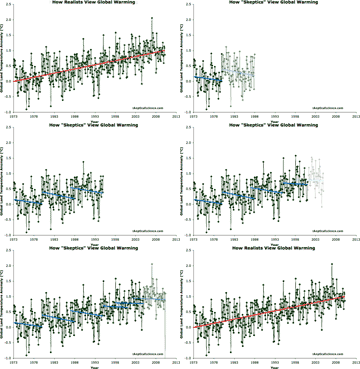
Comments