



 Arguments







Recent Comments
Prev 2625 2626 2627 2628 2629 2630 2631 2632 2633 2634 2635 2636 2637 2638 2639 2640 Next
Comments 131601 to 131650:
-
Quietman at 07:52 AM on 3 September 2008It's the sun
Pep I found the original story (I still can't remember where I put the lik originally). Strange Clouds Spotted at the Edge of Space By Jeremy Hsu, Staff Writer, posted: 01 September 2008 08:50 am ET, 30 Comments A brief opening quote: “The noctilucent or “night-shining” clouds are at an altitude of 47 to 53 miles (76 to 85 km), where meteors and bright aurora lights are not uncommon and the atmosphere gives way to the blackness of space.” and from the body of the article: “Another likely source of water vapor is methane oxidation” It's an interesting read. :) -
Pep at 06:00 AM on 3 September 2008It's the sun
Good one, so when do they arrive back home? I’ll watch this thread for the link, and thank you. -
Quietman at 04:07 AM on 3 September 2008CO2 lags temperature
Austerlitz The relationship as stated and accepted by the IPCC may indeed be false, I agree. But there is a feedback that has a minor effect and can be viewed as symptomatic. Spencer gives a good explanation for this, the sensitivity to CO2 is lower than the sensitivity of other drivers/forcings and easily overcome which is indicated in the current cooling trend. The idea that CO2 caused AGW therefore is rather meaningless since it is not strong enough to have driven climate change from 1975 through 2007. Recent articles on ocean oscillations and plate tectonics/vulcanism indicate that "The solar jerk" is at work. -
Quietman at 03:04 AM on 3 September 2008It's the sun
Pep We had been discussing CH4 and tropospheric clouds in a recent article on how they form with Mizimi. Unfortunately I don't remember where I put the link to the article but I don't think it was flying cows. I believe it may have been about methane hydrates but now I can't remember. :) -
Quietman at 02:52 AM on 3 September 2008Arctic sea ice melt - natural or man-made?
PS People use real names on different sites and handles on others to avoid witch hunts. The alarmists are the witch hunters in the AGW argument and many are fanatics so skeptics use a handle. I use my real name on sites that do not have the crazies around to hassle me. -
Quietman at 02:47 AM on 3 September 2008Arctic sea ice melt - natural or man-made?
Lee Re: " The IPCC is headed up by the 600 leading climate scientists in the the world. " That is your opinion, and theirs. The best have already left the IPCC because they were true scientists who refused to have their work altered. This line of argument is both childish and foolish. When you have a valid point to make I will respond otherwise I will not longer reply to you. DO your homework and think for yourself. Since the hypothesis of AGW was first proposed many other factors have been determined. Read all of the threads. To blindly accept the word of the IPCC is to accept AGW on faith. I do not believe in blind faith. As for lies, yes deniers have lied. But not skeptical statements. You have to learn how to discern truth from falsehood and more importantly accept that no one is infallable, not even Hansen. -
Mizimi at 00:23 AM on 3 September 2008Does model uncertainty exagerate global warming projections?
HealthySkeptic: Wow! Look what insignificant little ol' Life did in the Carboniferous...nearly wiped out atmospheric CO2 and ........that GMT!! Good job we learned to make fires................tho' looking more closely at the graph, there's a big upswing in the Permian....maybe we have been around longer than anyone thinks???? -
Mizimi at 00:11 AM on 3 September 2008Can animals and plants adapt to global warming?
C: "As noted above, it is critical to understand that ecosystems in the 21st century start from an already massively ‘shifted baseline’ and so have lost resilience. Most habitats are already degraded and their populations depleted, to a lesser or greater extent, by past human activities." Consider the vast changes to the British environment: modern Britain has been transformed in a relatively short period of time from dense woodland/wetlands to what it is now...an 'idustrialised' landscape. Consider the only bird to have become extinct throughout this process is.........the Great Auk, hunted to extiction. Wild boar, bears, wolves...hunted to extinction... the list goes on. Nothing to do with climaste or environmental changes. -
Mizimi at 22:05 PM on 2 September 2008Models are unreliable
QM: Yes, just recently, which prompted me to look for further info on how a shifting barycentre could affect climate. One thought which I am currently pursuing is adiabatic cooling of the upper atmoshere caused by the tidal effect of sun/moon. As the barycentre moves it causes the shape of the atmospheric envelope to alter, effectively expanding the volume, which should cause a cooling effect. -
Pep at 19:05 PM on 2 September 2008It's the sun
I wouldn’t worry about cows but methane hydrates are a concern. As a side note: I can’t say CO2 doesn’t contribute to warming, more likely so. Absorbs infrared energy. I agree to disagree in other words. -
Lee Grable at 19:05 PM on 2 September 2008Arctic sea ice melt - natural or man-made?
My user name is my real name Quietman, as is every other person on this website who speaks the truth. -
Lee Grable at 19:01 PM on 2 September 2008Arctic sea ice melt - natural or man-made?
Quietman, I have pointed out SPECIFIC lies. I've provided references to back up my claims. The IPCC is headed up by the 600 leading climate scientists in the the world. Deny that if you can. BTW, my user name is my real name. -
Quietman at 18:35 PM on 2 September 2008Arctic sea ice melt - natural or man-made?
Re: I'm sure everyone in California would be interested to know why their state is "despicable." Ask anyone from the other 49. -
Quietman at 18:29 PM on 2 September 2008Arctic sea ice melt - natural or man-made?
Philippe I know about the tricks they are playing on Spencer. He's eccentric but not nuts. They are trying to discredit him any way that they can. But who sounds nuttier? Another NASA scientist tried to discredit Dr. Fairbridge in a discussion by saying his papers are not peer reviewed. That is an alarmist tactic that will soon backfire. Papers that they refused based on lack of peer review will soon be printed because they are turning out to be factual. The IPCC can only supress the facts for so long. That is why they are now looking into solar forcing and why you now get a lot of hits instead of just one when doing a search for "The Solar Jerk". Eyes are finally opening. -
Quietman at 18:21 PM on 2 September 2008Arctic sea ice melt - natural or man-made?
PS Lee you have not pointed out any lies at all. Just because it's not in the bible does not make it an untruth. -
Quietman at 18:18 PM on 2 September 2008Arctic sea ice melt - natural or man-made?
Re: "Oh yeah, one more observation Quietman, are you claiming that the IPCC doesn't employ good science? Your whole position is predicated on the assumption that those scientists are either incompetent, or liers. Which is it?" A little of both. The IPCC has no (zero) scientists. That is not how things work. SELECT scientists submit and review papers dealing primarily with what the effects of AGW will be. They do not do any work on proving the hypothesis at all because they have assumed it to be fact. The IPCC then deletes any papers or comments that do not support AGW. It's kind of like a high school click, outsiders have no voice and papers submitted are simply rejected. This is BIG money and the IPCC isn't going to let the gravey train stop any time soon. -
Quietman at 18:11 PM on 2 September 2008Arctic sea ice melt - natural or man-made?
Lee Grable The IPCC is a political body and like all politicians they lie a lot. The lie is "Global Warming". The warming is not Global, it is regional, and caused by heat escaping from the mantle at subduction zones and ridges. I have placed many links on the "Volcanos" thread that back up my hypothesis. The cause of tectonics is gravitational stress. The Earth has a sizeable moon to keep the tectonics going. Dr. Rhodes Fairbridge explained how gravitational forces affect sunspots by affecting the suns barycenter. Jupiter has the largest effect but the effect is increased during planetary alignments, particularly the inner planets and the gas giants. The TSI stopped leading temps in 1975. 1975 was a near complete planetary alignment and 1976 was the full alignment that is quite rare (most people will never see one). There was a lot of speculation about earthquakes and other forms of vulcanism at the time but nothing drastic happened ... that they could detect at the time. But something quite drastic did happen and vulcanism/tectonic movement has increased and much of it is increased activity in the subduction zones, hence the record El Nino's (ENSO) that we have been experiencing since. Chris lists the years of the El Ninos higher in this thread in an attempt to prove me wrong but the El Nino is cyclical, it has happened for a very long time. It's strength is what has changed. The same goes for the other oscillations. The South Atlantic anomally is reducing the magnetic field from eastern South America to western Africa. Tropical storms have been forming farther east, closer to the red sea, making Hurricane forcasting more difficult. Have you even read the other comments on this site? PS You asked who is the liar. The spokesman for the alarmists is Al Gore, and he tells lies. The scientist who brought this up is "we are all toast" Hansen (Real Climate) and he has lost his cool and who knows what else. Sorry, but "we are all toast" is a lie. -
Quietman at 17:45 PM on 2 September 2008Arctic sea ice melt - natural or man-made?
Sorry about the spelling, my eyes are going fast. -
Quietman at 17:44 PM on 2 September 2008Arctic sea ice melt - natural or man-made?
Philippe I am 60 years old and I heard the word used by a californian in Viet Nam in 1968. He had joined my company shortly after the Tet Offensive. Nelieve it or not they did draft hippies. PS I never look at Real Climate anymore after finding out how their site is funded and by whom. It is THE alarmist site. -
Lee Grable at 15:23 PM on 2 September 2008Arctic sea ice melt - natural or man-made?
#163. Sorry dude. -
HealthySkeptic at 14:53 PM on 2 September 2008Arctic sea ice melt - natural or man-made?
#153 Lee Grable >> "John Cook. I'm sorry. " So you should be. -
HealthySkeptic at 14:41 PM on 2 September 2008Do growing glaciers disprove global warming?
In an interglacial period such as today, why are we surprised that glaciers are receding? How is this fact supportive of AGW? -
Lee Grable at 14:33 PM on 2 September 2008Arctic sea ice melt - natural or man-made?
Oh yeah, one more observation Quietman, are you claiming that the IPCC doesn't employ good science? Your whole position is predicated on the assumption that those scientists are either incompetent, or liers. Which is it? -
Lee Grable at 14:23 PM on 2 September 2008Arctic sea ice melt - natural or man-made?
And why is it that when one of you denialists get backed into a corner, you bring up Al Gore? Last I looked, he's a politician, not a scientist. -
Lee Grable at 14:11 PM on 2 September 2008Arctic sea ice melt - natural or man-made?
I've pointed out specific lies told by the deniers side. Point out SPECIFIC lies told on this website. And gosh, I'm really sorry that I called you dude. I know how germaine that is to this disscusion. -
Lee Grable at 14:03 PM on 2 September 2008Arctic sea ice melt - natural or man-made?
Quitman, put up or shut up! -
HealthySkeptic at 13:42 PM on 2 September 2008Evaporating the water vapor argument
My god, all that extra Dihydrogen Monoxide in the environment! How horrible! What are we going to do!!! The dangers of Dihydrogen Monoxide -
HealthySkeptic at 13:09 PM on 2 September 2008Does model uncertainty exagerate global warming projections?
Mizimi, Your point is no better illustrated than by the graph posted by 'Wondering Aloud' in #4 above;-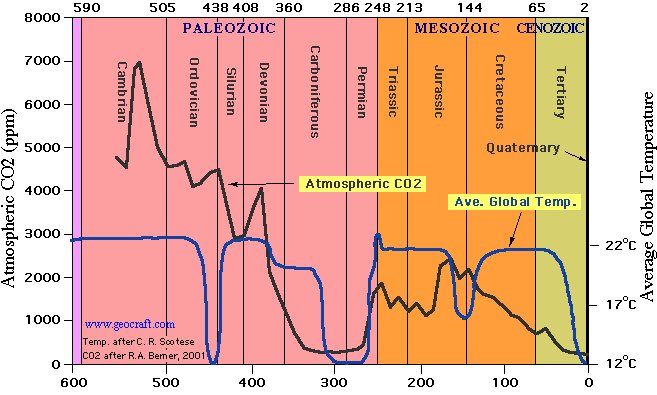
-
HealthySkeptic at 12:52 PM on 2 September 2008Does model uncertainty exagerate global warming projections?
John said >> "There are numerous positive feedbacks in the climate system. As temperatures rise, more water evaporates into the atmosphere - the increased water vapor absorbs more heat..." You continually promote the positive feedback of increased water vapour, but what about the negative feedback of increased solar radiation reflectivity caused by increased global cloud cover? -
Philippe Chantreau at 11:11 AM on 2 September 2008Arctic sea ice melt - natural or man-made?
RC has an interesting post on how Spencer works sometimes. Very telling: http://www.realclimate.org/index.php/archives/2008/05/how-to-cook-a-graph-in-three-easy-lessons/langswitch_lang/de Another good one about Spencer: http://scienceblogs.com/stoat/2008/01/spencer_is_totally_off_his_roc.php. "Humerous" indeed. What exactly are the criteria to establish that Spencer should be more trusted than Hansen? Spencer and Christy had some errors in their 98 (I believe) paper on MSU data. Errors were later corrected but S&C let skeptics used the wrong data for a while. Deltoid had a post on the revised numbers: http://timlambert.org/2005/07/spencer/ Those links are to blogs posts, but each treats of Spencer publication/work. Quietman, hippies are now in their 60's and never used the word "dude." It actually belongs to college crowds all over. I'm sure everyone in California would be interested to know why their state is "despicable." -
Quietman at 10:53 AM on 2 September 2008There is no consensus
From this weeks "Skeptic of the week": "In particular I am referring to the arrogance, the activities aimed at shutting down debate; the outright fabrications; the mindless defense of bogus science; and the politicisation of the IPCC process and the science process itself." LOL - I Love it! -
Quietman at 10:24 AM on 2 September 2008Arctic sea ice melt - natural or man-made?
And please do not call me dude. That is a california hippy term and I find both despicable. -
Quietman at 10:21 AM on 2 September 2008Arctic sea ice melt - natural or man-made?
Lee Grable See Al Gore, between 10 and 35 lies depending on whose opinion you read. See Any paper that contains the words "global warming" contains lies. As for truths See any paper on any subject that contains the words "climate change" or "climate shift" or just about anything other than "global warming". An example Kay et. al. (linked by john) is an honest paper because it does not attempt to alarm or place blame on AGW. Good science does not accept a hypothesis as fact, it accepts it as a hypothesis until it has been tested. A hypothesis such as AGW can be tested by prediction. It has been and it has failed the test. Instead of moving the goal post to meet the hypothesis, make the hypothesis more realistic as Dr. Spencer has pointed out. Dr. Spencer is obviously more familiar with the science than you are so why do you choose to believe "Or we are all toast" Hansen over a calm and somewhat humerous Spencer. -
Quietman at 10:03 AM on 2 September 2008Volcanoes emit more CO2 than humans
John A little more support for my hypothesis: Tectonic Plates Act Like Variable Thermostat ScienceDaily (Aug. 14, 2007) — Like a quilt that loses heat between squares, the earth's system of tectonic plates lets warmth out at every stitch. Adapted from materials provided by University of Southern California. -
Lee Grable at 09:51 AM on 2 September 2008Arctic sea ice melt - natural or man-made?
Quitman, put up or shut up! -
Lee Grable at 09:46 AM on 2 September 2008Arctic sea ice melt - natural or man-made?
I pointed out lies that you deniers have told. Show me tne lies that the scientists have told. Come on man, it shouldn't be that hard. -
Lee Grable at 09:41 AM on 2 September 2008Arctic sea ice melt - natural or man-made?
John Cook. I'm sorry. -
Lee Grable at 09:38 AM on 2 September 2008Arctic sea ice melt - natural or man-made?
Quietman,You have a side. That much is obvious. Show me the lies from the 'alarmists' side dude. Are you saying that the graph provided in the "it's the sun" thread on this website is a lie? Prove it. You seem to be claiming that the info on this website is a lie. Prove it. That's all I'm saying. And once again, let Jim Cook decide which one of us is out of line. I'll abide by his judgement. -
Quietman at 08:28 AM on 2 September 2008Arctic sea ice melt - natural or man-made?
PS Alarmism is not science, skepticism is. Re: "You don't have any say." A little hostile are we? The lies come from both deniers and alarmists, those of us who are skeptical do not need to lie, we simply ask for proof of your hypothesis. Make a prediction that pans out for a change, just once, and you will convince us skeptics. So far it's a no hitter. -
Quietman at 08:21 AM on 2 September 2008Arctic sea ice melt - natural or man-made?
Lee Grable I do not have a "side", th4e sides are alarmists and deniers and I am neither. And what do solar graphs say? Without the sun GHGs are meaningless, they are a feedback of solar radiation. It's cooler now because the sun is not providing as much radiation for GHGs to act on (not rocket science). You fundamentalist types ever do any reading? -
Lee Grable at 08:12 AM on 2 September 2008Arctic sea ice melt - natural or man-made?
As far as the solar graphs, look at the solar graphs ON THIS WEBSITE!! It's been layed to rest. You continually prove my point. You concider the very few facts that don't support the MMGW are valid, and yet you concider that the vast majority of facts that prove that MMGW are valid are'nt. The very despription of blind faith. And if John feels that I'm violating some sacred comment board rule, then let him speak up. You don't have any say. -
Lee Grable at 07:42 AM on 2 September 2008Arctic sea ice melt - natural or man-made?
One side KNOWINGLY LIES,(the skeptic side), one side doesn't,(the science side).Who do you believe? Quietman? -
Lee Grable at 07:32 AM on 2 September 2008Arctic sea ice melt - natural or man-made?
Quietman, who are you to "concede the point of accuracy"? Lies are Lies. Period!! Your side LIES.Period!! It's importent to every disscusion on global warming. Period!!! I find your 'arguement' to be more of the same denialist claptrap junk that I've seen everywhere that this subject is discussed. Period!! -
Quietman at 05:30 AM on 2 September 2008Animals and plants can adapt
Good article. The only fault I see is "The IPCC storyline scenarios such as A1FI and A2 imply a rate of warming of 0.2 to 0.6°C per decade." which just has not happened but it does not change the message or impact of the article. Kudos to Professor Barry Brook. -
Quietman at 05:15 AM on 2 September 2008The Mystery of the Vanishing Ocean Heat
Mizimi & HealthySkeptic That was what came to mind when I read this article (see comment one). However if the sea level is read purely from satellites then the reference points make this argument moot (for actual sea level). But I agree that the conception is from sinking land, not rising seas. -
Quietman at 05:01 AM on 2 September 2008It's the sun
Pep See Mizimi comments for formula. -
Quietman at 04:55 AM on 2 September 2008Water levels correlate with sunspots
Re: "If so, the basic thesis if not the specifics of the paper may be true - the ocean absorbs heat then releases it again 30 years later." This may be tied to the 20-30 year cycle of the PDO somehow. -
Quietman at 04:43 AM on 2 September 2008CO2 lags temperature
theTree Unfortunately some threads here are also a bit heated but it is still much better than RealClimate. -
Quietman at 04:41 AM on 2 September 2008Al Gore got it wrong
Anthony Interesting links, thanks. -
Quietman at 04:27 AM on 2 September 2008Models are unreliable
Mizimi I would imagine that the difference between full and new is reflected sunlight and whatever radiation it may contain. This would have an effect on GHGs (I am thinking water vapor and methane which a recent article at LiveScience talks about. Re: "This has prompted a look at the effects of a shifting sun/earth/moon barycentre on earth climate." Have you ever read The Solar Jerk by Dr. Rhodes Fairbridge?
Prev 2625 2626 2627 2628 2629 2630 2631 2632 2633 2634 2635 2636 2637 2638 2639 2640 Next






