



 Arguments







A Plan for 100% Renewable Energy by 2050
Posted on 25 March 2011 by dana1981
We recently examined how Australia can meet 100% of its electricity needs from renewable sources by 2020. Here we will examine how that goal can be scaled up for the rest of the world.
Energy consulting firm Ecofys produced a report detailing how we can meet nearly 100% of global energy needs with renewable sources by 2050. Approximately half of the goal is met through increased energy efficiency to first reduce energy demands, and the other half is achieved by switching to renewable energy sources for electricity production (Figure 1).
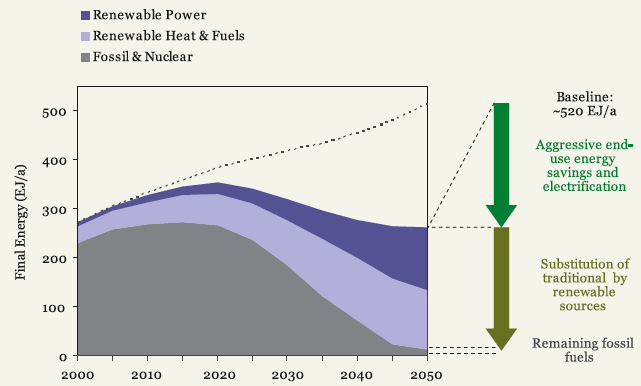
Figure 1: Ecofys projected global energy consumption between 2000 and 2050
To achieve the goal of 100% renewable energy production, Ecofys forsees that global energy demand in 2050 will be 15% lower than in 2005, despite a growing population and continued economic development in countries like India and China. In their scenario:
"Industry uses more recycled and energy-efficient materials, buildings are constructed or upgraded to need minimal energy for heating and cooling, and there is a shift to more efficient forms of transport.
As far as possible, we use electrical energy rather than solid and liquid fuels. Wind, solar, biomass and hydropower are the main sources of electricity, with solar and geothermal sources, as well as heat pumps providing a large share of heat for buildings and industry. Because supplies of wind and solar power vary, “smart” electricity grids have been developed to store and deliver energy more efficiently. Bioenergy (liquid biofuels and solid biomass) is used as a last resort where other renewable energy sources are not viable."
To achieve the necessary renewable energy production, Ecofys envisions that solar energy supplies about half of our electricity, half of our building heating, and 15% of our industrial heat and fuel by 2050. This requires an average annual solar energy growth rate much lower than we're currently achieving – an encouraging finding.
The report notes that wind could meet one-quarter of the world’s electricity needs by 2050 if current growth rates continue, and sets that as its goal. Ecofys also envisions more than one-third of building heat coming from geothermal sources by 2050. If we double current geothermal electricity production growth rates, it can provide 4% of our total electricity needs by that date. Ocean power, through both waves and tides, accounts for about 1% of global electricity needs in 2050. Hydropower, which currently supplies 15% of global electricity, ultimately supplies 12% in the Ecofys scenario. As you can see in Figure 2, global renewable energy use ramps up gradually between now and 2050.
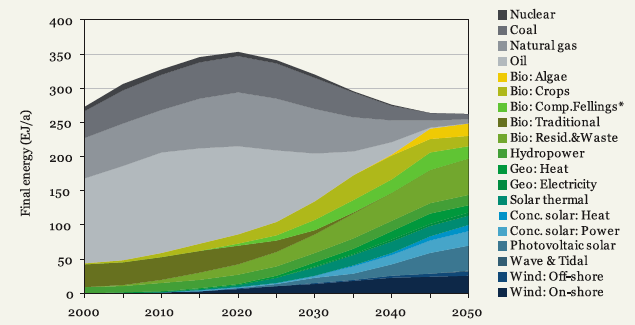
Figure 2: Energy use by source between 2000 and 2050
Burning biomass (such as plant and animal waste) will supply 60% of industrial fuels and heat, 13% of building heat, and 13% of electricity needs. Much of the proposed biomass use comes from plant residues from agriculture and food processing, sawdust and residues from forestry and wood processing, manure, and municipal waste. All of these renewable energy technologies currently exist, and it's just a matter of implementing them on a sufficiently large scale.
Ecofys also envisions using currently existing technology and expertise to "create buildings that require almost no conventional energy for heating or cooling, through airtight construction, heat pumps and sunlight. The Ecofys scenario foresees all new buildings achieving these standards by 2030." 2–3% of existing buildings will also need to be retrofitted per year to improve energy efficiency. Ecofys notes that Germany is already retrofitting buildings at this rate. Transportation must become more efficient, using more fuel efficient vehicles like electric cars, and increasing use of mass public transportation.
Accomplishing all of this will require a major effort, but Ecofys has a number of suggestions how we can start:
-
Introduce minimum efficiency standards worldwide for all products that consume energy, including buildings
-
Build energy conservation into every stage of product design
-
Introduce strict energy efficiency criteria for all new buildings
-
Introduce an energy tax, or perhaps a carbon emissions price
-
Help developing countries pursue alternatives to inefficient biomass burning, such as such as improved biomass cooking stoves, solar cookers and small-scale biogas digesters
-
Substantial investment in public transportation
-
Make individuals, businesses, and communities more aware of their energy consumption, and encourage increased efficiency
Undoubtedly you're wondering how much this will all cost. Ecofys finds that we will need to divert up to 3% of global gross domestic product (GDP) to investments in materials and energy efficiency, renewable energy, and necessary infrastructure. However, we also save money in terms of reduced fossil fuel use.
The report finds that we can save nearly 4 trillion Euros ($5.7 trillion) per year by 2050 based on energy efficiency savings and reduced fuel costs, as compared to business-as-usual. The up-front investments are expensive, but savings will begin to exceed those costs by 2040, and even sooner if oil prices rise faster than expected, or if we factor in the costs of climate change and the impact of burning fossil fuels on public health. The plan will reduce energy-related greenhouse-gas emissions 80% below 1990 levels by 2050, which will give us a fighting chance to avoid the 2°C global warming "danger limit".
There's a saying, "where there's a will, there's a way". In this case we have a way to fully transition from fossil fuels to renewable energy by 2050. The question is, do we have the will?


 0
0  0
0 dwindling supplies means actually that the red curve goes to the left - meaning more expensive FF and less production.
Actually the production per capita has been fairly constant during 30 years, and the GDP growth has been obtained only through demographic expansion and improvement of energy intensity. But with decreasing resources, it is not granted at all that this pace can be maintained.
"
But if the trends continue for the next 20 years we will see renewables become cheaper than hydrocarbons. Onshore wind is already cheaper than nuclear. "
think of a simple question : what makes the cost of renewable energy ?
another thing is of course that the capacity of renewable generation is limited by intermittence - and yet another one is that FF can't be replaced by electricity in all their uses.
All this together doesn't make the situation so comfortable you think, by far. The oil price is climbing anew to the sky. I predict that we won't wait for years before the next economic crisis, which will be still worse than the previous one - and like the previous one, no rush on renewables- just more poor people.
dwindling supplies means actually that the red curve goes to the left - meaning more expensive FF and less production.
Actually the production per capita has been fairly constant during 30 years, and the GDP growth has been obtained only through demographic expansion and improvement of energy intensity. But with decreasing resources, it is not granted at all that this pace can be maintained.
"
But if the trends continue for the next 20 years we will see renewables become cheaper than hydrocarbons. Onshore wind is already cheaper than nuclear. "
think of a simple question : what makes the cost of renewable energy ?
another thing is of course that the capacity of renewable generation is limited by intermittence - and yet another one is that FF can't be replaced by electricity in all their uses.
All this together doesn't make the situation so comfortable you think, by far. The oil price is climbing anew to the sky. I predict that we won't wait for years before the next economic crisis, which will be still worse than the previous one - and like the previous one, no rush on renewables- just more poor people.
 compare the 2007 to 2010 predictions : already 5 Mbl/yr of oil gone in only three years ! man.. where has all this oil gone ? and no - this has not begun after the economic crisis but before it. You don't see the evidence, because you don't want to see it.
"
2. I have never accepted that "supply and demand" is the general determinant of price. Were Model T Fords cheaper than previous cars because demand had decreased or supply had increased? No. Rubbish. They were cheaper because Ford had discovered a way of making more of them for the same money. He could have restricted the supply to a 10,000 rather than a million and he would still have been able to make them more cheaply. It's technology that determines price, not supply and demand.
"
that's precisely because the production costs had decreased, moving the red curve to the right- exactly the opposite of the FF case. Leading to more production at a cheaper price. It's no rubbish, it's perfectly understandable - you dismiss explanations that you're using yourself.
Side remark : if a high price doesn't prevent people from using FF, then how a carbon tax would work ?
"
2. Intermittence is most definitely NOT a problem for renewables. We have the technology now to address that through compressed air, hydrogen or methane production, chemical batteries, pumped hydro, and molten salts. ]#"
We have, but they aren't cheap - I know no country basing its energy supply on these techniques, they're only marginal.
"
FF can be replaced entirely by renewables. Name me one use of FF that cannot be replicated by electricity! (I mean fuels of course and not the plastics industry"
I suggest you to go in Iceland and explain them how to do this : thanks to geothermal and hydro electricity, they have plenty of renewable electricity , much more than what they really actually need for their personal use (so they build huge aluminium plants to use it and export the aluminium.
But still, they import a lot of oil and coal, whereas they're totally deprived of FF resources, and they're not cheap.( see for instance here for data. I saw in Iceland some boat tours that closed because of too high fuel costs. So much probably they're not aware of all the capacities you seem to know perfectly. I think you could make pretty much money there if you sell them your marvelous solutions. BTW all their renewable electricity didn't prevent them to be cruelly hit by the economic crisis, which was the only reason why their consumption decreased in the last years. Again, just open your eyes.
compare the 2007 to 2010 predictions : already 5 Mbl/yr of oil gone in only three years ! man.. where has all this oil gone ? and no - this has not begun after the economic crisis but before it. You don't see the evidence, because you don't want to see it.
"
2. I have never accepted that "supply and demand" is the general determinant of price. Were Model T Fords cheaper than previous cars because demand had decreased or supply had increased? No. Rubbish. They were cheaper because Ford had discovered a way of making more of them for the same money. He could have restricted the supply to a 10,000 rather than a million and he would still have been able to make them more cheaply. It's technology that determines price, not supply and demand.
"
that's precisely because the production costs had decreased, moving the red curve to the right- exactly the opposite of the FF case. Leading to more production at a cheaper price. It's no rubbish, it's perfectly understandable - you dismiss explanations that you're using yourself.
Side remark : if a high price doesn't prevent people from using FF, then how a carbon tax would work ?
"
2. Intermittence is most definitely NOT a problem for renewables. We have the technology now to address that through compressed air, hydrogen or methane production, chemical batteries, pumped hydro, and molten salts. ]#"
We have, but they aren't cheap - I know no country basing its energy supply on these techniques, they're only marginal.
"
FF can be replaced entirely by renewables. Name me one use of FF that cannot be replicated by electricity! (I mean fuels of course and not the plastics industry"
I suggest you to go in Iceland and explain them how to do this : thanks to geothermal and hydro electricity, they have plenty of renewable electricity , much more than what they really actually need for their personal use (so they build huge aluminium plants to use it and export the aluminium.
But still, they import a lot of oil and coal, whereas they're totally deprived of FF resources, and they're not cheap.( see for instance here for data. I saw in Iceland some boat tours that closed because of too high fuel costs. So much probably they're not aware of all the capacities you seem to know perfectly. I think you could make pretty much money there if you sell them your marvelous solutions. BTW all their renewable electricity didn't prevent them to be cruelly hit by the economic crisis, which was the only reason why their consumption decreased in the last years. Again, just open your eyes.







Comments