



 Arguments
Software
Resources
Comments
The Consensus Project
Translations
About
Support







Latest Posts
- Skeptical Science New Research for Week #43 2026
- As El Niño fuels drought in Panama, trees help ranchers maintain their water supply
- Climate Trunk - Daily Life
- The strongest El Niño in a thousand years?
- 2026 SkS Weekly Climate Change & Global Warming News Roundup #42
- Skeptical Science New Research for Week #42 2026
- Climate Trunk - Governance
- Fact brief - Does onshore wind power need subsidies to compete with fossil fuels?
- How Hurricane Isaias broke through to become the first Atlantic hurricane in an extremely quiet 2026 season
- 2026 SkS Weekly Climate Change & Global Warming News Roundup #41
- Skeptical Science New Research for Week #41 2026
- Scientists link fossil fuel producers to the West’s worsening water shortages
- The world without solar and wind?
- America is hurtling toward a power grid crisis
- 2026 SkS Weekly Climate Change & Global Warming News Roundup #40
- Skeptical Science New Research for Week #40 2026
- The impacts of this year’s record-shattering El Niño
- The Worst Case Is Still on the Table
- Scientists link fossil fuel producers to the West’s worsening water shortages
- 2026 SkS Weekly Climate Change & Global Warming News Roundup #39
- Skeptical Science New Research for Week #39 2026
- India’s power-sector emissions flat for two years due to clean-energy surge
- Fact brief - Does wind power require backup from fossil fuels?
- Rapid Warming in the Himalaya Exacerbates Geohazard Cascades Beyond Adaptation Limits
- 2026 SkS Weekly Climate Change & Global Warming News Roundup #38
- Skeptical Science New Research for Week #38 2026
- The next water crisis is beneath our feet
- The Atmosphere Just Set a Water Vapor Record
- Factcheck: Reform UK’s 45 false or misleading claims about climate and energy
- 2026 SkS Weekly Climate Change & Global Warming News Roundup #37

Comment Search Results
Search for skeptic
Comments matching the search skeptic:
- CO2 effect is saturated
Bob Loblaw at 22:57 PM on 15 August, 2026foxydoxy @ 885:
I think the first thing we need to establish is that you make one horribly big mistake in the second sentence of your second paragraph. The atmosphere is not an isolated system. Everything that you say that follows from that is nonsensical. The atmosphere receives thermal energy and latent heat and IR radiation from the surface. It receives radiation from the sun. It emits IR radiation to space. It is not remotely close to an isolated system.
The argument you are starting to present looks a lot like an argument that has been made here before, by multiple accounts. But, unfortunately, not by multiple people, as one individual keeps creating new accounts to try to repeat his bogus arguments. Creating multiple accounts this way is breaking the rules of the Comments Policy. Rules you agreed to when you signed up.
I strongly suggest that you look through the comments here, to see where your argument has been presented before, and where people have pointed out the errors in that argument. Unless you actually have something new to say, you are wasting everyone's time by repeating the same errors.
- CO2 effect is saturated
Bob Loblaw at 05:15 AM on 15 August, 2026foxydoxy @ 883:
There is a lot of room between individual molecule behaviour and "the entire atmosphere". I'm afraid I'm not really sure where in that vast range you are placing "macroscopic scale".
The absorption and emission of IR, transfer of energy by collisions, etc. is happening at the molecular level. The concept of temperature is not, so you can't talk about molecules cooling or warming. You need to look at a bunch of molecules for that - a big bunch.
Fortunately, you don't need to go to "the entire atmosphere" to get a bunch of molecules, though - and climate science doesn't. One m3 of air weighs over 1kg, so if you figure out how many moles that is, you can use Avogadro's constant (6.022x10²³) to figure out just how many molecules that is. (It's a bunch.)
So, macroscale discussion of these effects can be carried out for pretty small volumes of air. Climate models do not go down to the 1m3 level - but they do divide the vertical profile into a number of layers, and divide the horizontal world into a number of areas. Each box then becomes a unit for conservation of energy, total absorption, total emission, temperature, etc. Mass and energy can move from box to box, and radiation can be absorbed, emitted, or pass through (no interaction) in each box.
I know you will not have been able to wade through the 878 comments that came before you, but in comment 805 I discussed some of the characteristics of a one-dimensional (vertical) climate model and present a few graphics. This figure in that comment shows the results of a model as it progresses through (modelled) time to approach equilibrium. Dependent on the starting conditions, at each time step the model will warm or cool layers in response to the energy changes in that layer. (The figure is from Manabe and Strickler 1964.)
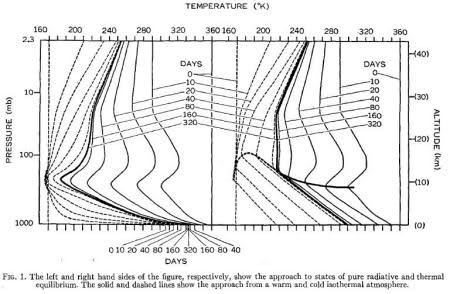
I also suggest that you look through a blog post I did a few years ago on Beer's Law, which covers some of the theoretical aspects of radiation transfer in the atmosphere. The comments provide very useful additional information.
The collisions between molecules are elastic in the sense you describe. There is no loss of energy. As MA Rodger pointed out, any molecule that has absorbed energy by absorbing IR radiation will almost always lose that energy to other molecules via collision, not the emission of radiation. That also holds true for any molecules gaining energy via collision with another molecule. If their energy level becomes higher than other molecules they collide with, they will lose energy via the next collision.
Who gains, who loses depends on the relative energy levels of the two molecules. Sometimes, a molecule will lose energy by emitting radiation, but nearly all the energy movement within the volume of air is by collision. That's why the concept of temperature (average kinetic energy of a bunch of molecules) works. Keep in mind that nearly all the other molecules that a CO2 molecule will run into are either nitrogen or oxygen. Collisions are an equal-opportunity energy transfer mechanism.
A more technical discussion (linked elsewhere in this stream, but repeated here) is over at Eli Rabett's blog.
Note that this discussion is getting a rather long way away from the topic of the OP - the myth that the CO2 effect has reached saturation.
- Eastern U.S. broils after heat wave kills over 1,300 in Europe
Bob Loblaw at 05:31 AM on 19 July, 2026Michael @ 10:
Thanks for the positive feedback and kind words. I (nearly) always write discussions like this assuming that there are at least a few lurkers that will read my comments and learn from them - something more than just the one person I'm discussing with directly.
I agree with you about the need for people posting comments to provide some analysis, rather than just posting a link to "data". There is almost no such thing as "raw data" - any measurement has some level of implicit or explicit processing involved. From the recent discussion, I'll take the example of "wind direction". What does "average wind direction" really mean?
- You can't just take a collection of wind direction readings and do a simple average. One minute of wind from 5° averaged with one minute of wind direction from 355° does not a south wind (180°) make.
- The usual process is to treat wind as a vector (speed plus direction) and sum the vectors to get the resultant vector. This gives more weight to the readings with greater wind speeds (among other factors).
- ...but the magnitude of the resultant vector will be less than the mean speed, if there is any variation in direction. Twelve hours of north winds at 40km/hr combined with 12 hours of south winds at 40km/hr does not a calm day make.
When Eric posted his strong claim ("never") about temperatures and exhaust heat from the terminals, my spidey sense immediately began to think we'd be dealing with another version of Anthony Watt's claims about station siting affecting temperature readings and rendering them useless.
- My background (people can read a bit about it on the SkS Team page) includes much work in microclimatology, so the immediate question to me was "where exactly is the weather station located?"
- ...but documentation on airport weather stations often provides the Airport Reference Point (as mentioned in comment 4), not the actual instrument location.
- ...and I knew to look for this because I have a background in instrumentation and standards for automated weather stations. Aviation stations are linked to aircraft needs (such as altimeter settings) and have their own standards.
- So Google Earth to the rescue - and because I knew what to look for, I could fairly easily find the actual weather station on the imagery.
For the record, here is the snippet from Google Earth that shows the automated weather station at Reagan airport:
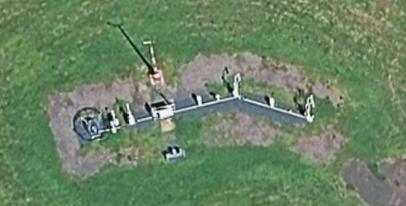
I immediately recognized the shadow of the anemometer (wind speed and direction, top middle) mast, and the wind shielding around the precipitation gauge (circular pattern on the left). [Again, my experience includes a lot of time working around automated weather stations, so I know what they look like.]
Later confirmation that I had found the correct location came when Eric posted information about BWI and Dulles airport weather stations. For the record, here are GE images for Dulles and BWI:
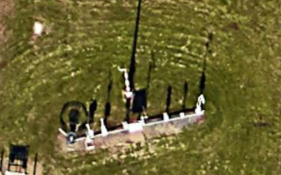
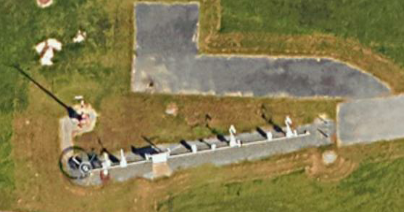
Note the close similarity in the views. Not exactly the same, but clearly following a similar standard layout. FYI, I was able to find a NOAA image of their standard ASOS (airport weather) system. Looks familiar...
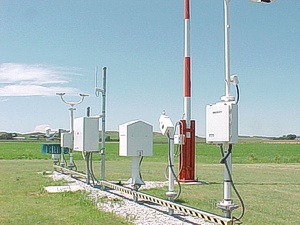
As for working through and combining various sources of data related to the problem at hand (AC exhaust), my background also includes a period of time participating in the Canadian met service's data quality working group. I finished my time with the met service (in part) supervising the staff responsible for data QA/QC.Although automated systems do some checks (detecting spikes, step changes, unrealistic instrument readings, etc), most of these require an examination by human eyeballs. Figuring out "is that reasonable?" requires a blend of detective skills plus an understanding of micro- and meso-scale weather and climate. A sudden drop in temperature makes sense when you see a similar drop a few hours earlier or later in other nearby stations, and the shifting wind patterns and pressure changes tell you a cold front is moving through.
To Eric's credit, although he started with a strong assertion about exhaust plumes, he clearly listened to what I was saying and showed a willingness to change his mind. In the end, he agreed that AC exhaust plume hypothesis was not plausible. That shows a tendency towards genuine skepticism, not the dogged "you can't change my mind" that is often seen in climate discussions.
As you state, Michael, there is a level of skill involved. There is also a level of experience and training - "knowledge" as you describe it. Two old quotes come to mind:
From Alexander Pope, An essay on Criticism:
A little learning is a dangerous thing;
drink deep, or taste not the Pierian spring:
there shallow draughts intoxicate the brain,
and drinking largely sobers us again.
And from the Canadian Aviation Safety Letter (from back in my pilot days):
Learn from the mistakes of others. You won't live long enough to make them all yourself.
- Eastern U.S. broils after heat wave kills over 1,300 in Europe
Bob Loblaw at 05:07 AM on 10 July, 2026Eric @ 3:
Thanks for providing additional details. A good many points to consider.
First, the data source you link to is useful in providing coordinates for the actual weather stations. Often, sources referencing airport weather stations will provide the coordinates of the Airport Reference Point (ARP), which rarely matches the actual weather measurement coordinates. That web page does make it easy to find the weather instrumentation at BWI (Baltimore/Washington) and IAD (Dulles). Unfortunately, the coordinates it provides for DCA (Reagan/Washington National) appear to be about 150m north of the actual weather station, based on Google Earth's mapping.
I agree that the instrument location at BWI is pretty poor - near the button of runway 10, between the runway and the apron to the south. Dulles is definitely better, being at least 500m away from most large pavement surfaces.
...but I disagree strongly with your interpretation of the Reagan data for July 4 around 6pm. (As of today, the 7-day data from the page you link to only goes back to July 2.)
Here is my graph of the July 4 temperature data - both air temperature and dew point (humidity).

Temperatures were pretty stable at 100F from noon onward, and then there is a slight rise to 102F before 6pm, a drop to 97F immediately after 6pm, and then a temporary rise to 99F before dropping to 94F (and lower) after 6:30pm.
Note that dew point also fluctuates during this period. Having varied between 68F and 72F in the latter part of the afternoon, it shows a drop to 65F at 5:40pm, then rises to 74F by 6:10pm, then drops more or less steadily to the low 60s in the evening.
There is more variation in atmospheric moisture around your 6pm time range than there is in atmospheric heat.
Let's look at wind direction. Your source lists wind direction in 22.5 degree increments (S, SSW, SW, WSW, W, etc.) I have transformed that into standard degree coordinates in this graph. (The wild variations in values between 0 and 337.5, early in the day, are just small variations around north).

You claim that the temperature spike around 6pm is due to west winds bring exhaust air from the airport facilities. But the timing of the wind shift does not match this. There is one 5-minute value of west winds at 5:40pm, but from 5:45pm to 7:30pm, the winds are almost entirely from the S and SW. There is an increase in wind speed around 6pm, but the stronger winds do not happen until 6:30-ish and later, when a thunderstorm moves through.
Using the correct location of the DCA weather station, the land surface to the SW is predominantly grass, runways, and (to the WSW) aprons (pavement) a few buildings, and parking areas. Anything that looks like "newly expanded terminals" on Google Earth is to the west (or north of west) of the weather station. It is not upwind for S or SW winds.
And frankly, the amount of energy coming off the AC units you speak of is going to be dwarfed by energy coming of large areas of pavement. Any hot plume from AC is going to be mixed in with the normal air flow - spreading both vertically and horizontally in the turbulent air.
So, your "hot AC plume" is not from the correct direction, it does not explain the variations in humidity (dew point), and it is physically unlikely. What I see is normal variations in temperature, humidity, and wind speed/direction on a hot summer day as some thunderstorms move in.
I think you are over-interpreting the data, trying to seek justification for a viewpoint that the data do not support.
- Greenhouse effect has been falsified
Bob Loblaw at 10:16 AM on 26 June, 2026NOGHE4ME:
In addition to MA Rodger's comment, I'll say the following.
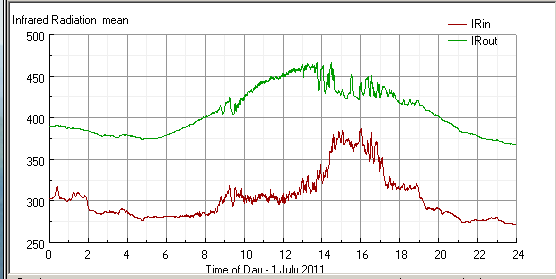
You claim "The claim that the Earth's Surface emitts 340w m**2 has been disproved experitmentally.[sic]" Well, here is some experimental (read "real" or "measured") data that shows the earth's surface emitting considerably more than 340 W/m^2 - varying from about 375W/m^2 at the coolest time of day, increasing to over 450W/m^2 at the hottest part of the day for that location and date.
- Since this measurement shows that the surface is quite capable of emitting 340W/m^2 (and more..), how does your physics explain that measurement?
- If by "surface", you mean upward-directed IR radiation in the atmosphere at some distance above the surface, then please clarify. But in that image, also note that the downward-directed ("IRin") flux from the atmosphere back to the surface ranges from about 275W/m^2 to over 375W/m^2. So the atmosphere is also quite capable of emitting 340W/m^2.
As MA Rodger points out, your argument about CO2 losing energy to surrounding molecules skips over the part where CO2 also gains energy by collision with other molecules. That's why CO2 will be at the same temperature as other molecules: the higher-energy ones pass energy to lower-energy ones, passing energy back and forth, until things average out. You can read the details over at Eli Rabett's blog.
The simple fact is that CO2 will always emit some IR at 15um as long as it is at a temperature above 0K. To argue otherwise ignores more than a century of physics.
Your "version 1.0" is simply wrong. Your version 2.0 is also far too simplistic. There is a version 3.0 out there that you need to learn, that explains the role of CO2 in atmospheric radiation, and how it is involved in the greenhouse effect.
- Plateauing CO2 emissions have slowed atmospheric growth
MA Rodger at 18:39 PM on 20 June, 2026johnpead @6,
I can't accept that CO2 emissions are 'falling'. They are barely staying flat, and that due to reductions in emissions from Land-Use-Change.
To put some numbers on that from the GCP 'budget':-
Average Annual Global CO2 Emission increases
... ... ... ... ... Fossil Fuel ... ... [LUC emissions]
1990-2000 .... +82Mt(C) ... ... [+4Mt(C)]
2001-2012 ... +215Mt(C) ... .. [+12Mt(C)]
2013-2024 .... +83Mt(C) ... ... [-48Mt(C)]
But to address your question, the additional annual atmospheric CO2 burden is often called the "Airborne Fraction" which very roughly sits a 50% of annual emissions. But this fraction is not a single year thing. The draw-down of our emissions into ocean & biosphere is a multi-year thing. Thus that 50% comprises illustratively 3.00% of year one, 2.90% of year two, 2.75% of year three, etc, this draw-down completed over a millenium when about 75% (or less for high levels of emissions) in total will have been drawn out of the atmosphere. The final tiny-tiny component is absorbed when the last bit of deep ocean water eventually surfaces and absorbs its CO2. The remaining 25% requires geological processes or a helping human hand.
So if emissions level-off, the Keeling Curve will stop bending upwards, accelerating. Identifying that disappeared acceleration amongst the wobbles will take a decade or two. If there were a drop to 50% of our emissions, the Keeling Curve will plateau a while, and if emissions continue to fall below that 50%, the Keeling Curve will dip.
That doesn't sound very encouraging. That is not to say the problem is unnsoilvable. My own view of it is that solar PV is the solution along with its use for hydrogen/ammonia/methane production.
I recall an anecdote from a couple of decades ago. A clever environmentalist tells a dumb climate skeptic that the USA could get all its energy requirements (so all primary energy) from 10,000 sq miles of solar farms in Texas. The skeptic replies that 10,000 sq miles is a massive area - the task is far too great to be delivered. The environmentalist responds that 10,000 sq miles is massive but it is the area of forest/mountain strip-mined for coal in the USA, a far-harder task which didn't prove too great, and that all this mined coal is now burned and gone. With coal you have to keep mining. The solar PV will keep on delivering.
(I won't vouch for the numbers being right.)
So there is a solution to hand (and likely other scaleable technologies as well) and if it (they) were embraced as strongly as then-there tech-bro AI projects (and money-wise it has a far far stronger basis for investment) we could deliver that solution.
What is depressing is the evident denial within the political sphere that we are still not doing anything like enough to reach net-zero (& the net-negative that must follow). The graphic below shows the scale of the problem.
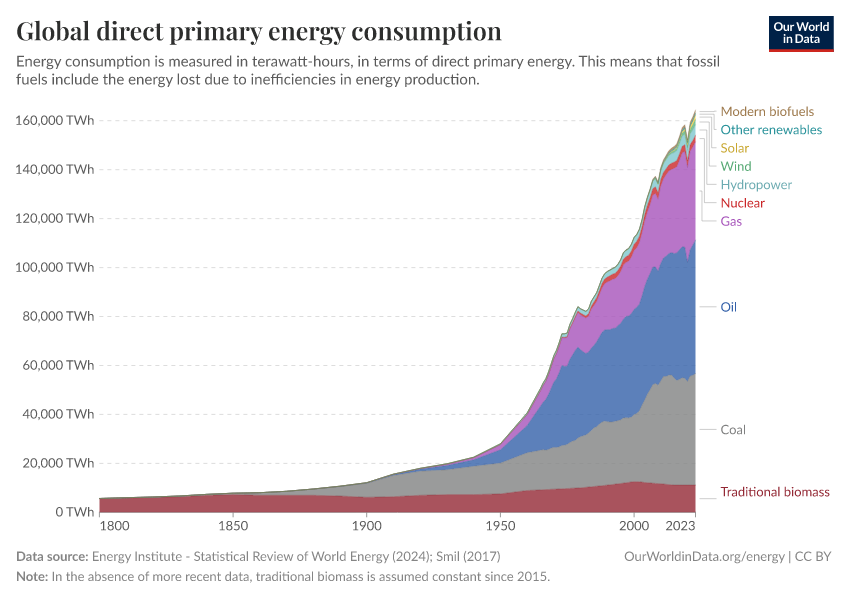
In terms of the warming, things are more encouraging. The delay in warming and the delay in draw-down sort-of cancel each other out. Modelling shows that, very roughly, net-zero also brings zero-warming. The draw-down of CO2 drops the climate forcing providing cooling. And that sort-of matches the delayed in-the-pipeline warming. (The detail of this 'matching' isn't entirely forthcoming. CH4 & N2O have shorter atmospheric residency and are substantial contributors to AGW [respectively 25% & 10% of CO2's forcing] and are surely significant in those 'matching' result.)
- It's not bad
jlsoaz at 07:02 AM on 11 June, 2026
Folks,
For those that may not have seen it, this research was published recently, and the author seems to have made a point of seeing to it that it showed up directly on skepticalscience.com
https://skepticalscience.com/how-many-people-does-heat-kill.html
How many people does heat actually kill?
Posted on 9 June 2026 by Guest Author
This is a re-post from The Climate Brink by Andrew Dessler
You have likely seen a headline like this: 62,000 people died from record-breaking heat in Europe:
which leads to here from a couple of months ago:
https://www.theclimatebrink.com/p/how-many-people-does-heat-actually
How many people does heat actually kill?
It depends on how you count it
Andrew Dessler
Apr 13, 2026
which leads to here from a couple of months prior to that:
https://agupubs.onlinelibrary.wiley.com/doi/10.1029/2025GH001537
The True Cost of Heat: Evaluating Heat-Related Mortality Estimation Methods in Texas
Jesse R. J. Rutt, Andrew E. Dessler
First published: 11 February 2026
https://doi.org/10.1029/2025GH001537Digital Object Identifier (DOI)
Accessibility issue? Request accessibility update.
Anyway, it looks like useful research in this area, and I think can help laymen such as myself, along with scientists, have more uniform and intelligible metrics to understand what is happening, and talk it over with our representatives where appropriate to see if they can understand how deadly this whole climate change crisis is.
- How many people does heat actually kill?
jlsoaz at 06:51 AM on 11 June, 2026Thank you for doing this research and additionally for making sure the skeptical science website has it noted. I have long thought and argued that it is a good idea if we can bring as much attention as possible to credible estimates of the net numbers of people whose lives have been harmed or ended by human-caused climate change.
When I have tried to sift through the peer-reviewed literature to try to make sense of what is out there (as a non-scientist, but as someone who can at least take a reasonable shot at understanding some of what is out there), I have found it intimidating to try to understand. As someone here on skepticalscience.com pointed out, to publish epidemiological research in this area, and adhere to credible methods, can be difficult in a somewhat similar way to how it was difficult for a solid body of work from various scientists was somewhat challenging to build up when the questions were around how to assess the dangers of smoking and how many deaths could be attributed to it. Likewise, we now seem to be going through a period where there are increasing numbers of peer-reviewed articles that come out that help us understand the best efforts of scientists to understand how much mortality is attributable to the different impacts of climate change.
I like your point about the different methods. The excess death method is the one that makes sense to me here for the purposes that I see.
For those seeking to take additional action, I think there are two worthwhile projects, where the door is open for capable people to do them:
- publish a full blown myth and science rebuttal article here on skepticalscience.com, with respect to the myth that “very few if any people are being killed or hurt” by human-caused climate change. As best I can tell, the closest this site comes to this is the top-level myth “it’s not bad”. There is a little bit of good rebuttal in that myth writeup, but I think this myth deserves its own full break-out and discussion and examination.
- publish a permanent web page for the world to see with a credible range estimate of the deaths that human-caused climate change has caused, is causing per year and per day, and will cause in the future.
- A look back at ‘An Inconvenient Truth,’ 20 years later
prove we are smart at 18:13 PM on 12 May, 2026From this self explanitory link here, theconversation.com/ten-years-on-how-al-gores-an-inconvenient-truth-made-its-mark-59387 "While most of the research into the impact of AIT investigates the direct effect on viewers, a potentially more significant impact is the film’s role in inspiring others to follow Gore’s example in communicating the issue of climate change to others.
Personally, I can attest to this influence. Before 2006, I hadn’t given much thought to the climate change issue. Watching AIT raised a number of questions about the human role in global warming.
With the issue salient in my mind, I got into conversations with family members who happened to reject the scientific consensus on climate change. This precipitated the founding of Skeptical Science, which led to me becoming a researcher in climate communication at the University of Queensland.
I’ve spoken to or know of many other climate communicators whose awareness of the issue dawned with their viewing of AIT. While the direct effect of the original screening of the film may have dissipated, the impact of those inspired to communicate the realities of climate change persists."
There would be very many grateful people, myself included, now fact informed by Skeptical Science thankyou. We all know it will need global cooperation to halt global warming. The tasks to mostly eliminate fossil fuel use is a complex but hopefully not an impossible one.
Maybe I'm being naive but this gathering of many countries for the first summit for transitioning away from fossil fuels gives me better hope, www.carbonbrief.org/santa-marta-key-outcomes-from-first-summit-on-transitioning-away-from-fossil-fuels/
- Human-caused climate change is unmistakably distinct from Earth’s natural climate variability
MA Rodger at 22:44 PM on 23 April, 2026Eric (skeptic) @7,
I was a little taken aback in your comment by you saying in the context of 'slow feedbacks' that "feedback increases CO2." That is not the normal understanding of 'slow feedbacks' which are the main difference between ECS & ESS.
Folk are usually rather vague about the nature of the things dividing ESS from ECS but carbon feedbacks isn't what I find mentioned (as per here). It's usually the changing vegetation & ice cover that gets the mention, along with deep ocean warming. Melting ice/permafrost and oceans will have an associated thermal-lag element but I can't see that aspect being very great. This suggests the big part of Δforcing remaining out-of-equilibrium after ECS arrives is albedo changes.
I see two points of note - (1) The value of ESS & (2) Its relevance to the AGW situation.
(1) The main evidence supporting a significant ESS is of course the temperature and the CO2 records. And those don't come with labels showing the Δforcing involved in ESS. However, they do show ESS significantly above the usual range of ECS values (ECS =+2.0ºC to +4.5ºC) although there remains the "fat tail" in ECS analyses which sits yet higher.
The accounts of ESS have in the past put ESS = 1.5 x ECS or ESS = 2 x ECS, whatever that means number-wise. The analysis is usually applied to pre-ice age data although the OP above has also used mainly ice-age data-points and spliced them onto Judd et al (2024). (The OP figures show the Cenozoic data points of Judd et al below 700ppm CO2. So not shown is the seven Cenozoic points at higher CO2 levels. If these high points were missing also from the OP's analysis, it may explain the discrepancy between the Judd ESS [+7.7ºC] and the OP ESS [+8.2ºC].)
Judd et al (2024) Fig 4b
Of course, the ESS analyses are dependent on these temperature and CO2 reconstructions. And there is significant variation here as Judd et al Fig 4a below and Rae et al (2021) fig 7 below-again demonstrate. (At 50My bp, Judd et al have CO2 at 1,200ppm & Temp at 33ºC while Rae et al have CO2 at 1,500ppm & Temp at 27ºC which would make a significant difference in caculating ESS.)
Judd et al (2024) Fig 4a
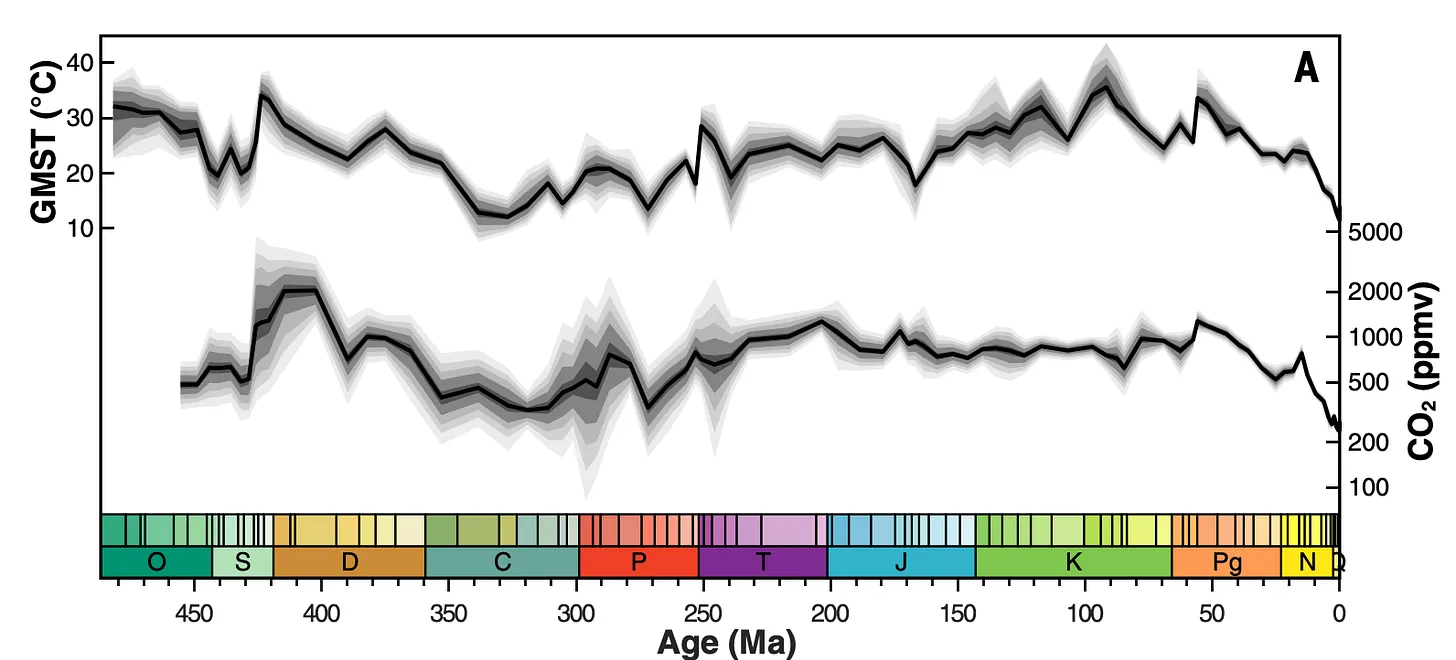
Rae et al (2021) Fig 6

So what value ESS? Presumably somewhere +5ºC to +9ºC.
But does it matter?
(2) Both ECS and ESS warming assumes the CO2 levels (or equivalent) are maintained until the respective equilibrium is reached. Give the draw-down of CO2 over the millennium will amount to roughly half the CO2 level increase of today, that maintenance of CO2 levels over the millennium would require a lot of CO2 coming from somewhere. The carbon feedbacks aren't that big. (See this CarbonBrief article which suggests natural feedbacks could amount to perhaps 15% or so.) If CO2 levels will not be maintained over centuries post-net-zero, that suggests that even ECS lacks relevance, although beyond the millennium and into ESS-territory there is no significant CO2 draw-down.
Of course, with AGW rapidly approaching +1.5ºC and the emissions still up where they shouldn't be, I don't think any reassurance given about AGW not reaching ESS levels or ECS levels (ECS levels which still may be higher than the 'usual range' due to the "fat tail"): any such perceived reassurance should not be allowed to lessen the efforts to rapidly cut emissions and reduce the bad effects of AGW we are creating for the future. (And note that the less-dreadful IPCC scenarios also include net-negative anthropogenic emissions post-net-zero to add to the natural draw-down.) - Human-caused climate change is unmistakably distinct from Earth’s natural climate variability
rkcannon at 17:14 PM on 18 April, 2026Rebuttal: Systems Analysis vs. Circular Reasoning
Subject: Response to Moderator Comments regarding Bhatta (2024) and Marks-Peterson (2026)
While the ad hominem labels—"amateur" and "naive"—provide a look into the moderator’s temperament, they do not address the physical and statistical discrepancies presented. As a Professional Engineer (PE), I prefer to evaluate the Transfer Functions of a system rather than the consensus of the "grown-ups."
1. On Circular Reasoning and System Gain
The moderator admits that the Nature paper (Marks-Peterson et al., 2026) requires "important contributions" from albedo and ocean circulation to explain a 2.5°C cooling while CO2 remained stable.
The Logic: To claim CO2 is the "key" control knob, only to demote it to a "passenger" whenever the data shows the planet cooling without its help, is circular reasoning.
The Math: Since the early 1900s, human CO2 emissions have increased by over 1,700%. If a seventeen-fold increase in the supposed "driver" results in a warming rate statistically similar to 1910, a rational systems analysis concludes the system is insensitive to that input.
2. The Failure of "Aerosol Masking"
The argument that mid-century cooling was "masked" by aerosols fails the spatial and modern test.
The Discrepancy: If industrial aerosols were a primary "cooling shield," China—with the world’s highest coal-related aerosol loading—should have been a global cool spot. Instead, China has warmed faster than the global average.
The Conclusion: You cannot invoke a "masking shield" to explain the 1940s cooling while ignoring its failure to stop warming in modern Asia. This is curve-fitting, not physics.
3. The Measured Driver: Albedo and the CERES Data
The moderator’s focus on 21-year surface trends ignores the most robust data set we have: the CERES satellite record.
The Data: Since 2000, CERES has measured a 0.8% drop in Earth’s albedo. This change in reflectivity has added roughly 2.7 W/m2 to the Earth's energy budget—effectively 100% of the warming forcing that the IPCC attributes to CO2 over the last 250 years.
4. The Missing "Fingerprint" and UHI Bias
If CO2 were the driver, the laws of physics dictate a "Tropical Hot Spot" in the upper troposphere. Decades of radiosonde and satellite data show this fingerprint is missing. The warming we do see is surface-based and highly correlated with Urban Heat Island (UHI) contamination. When you "homogenize" data by forcing rural stations to match urban trends, you aren't measuring global climate; you're measuring the encroachment of asphalt on thermometers.
Conclusion
Rational skepticism demands that models reconcile with empirical history. If the planet cooled 2.5°C with no change in CO2 in the Pliocene, and cooled for 40 years during a CO2 surge in the 20th century, the "Control Knob" theory is functionally dead. It is fascinating to watch the "Immune System" of this forum react; the Killer T-cells are working overtime to neutralize empirical data that looks like a "foreign invader" to the dogma. Nature doesn't care about your PhD or your moderation policy if your math is wrong. - 2026 SkS Weekly Climate Change & Global Warming News Roundup #14
One Planet Only Forever at 08:54 AM on 8 April, 2026Recent SkS posted items raise important awareness and understanding related to the historic challenge of dealing with the damage done by people who choose to fail to responsibly learn to self-regulate their actions. Thank you to Doug and Marc for curating and sharing the Weekly New Research, and to Baerbel, John, and Doug (again) for curating and sharing the Weekly News Roundups.
A related item in this week’s Climate Policy and Politics list is, Vermont Hits Back at Trump’s Effort to Block ‘Climate Superfund’ Law. It is about responsible leaders struggling to use the powers they have, State powers in Vermont, to penalize and limit the climate change harm done by the global team of undeserving economic winners.
Responsible leadership struggles to effectively discourage and disappoint people who want to benefit from being: less accepting of diversity, more harmful, and less helpful. Humanity, especially its leaders, has a history of struggling regionally and globally to collectively correct and recover from results of harmful pursuits of benefit and get the beneficiaries of the harm done to make equitable and adequate reparations. It is more challenging when members of a regional or global club of harmful unhelpful people Win positions of power that enable them to make-up inequitable rules and harmfully enforce rules to avoid being penalized and to threaten, penalize and punish everyone they believe is a potential threat to their undeserved perceptions of superiority.
People passionately pursuing being perceived to be “The Winners” are most likely “The Problem”.
Restricting a person’s freedom to continue to benefit from understandably unsustainable harmful actions - does not harm them.
Penalizing a person for benefiting from understandably harmful actions and making their penalty help those who have been harmed - does not harm them.
An earlier related item is the study The political economy of leaving fossil fuels underground: The case of producing countries, listed in Open Access Notables in Skeptical Science New Research for Week #13 2026.
The study discusses the challenging temptation to pursue ‘Private Profits and Rents’ while creating ‘Public Problems’ by extracting and exporting non-renewable resources, especially challenging for developing nations.
The developed economic system is fatally flawed in many ways. One of the major flaws is that it values the removal and use of non-renewable resources, and ignores the harm done (it also encourages more harm to be done because it is easier and more profitable to be more harmful). Non-renewable resources have no value when they are left in the ground.
And the challenge is made worse by unjust made-up rules like the 1994 Energy Charter Treaty (Wikipedia link) (ECT). The EU formally withdrew from the ECT in June 2024. But the ECT rules were include ‘protection’ of Fossil Fuel investment rewards for 20 years after withdrawal (to 2044).
Another recent related item is Quantifying climate loss and damage consistent with a social cost of carbon, the first item listed in Open Access Notables in Skeptical Science New Research for Week #14 2026, (which was the basis of news item, Past CO2 emissions may drive far bigger future economic losses, in 2026 SkS Weekly Climate Change & Global Warming News Roundup #13). The study explains that calculating the penalty owed today for fossil fuel harms of emissions-to-date should begin as early as 1980 and extend far into the future.
The following quote is regarding the earliest date it would be reasonable to say leaders would struggle to deny understanding the harmfulness of fossil fuel use:
To estimate when to begin counting emissions, we set our baseline ‘year of knowledge’ as 1990, or a year after the establishment of the IPCC. This is perhaps conservative: using text-based analysis of United Nations documents, other analyses set the date a decade earlier, and internal company documents reveal that some major emitters were aware of climate risks beginning around 1980.
Any pursuer of profit from fossil fuel use since 1990, and potentially since 1980, would struggle to credibly claim that they were unaware of the harm done by fossil fuel use. This reinforces the understanding that the Energy Charter Treaty was an unjust rule made-up by undeserving wealthy people.
Both studies also relate to Don Gillmore’s 2025 book, On Oil that I recently commented about (here @ comment 25 on the SkS post, After a major blow to U.S. climate regulations, what comes next?). In addition to presenting the general understanding that Alberta and other regional populations are easily tempted to pursue benefit from harmful fossil fuel use, and things really took off in about 1980, the chapter titled The Battle Begins opens with the following reinforcement of 1980 as a legitimate start date for evaluating penalties to apply to beneficiaries of harmful fossil fuel use:
In 1980, Ronald Reagan became president of the United States and appointed James Watt, a determined anti-environmentalist, as secretary of the Department of the Interior. Watt described environmentalists as “a leftwing cult dedicated to bringing down the type of government I believe in,” and refused to meet with them. Watt was a devout Christian who believed the End Times were near. “I do not know,” he said to Congress in 1981, “how many future generations we can count on before the Lord returns.” In the meantime there wasn’t much point in preserving the environment. Reagan concurred, telling television evangelist Jim Bakker, “We may be the generation that sees Armageddon.”
Anne Gorsuch, a lawyer who was scornful of climate science (and whose son Neil sits on the Supreme Court), was given the role of Administrator of the Environmental Protection Agency, and cut the EPA budget by 22 percent and staff by almost 30 percent. Enforcement declined by 79 percent during her first year. She hired people from the industries the EPA was supposed to be regulating, tried to weaken pollution standards, and facilitated the use of restricted-use pesticides. She resigned in 1983 amid scandal, ... Her most lasting legacy may have been to solidify political battle lines around oil and the environment: If you were a Republican, you were pro-development and, if not anti-environment, at least anti-environmentalist. It began as a corporate issue, then became a political issue and to some extent a generational issue, and finally, like so much these days, it became a tribal issue.
The formation of the ECT in 1994, 14 years after 1980, should be understood to be a misleading attempt to unjustifiably obtain benefit and protect against the loss of undeserved perceptions of superiority. And since 1980 it has continually become clearer that investments in new fossil fuel pursuits should be considered to be bets in the marketplace that deserve whatever ‘penalties or losses of opportunity for benefit’ happen. The people who benefited from the delay of transition away from fossil fuel use since 1980, particularly business leaders and investors, could and should be penalized rather than be protected and rewarded. ‘Legal creations’ like the ECT should not be able to be used to evade penalty for past ‘bad bets made on benefiting from fossil fuel use’.
There is a long diverse history of harmful pursers of personal benefit seriously damaging and delaying the development of sustainable improvements for the future of humanity. The, now officially discredited, Doctrine of Discovery developed as Papal Bulls in the 1400s (Link to Canadian Museum for Human Rights) and was formally brought into American Law by US Supreme Court Justice John Marshall in 1823 (Link to Wikipedia). It was misleading marketing to excuse undeniably harmful colonialism, racism, and slavery. The incorrect beliefs about the ‘fundamental superiority of a sub-set of humanity’ persist in the supposedly most advanced societies today, and contaminate the thoughts and actions in many developing societies, allowing neocolonialism (link to Wikipedia) to flourish.
People passionately pursuing being perceived to be “The Winners” are most likely “The Problem”.
I have also been re-reading Thomas Piketty’s 2021 book, A Brief History of Equality (first english translation 2022). The following are selected related quotes:
From Chapter 9, Exiting Neocolonialism, which includes a sub-section with the heading, The Pretenses of International Aid and Climate Policies.
The battle for equality is not over. It must be continued by pushing to its logical conclusion the movement toward the welfare state, progressive taxation, real equality, and the struggle against all kinds of discrimination. The battle also, and especially, involves a structural transformation of the global economic system [including reparations (penalties) for harms done by past emissions, and no compensation for people claiming to be harmed by restrictions of their harmfulness and penalties for being harmful] .
…
Our current economic organization, which is founded on the uncontrolled circulation of capital lacking either a social or environmental objective, often resembles a form of neocolonialism that benefits the wealthiest persons. This model of development is politically and ecologically untenable. Moving beyond it requires the transformation of the national welfare state into a federal [multi-national] welfare state open to the global South, along with a profound revision of the rules and treaties that currently govern globalization.
...
We must also emphasize the extreme hypocrisy that surrounds the very notion of international aid. First, public aid for development is much more limited than is often imagined: in all, it represents less than 0.2 percent of the global GDP (and scarcely 0.03 percent of the global GDP for emergency humanitarian aid). In comparison, the cost of climatic damage inflicted on poor countries by past and current emissions from rich countries amounts by itself to several points of the global GDP. The second problem, which is not a detail [not a minor technicality], is that in most of the countries supposedly “aided” in Africa, South Asia, and elsewhere, the amount of outflow in the form of multinationals’ profits and capital flights [evading taxation] is in reality several times greater than the incoming flows from public assistance, …
Chapter 10 sub-section with the heading, Climate Change and the Battle Between Ideologies.
All the transformations [sustainable improvements reducing harmful inequality] discussed in this book, whether the development of the welfare state, progressive taxation, participatory socialism, electoral and educational equality, or the exit from neocolonialism, will occur only if they are accompanied by strong mobilizations and power relationships. There is nothing surprising about that: in the past, it has always been struggles and collective movements that have made it possible to replace old [harmful unsustainable] structures with new institutions.
…
Environmental catastrophes are, of course, among the factors that may help accelerate the pace of change. In theory, we could hope that the mere prospect of these catastrophes, whose future occurrence scientific research has increasingly confirmed, might suffice to provoke adequate mobilization. Unfortunately, it is possible that only tangible concrete damage greater than we have already seen will manage to break down conservative attitudes and radically challenge the current economic system.
…
In the darkest scenario, the signals will come too late to avoid conflicts between nations over resources, and it will take decades to realize possible, as yet hypothetical reconstructions [sustainable developments like Diversity, Equity and Inclusion pursuits to mitigate and correct high levels of inequality] [we are potentially already experiencing that Darkest Scenario].
…
We can also foresee hostile reactions towards countries and social groups whose ways of life have contributed most to the disaster, starting with the richest classes in the United States, but also in Europe and the rest of the world.
…
the global North, despite a limited population (about 15% of world population for the United States, Canada, Europe, Russia, and Japan), has produced nearly 80% of the carbon emissions that have accumulated since the beginning of the Industrial Age.
…
However, we have to qualify the idea that a green Enlightenment will be likely to save the planet. In reality, people have suspected for a long time – indeed almost since the beginning of the Industrial Revolution – that this accelerated burning of fossil fuels might have harmful effects. If reactions have been slow and remain so limited even today, that is also and especially because the economic interests at stake are considerable, between countries as well as within them. For the countries most affected (in particular in the global South), the attenuation of the effects of a warming climate and financing for measures to adapt to it will require a transformation of the distribution of wealth and the economic system as a whole, and this in turn will involve the development of new political and social coalitions on a global scale. The idea that there might be only winners is a dangerous and anesthetizing illusion that must be abandoned immediately.
It all closes back to the SkS items that this comment started with.
People passionately pursuing being perceived to be “The Winners” are most likely “The Problem”.
- Why Science Communication Fails: How to Break Down Misleading Arguments and Inoculate Against Misinformation
Just Dean at 01:17 AM on 12 March, 2026Bob,
I appreciate you engaging.
However, I would really value specific reviews and comments of my efforts to tell the climate change story with one diagram. My diagram overlays the deep-time equilibrium relationship with glacial–interglacial data from the past 800,000 years and instrumental observations from the industrial era, along with a representative future scenario. Viewed together, these datasets place contemporary climate change within a broader Earth-system context. Skeptics and contrarians often cherrypick individual plots of CO2 or temperature or individual lines of evidence. It is harder when they are all plotted together on a common axes.
I have not seen this combination of datasets anywhere before and so I would really value reviews and feedback from the skeptical science community.
Here's the link again to my Substack post: [Link]
- Why Science Communication Fails: How to Break Down Misleading Arguments and Inoculate Against Misinformation
Just Dean at 19:47 PM on 10 March, 2026John's discussion of cherrypicking — one of the five FLICC techniques — resonated with me in a specific way. One of the most effective forms of cherrypicking in climate communication isn't the deliberate kind; it's the inadvertent kind. When we present the modern instrumental record of CO₂ and temperature in isolation — as most data visualizations do — we're unintentionally handing skeptics an opening. The data is hanging out in parameter space with no reference point, vulnerable to the response: "the climate has always been changing."
As an engineer and former experimental physicist, my instinct when evaluating any measurement is to overlay independent diagnostics. If they converge, you have something real. Applied to climate, that means placing three completely independent datasets on the same CO₂–temperature axes: the deep-time equilibrium relationship from Cenozoic reconstructions spanning 66 million years (Judd et al., Science 2024), glacial–interglacial variability from Antarctic ice cores covering the past 800,000 years, and the modern instrumental record since 1850. These datasets were developed by different scientific communities, using different methods, to answer different questions. When plotted together, they don't just approximately agree. They land on top of each other.
What this ensemble makes structurally harder is cherrypicking. To dismiss the composite, a skeptic must simultaneously discredit three independent lines of evidence — geological proxies, ice cores, and direct measurement — each developed without reference to the others. More importantly, the composite provides a direct visual answer to the "climate has always been changing" myth. Yes — and here are 66 million years of it on one plot. What it shows is that nowhere in that entire record does Earth evidence the specific combination of CO₂ concentration and global temperature that exists today. It is not the individual values that are unprecedented. It is the combination.
At the end of the episode, Nate asked John what individuals can do. His answer — that we each bring something different to the table — struck me as both honest and important. I'm not a climate scientist. But the instinct to overlay independent diagnostics, standard practice in experimental physics, turned out to be useful here.
For anyone interested, the most recent post developing these arguments is here: [link]
- Trump just torched the basis for federal climate regulations. Here’s what it means.
Bob Loblaw at 01:43 AM on 3 March, 2026nigel @ 38:
Going back in history, many trades operated guilds that helped identify skilled craftsmen. But as you point out, there is a fine line between controlling entry to the association to ensure that the people in it are truly skilled versus controlling entry to maintain some sort of privilege and exclusivity (and economic advantage). When it comes to regulation, the equivalent to the latter is regulatory capture (which I mentioned in #10). Someone has to watch the watchers, to make sure that the system is kept honest.
Even for something like engineering, where a person is accredited to design structures, there is a dependency on other accreditation processes. An engineer designing a building does not design and test the beam that will be used - they buy one "off the rack" from a company that makes them and provides specifications of the load it can handle. And that company will need to test their beams according to some sort of independent methodology developed by an accredited standards association.
I would argue that climate change is indeed a topic that has massive health and safety implications for the public, but as you say it is a much less tangible and immediate than things such as health outcomes, electrical safety, etc. The current EPA has codified this by barring the use of any indirect costs in the economic analysis of regulations.
The implications that can arise from climate change are also influenced by many other factors, which makes it easy for the contrarians to engage in a variation of whataboutism - assigning blame of any observed bad outcomes on something else. The tobacco industry perfected this technique in delaying actions against tobacco's health impacts.
Another issue with something like climate change is that is it not a well-defined target zone of study. Atmospheric science will help you understand why a region's climate is what it is, and how it might change, but to understand sea level rise you need to know oceanography. And to know food production implications, you need to know agricultural science. And to know flooding risks, you need to know hydrology. And to know ecosystem stresses, you need to know ecology. Thus "climate change" is by its nature an extremely multidisciplinary subject. You need a lot of people cooperating to put it all together. No single person can do it all alone, and the fake skeptics that act as if they know it all are clearly working outside their area of expertise. The width of the “climate change” net can be seen by the tremendous variety of references listed in things like the IPCC reports. The shallowness of the contrarians' analysis can be seen in the highly-selective and self-referential lists of publications they include in their reports.
In the current Trump administration, the phrase "conflict of interest" takes on new meaning - "Only my interests matter, and the only conflict is how others dare to challenge me".
- Is Nuclear Energy the Answer?
One Planet Only Forever at 06:52 AM on 22 February, 2026A followup to my comment @460,
The US leadership-of-the-moment’s push to deploy massive amounts of small nuclear reactors without rigorous proof that it will be safe continues as described in the following report:
US military airlifts small reactor as Trump pushes to quickly deploy nuclear power, reported in NPR, by Associated Press, Feb 21, 2028.
This is an example of misleading marketing abused by gamblers (inventor/investors) who will try to harmfully maximize their benefit from potentially bad bets (or bad ideas). The harm will be discovered in the future (because the innovator is not required to rigorously investigate potential for harm). And it is likely that the promoters of the ‘innovation’ will obtain benefits that cannot be taken away from them in the future when the harm they benefited from causing becomes undeniable – like the fossil fuel climate impact issue.
Selected quotes from the article:
Energy Secretary Chris Wright and Undersecretary of Defense Michael Duffey, who traveled with the privately built reactor, hailed the Feb. 15 trip on a C-17 military aircraft as a breakthrough for U.S. efforts to fast-track commercial licensing for the microreactors, part of a broader effort by the Trump administration to reshape the country's energy landscape.
...
Skeptics warn that nuclear energy poses risks and say microreactors may not be safe or feasible and have not proved they can meet demand for a reasonable price.
Wright brushed those concerns aside as he touted progress on Trump's push for a quick escalation of nuclear power. Trump signed a series of executive orders last year that allow Wright to approve some advanced reactor designs and projects, taking authority away from the independent safety agency that has regulated the U.S. nuclear industry for five decades.
...
The minivan-sized reactor transported by the military is one of at least three that will reach "criticality" — when a nuclear reaction can sustain an ongoing series of reactions — by July 4, as Trump has promised, Wright said.
"That's speed, that's innovation, that's the start of a nuclear renaissance," he said.
...
Edwin Lyman, director of nuclear power safety at the Union of Concerned Scientists, said the transport flight — which included a throng of reporters, photographers and TV news crews — was little more than "a dog-and-pony show" that merely demonstrated the Pentagon's ability to ship a piece of heavy equipment.
The flight "doesn't answer any questions about whether the project is feasible, economic, workable or safe — for the military and the public," Lyman said in an interview.
Rapid scale-up to power AI data centres could see 1000s of these ‘potential disasters’ in operation by 2030. The expected global power demand for AI data centres by 2030 is over 1000 TWh. Assuming a 5 MW generator, like the one reported to have been shipped by the military on Feb 15, 2026, operates at full power 24 hrs a day every day it would produce 5 x 24 x 365 = 43,800 MWh = 0.0438 TWh. (Also note that a typical AI data centre requiring 100 MW would need twenty 5 MW generators).
Poorly regulated, unrestricted, innovation in pursuit of personal benefit has a history of producing harmful results that Others have to deal with. New Nuclear appears to be rapidly becoming a New Future Disaster promoted by Master Misleading Marketers.
- Is Nuclear Energy the Answer?
Bob Loblaw at 00:10 AM on 18 February, 2026Pollution Monster:
In your own link, the statement is that "Nuclear energy now provides about 9% of the world's electricity..." [emphasis added]. The world uses a lot of energy in forms other than electricity (Michael's "all power"). Beware the denominator.
As for the comments policy, there are two relevant statements:
- "Though we believe the only genuine debate on the science of global warming is that which occurs in the scientific literature..." [in the opening paragraph]
- "Comments consisting of simple assertion of a myth already debunked by one of the main articles, and which contain no relevant counter argument or evidence from the peer reviewed literature constitutes trolling rather than genuine discussion." [In the "No sloganeering" section]
Although those sections are not a "thou shalt under all circumstances" rule, there is an expectation that opinions expressed here need to have more evidence and support that just a reference to another opinion.
- Is Nuclear Energy the Answer?
PollutionMonster at 18:21 PM on 17 February, 2026@michael sweet 455
"To me, the most important issue is there is not enough uranium to generate more than about 5% of all power To me, the most important issue is there is not enough uranium to generate more than about 5% of all power"
Nuclear enegy already generates 9% of all power. Where are you getting the 5% number?
No problem about the typo.
"The comments policy at Skeptical Science asks for strong references to support your position. Most blogs do not count."
Ok, still kind of new here thanks for pointing this out, I just looked over the comments policy didn't see that. I do understand the scientific method, but I am new to the entire nuclear angle of climate change. I plan for this to be my last comment here for a while until I read your previous comments as suggested, been busy at work so may take awhile.
- Is Nuclear Energy the Answer?
michael sweet at 10:06 AM on 17 February, 2026Pollytion Monster:
Perhaps you do not understand the scientific method. Scientists spend much time measuring and experimenting to learn new information. Then several experts write a paper about what they have learned. They submit the paper to a scientific journal where an editor who knows about the subject finds several unbiased experts who review the article for errors. Then the article is published. An article is not necessarily correct, but it has been written by experts and screened for errors.
Your blog post is written by a neurosurgeon who claims no experience in energy systems. It accepts nuclear industry propaganda as fact. Bob Loblaw has identified several serious errors in it. There are more errors that he did not bother to point out.
If your doctor tells you that you need surgery do you ask your barber whether you really need it?
The comments policy at Skeptical Science asks for strong references to support your position. Most blogs do not count. Your blog does not address the issues raised in Abbott 2012.
For example, there is not enough uranium to generate a significant amount of world power. Money spent on nuclear is wasted, it should be used to build out renewable energy.
Read the rest of the posts in this thread, all of your questions have been addressed.
Nuclear power is too expensive, takes too long to build and there is not enough uranium.
- Zeke's 2026 and 2027 global temperature forecasts
prove we are smart at 07:30 AM on 24 December, 2025Tis the season to be jolly, tralala, tralala, lal,lal,lar... Occasionally I still get optimistic but less frequently now. I agree with Zeke's conclusion {from a link above} "Consilience of evidence
If we were solely relying on drawing trend lines through cherry-picked periods in surface temperature records, I too would be pretty skeptical about making strong claims regarding a recent acceleration in warming.
But we don’t just have surface temperatures:
Acceleration in surface temperatures is more readily apparent and significant when removing natural variability.
Our climate models expect a faster rate of warming under current policy scenarios.
We have a clear mechanism in declining aerosol emissions to explain a recent acceleration.
Acceleration is apparent in both ocean heat content and earth energy imbalance measurements.
In my view this consilience of evidence tips the scale toward pretty clear acceleration in recent years. I hope I am wrong – I’d prefer to live in a world where the rate of warming was flat or falling – but the evidence is becoming too strong to ignore." Here is his link from the re-post article above, www.theclimatebrink.com/p/the-great-acceleration-debate
But as I have learnt, delving into the links and especially the comments to those links,reveal many new avenues of thought.
This link from comments from the James Hansen's link on his recent estimates (above), has really lined up with my thoughts. Can anybody explain to me why this author Steven J Newbury is wrong? theuaob.substack.com/p/the-agency-trap-why-we-must-fail
- Ice age predicted in the 70s
angusmac at 15:29 PM on 18 November, 2025BL@165
I have read, and I do understand, the papers presented in PCF-08. I have also read, and I do understand, those papers presented in my database.
I also reiterate (although you keep denying it) that my methodology was identical to PCF-08. However, I will amend my paper to highlight that my database is limited to papers that include climate change trends that are “relevant to, time scales from decades to a century” so that anyone who reads my paper, and the database, will be able realise that I have used the same methodology as PCF-08.
Regarding your purported rebuttal of my database at:
https://skepticalscience.com/70s-cooling-myth-tricks-part-I.html
https://skepticalscience.com/70s-cooling-myth-tricks-part-II.html
My database, and the review therein, is different from the NTZ papers that you quote. Nevertheless, I shall conduct an independent assessment of the above 2018 SkS “Zombie Myth” posts and revert to you on how those posts compare with my database vis-a-vie completeness, content, and accuracy. Perhaps my assessment may turn out to be a red team review of your “Zombie Myth” posts.
Regarding your comment that PCF-08, “is now 17 years old – almost old enough to drink in most jurisdictions” is trite. Science, and scientific issues, are never too old to be revisited, and corrected if necessary.
- Ice age predicted in the 70s
Eclectic at 17:17 PM on 16 November, 2025Angusmac @168 :
Yes, I like your idea of adding a Purple Team to the color mix.
Though if you are indeed working on the Saudi project called "The Line" . . . then I suspect you are no longer on the Red Team nor the Blue Team nor the Purple Team ~ but that you are transitioning onto the Gray Team (thus called, because the project designers are rapidly developing gray hairs).
As for a Red Team attack on the mainstream climate science, IIRC there has been no such "investigation" for a decade at least. #The last attempt I can cite is the January 2014 climate workshop held by the American Physical Society [a Society re Physics, not Yoga].
~ The transcript of the "investigation" is about 570 pages. Prominently featured is the bright intellect of Dr Steven Koonin. Koonin had much to say himself, but the whole workshop was an armchair discussion rather than a scientifically-illuminating thrust & riposte featuring cogent points.
~ In short, "Team Skeptic" was a great flop, and Koonin showed that his intellect had been sabotaged by his own subconscious (in other words, he was a victim of his own Motivated Reasoning on the climate issue).
So I would be happy to hear if there has been any genuine & successful refuting of the mainstream [i.e. consensus] climate science in recent decades.
Sad perhaps ~ but at this stage of things, the commissioning of a Red Team to attack/review the mainstream science . . . would be like gathering an engineering team to design wheels to fit on the bottom of a ship ~ a ship that had already sailed many years ago.
- Ice age predicted in the 70s
Eclectic at 19:32 PM on 8 November, 2025Angusmac @159 :
No ~ my query was with regard to your motivation for pursuing this long-out-of-date topic.
This thread was started in 2007. That is 18 years ago. Even then it was rather outmoded, and, as I point out ~ the science has moved on, well and truly. And as you look through the thread's posts, you will find several oddball commenters ~ but overall, the topic has not received much attention. Rightly so. The whole topic subject is of only minor (dare I say, trivial?) historical interest, and is of almost zero relevance to today's climate problems.
So that is why I ask for you to explain your motivation. Are you a fervent amateur historian? Have you discovered a Nobel-Prize-eligible factor of critical value to the world? Have you looked inside yourself, and reflected [as we all should] on your internal processes of thought, to understand yourself? I am sure that other readers also would benefit from understanding your motivation here.
If you have a Quixotic mindset, then SkepticalScience has at your choice many threads on the modern relevance of wind turbines (or windmills, as our respected leader calls them).
- Climate sensitivity is low
Bob Loblaw at 08:52 AM on 7 November, 2025SCaGW2 @ 390:
Well, the "journal" is the publishing house of the organization "Science of Climate Change", which lists Hermann Harde as its editor. Harde is a well-known Norwegian "skeptic" with a reputation for misinformation. The organization's web page outlines their publishing purpose:
The objective of this journal was and is, to publish – different to many other journals – also peer re-viewed scientific contributions, which contradict the often very unilateral climate hypotheses of the IPCC and thus, to open the view to alternative interpretations of climate change.
You can't express a predetermined agenda much more clearly than that.
As a result, there seems little reason to think that the paper represents an unbiased analysis. A very short glance at the paper suggests that his "climate model" is extremely simplistic. Huijser's name seems pretty new in the climate skeptic camp, and Google Scholar doesn't seem to pick up any publications in credible climate science journals.
Is there anything in the paper that you find remotely interesting? It looks like yet another self-published analysis from a highly unreliable source. My personal view is that it is probably not worth reading in depth, but if there is an aspect of it that you think is interesting, please tell us.
- Ice age predicted in the 70s
Philippe Chantreau at 03:59 AM on 3 November, 2025As I look further, my skepticism increases, although I may have mistaken some papers as cooling when they say neutral. In fact, they are likely neither, or irrelevant. Another example: Eichenlaub (1970) This one is strictly about Lake effect snow events in the Great lakes region, makes no claim about global climate and contains these words in the conclusion section: "While this increase in lake effect snowfall cannot, as yet, be ascribed to any single cause, a tendency toward colder winters recently in
southwestern Michigan may be partially responsible for the upward trend in that area. Further evidence is needed before valid conclusions can be drawn regarding the role of air pollution in this climatic change."
This paper was an attempt at finding possible causes to a recent past change in a specific region. It makes no mention at all of global climate, or any forecast of future trends, and stops short at stating anything with any level of certainty.
- New Book - Climate Obstruction: A global Assessment
One Planet Only Forever at 13:07 PM on 23 October, 2025wilddouglascounty @1,
I downloaded and read the ‘Book Summary’ last week. This book was presented in last week’s Skeptical Science New Research for Week #42 2025 (it is the first item in the ‘From this week's government/NGO section:’).
The book title at the beginning of the text in the green box at the top of this post is a link to the book’s webpage. The Book and the Book Summary can be downloaded from that webpage.
I have just re-read the summary and offer the following:
- Chapters 11 and 12 (presented as items 12 and 13 in the summary) appear to be almost exclusively related to your interest.
- Chapters 2, 5, and 9 (summary items 3, 6 and 10) appear to include some content addressing your interests.
- The other chapters of the book may include content related to your interest but the summary does not specifically indicate that they do.
I would add the following action as something helpful being done. The UK government Bill “Elected Representatives (Prohibition of Deception)” to “Create offences in relation to the publication of false or misleading statements by elected representatives; and for connected purposes”. It was “Ordered, by The House of Commons, to be Printed, 28th June 2022”
The following is a sequence of some of the reporting on actions by the Welsh government.
- 2024-07-03: Breaking: Welsh government commits to ban lying in politics - by Compassion in Politics
- 2025-02-19: Welsh politicians caught lying could lose their seats – BBC News
- 2025 February: Welsh Parliament: Standards of Conduct Committee: Individual Member Accountability - Deliberate deception
- 2025 May 3: This Welsh lawmaker is trying to make it illegal for politicians to lie – CBC Radio
- 2025 October 6: Draft Bill giving Welsh voters power to remove Senedd Members published
And I will finish by raising a new concern: The deliberate harmful misleaders have been ruining the term “Common Sense” by calling their misleading nonsense “Common Sense”.
Trump uses 'common sense' to make a political point. It has populist appeal – NPR News
The harmful misleaders have also been ruining the term “Reasonable” by calling their irrational unjustifiable unreasonable claims “Reasonable”.
Developing sustainable improvements for humanity is challenged when people are misled to believe that Unreasonable Nonsense is Reasonable Common Sense.
Regressing to the days when “the Earth is Flat and the center of the universe” was considered to be reasonable common sense is not sustainable improvement.
- New Book - Climate Obstruction: A global Assessment
wilddouglascounty at 00:17 AM on 23 October, 2025Looks to be an impressive compilation of the climate denial industry. Does it add significantly to the already existing body of evidence, i.e. does it provide any new tools for those in the trenches listening to the new wave of climate denial that seems to be cresting in our political and financial circles? Specifically:
-The divestment from fossil fuels and investments in conservation/renewables movement seems to be hitting a real wall and is being reversed in several circles. Does this compilation provide any effective strategies for managing and reversing this change of direction and getting back on track? Who in the financial and investment circles are doing this and how can we assist them under the current assault coming from so many corporate reversals who are walking away from their sustainable goals?
Dismantling the scientific infrastructure that is providing information collection essential to understanding our climate in publicly funded collected data thru NOAA, EPA, as well as corporate funding for that matter, etc. seems to be going full speed ahead. Does this book provide any defensive bulwarks that can address this horrendous active suppression and dismantling of the scientific endeavor that has provided our current understanding of the dynamics of our climate as it relates to human activities?
I haven't read this book, but it seems like it's a great effort that describes PAST efforts at misinformation and delays. But I'm really worried that our efforts for understanding this obstruction is not what is currently needed. Understanding the type of gasoline used, how it was poured through the house and who brought the match to light it is important in the long run, but what we need now is a fire truck, plenty of water and firefighters to put out that fire, because the house is on fire RIGHT NOW and we are inside that house!
I want to see who the firefighters are right now, who is putting out the most water most effectively, and how we can support the most effective efforts. Like with so many other fronts, we are all shocked at how quickly our efforts have been crumbling under this assault. But unless we can take our understanding and translate it into counteracting and reversing the assault, it will become a largely irrelevant historical exercise.
Bill McKibben has done an admirable job in providing a counter narrative, but he seems to be pretty lonely out there. I'm hoping that Skeptical Science can play a role in actively highlighting successful efforts whereever they can be found and thereby helping us all weather the current storm.
- Is this the most embarrassing error in the DOE Climate Working Group Report?
Bob Loblaw at 04:35 AM on 17 October, 2025History suggests that the authors of the DOE report are largely incapable of being embarrassed. Their determination to spread their message, in spite of numerous criticisms and corrections, is quite remarkable.
Charlie Brown @ 4:
That is an interest take: that they argue 3 W/m2 is small compared to the total radiative flux. It seems that they are using the "it's a trace/small amount compared to [X]" template that has been used in a variety of poor contrarian arguments; vis a vis:
Anthropogenic emissions are small compared to natural cycles
Are there any other arguments that fit this same template?
DenialDepot had a fun post (15 years ago!) on how to cook a graph by playing with the Y-axis. Of course, in its standard mocking of the contrarians, DenialDepot accuses Skeptical Science of cooking the graphs by not expanding the Y-axis to make the change look minuscule. (DD looked at sea ice.) DD shows the "proper" method should be to compare the lost sea ice area to the total area of the earth. In DD's words, "That's far more clear. Immediately I am having trouble seeing the sea ice. This is good. If you can't see it, it's not a problem."
It's like a defendant in court arguing "how can it be grand larceny? I only took $100,000. He has billions."
- Climate change is accelerating, scientists find in ‘grim’ report
Evan at 19:58 PM on 19 September, 2025MA Rodger@11, thank you very much for your detailed answer and for the explanation about AF.
Katharine Hayhoe has an analogy about driving on a dead-straight road in Texas and saying that "relying on past climate patterns is no longer a reliable guide for the future because of the speed of climate change." (this is the Google AI version of her quote). It is reassuring in a sense that AF has been steady for so long, but ...
Despite the data you showed, because we are pushing the climate so hard (CO2 rising on average 2.5 ppm/yr), I remain skeptical that we can really be sure that AF will remain constant into the future. But for the sake of harmony, can we figure out wording that we all agree on.
Do you agree that climate scientists use 2C warming as a guesstimate of the point at which we begin to lock in warming in the pipeline? In other words, even if we achieved Net-0 after crossing the 2C warming threshold, do climate scientist agree that at that point we would have locked in additional future warming?
A lot of this is semantics, because the socio-political inertia does not give me much hope that we will put on the brakes before we cross the 2C barrier, but I would like to arrive at a common understanding so that my posts here don't seem to be at odds with professional climate science.
- Climate change is accelerating, scientists find in ‘grim’ report
Evan at 20:05 PM on 18 September, 2025MA Rodger@7, thanks for the review of the carbon cycle. I understand the principles here: I just don't accept the confidence with which the claims are made that carbon sinks will take care of carbon sources if we were to reach net-0.
But my real point is this. I caution people to listen less to all of the optimistic talk about how emissions are starting to flatten out and getting ready to decline, and watch instead what is happening to the Keeling Curve, because it represents the net effect of the carbon cycle. If the carbon cycle is really going to clean up our mess, then that should be reflected in the Keeling Curve (I understand that currently about half of our GHG emissions are absorbed by the oceans and the land).
But so far the Keeling Curve continues to accelerate upwards, and the annual average rate of increase is a colossal 2.5 ppm! I wonder if people really appreciate the magnitude of that kind of push on our environment?
For the Keeling Curve to continue its upward acceleration in the face of so much positive, optimistic emissions news means that either the carbon cycle is not doing what we thought it should be doing, or our emissions estimates underestimate reality. Either way, we are a long, long way from achieving anything like Net-0.
Perhaps my skepticism originates because I am a professional modeler and understand the uncertainties of such modeling. But beyond that, I am concerned about the confidence placed in our emissions estimates. The US is heading down a path to obfuscate climate science. Certainly such obfuscation is occurring elsewhere. For these reasons and more I encourage people to follow the trajectory of the Keeling Curve, because in the end, it is rrepresents the unvarnished truth about what is really happening to the carbon cycle.
- Climate Adam - The Dumbest Climate Denial Ever?
Bob Loblaw at 23:36 PM on 3 September, 2025There is an old joke in places that I have lived where people say "if you don't like the look of the weather, wait five minutes - it will change".
Likewise, calling this "the ... dumbest ever" may not last long. Don't underestimate the limits of arguments presented by the contrarian world.
In the video, I particularly liked where Adam highlights the contradiction between "its called summer" and "you can't predict the weather two weeks from now, so you can't predict climate" (number 63 on the Arguments list). As Adam says, identifying seasons as a recurring cycle is, in fact, a climate prediction. A reliable one. Not just because we have many observations of the cycle to look back on - but because we understand the physics involved.
Physics explains the earth's orbital patterns, and those orbital patterns explain the distribution of solar energy arriving at different locations and times on earth, and physics explains how those differences and cycles lead to the seasons. A year from now, the northern hemisphere will again be experiencing "summer". A climate prediction.
Skeptical Science used to have a list of the contradictions in contrarian arguments. It became too difficult to maintain.
- It's not bad
Eclectic at 10:45 AM on 30 July, 2025Jlsoaz @ 428 :
Not to be argumentative ~ which I never am . . . well, hardly ever ~ and I never say a big big D-—
[unlike in the days of Gilbert & Sullivan, a big big D- nowadays stands for Denier ]
.... Though to reply to you seriously :
~ My opinion is not strong, but merely ordinary.
~ SkepticalScience is a volunteer website, and thus suffers from limitation in time & resources to tackle/review any issue . . . and so prioritization should always be front-of-mind. All of which is a way of suggesting that it would be most welcome if you yourself submitted (to the Editorial Board) a cogent analysis of the Attribution current status.
~ Yes, I agree with you that "attribution" of property damages & deaths does upset denialists. But denialists are delicate creatures, and are sensitive to all sorts of issues. And upsetting denialists does not change their opinions. They simply carry on digging in deeper with their Motivated Reasoning.
~ It is the politician and the Man-in-the-street who can be influenced by occasional headlines pointing out the Attribution component. Yet the cry of Attribution is like the Boy-who-cried-Wolf . . . the result can easily be a public numbness as (in the years between major hurricane and flood damage) the public's life returns to normal or normal-ish. Especially since it is so easy for denialists to publicly cloud the issue by pointing out the fuzziness of the data . . . and how the local flood/hurricane was ever-so-much worse in Grand-pappy's time back in 1920 or 1880 or whatever.
~ My ordinary opinion is that you will have greater success by using arguments related to pocket-book issues (and perhaps: refugee migration increase). Priorities !
- It's not bad
jlsoaz at 00:43 AM on 30 July, 2025Eclectic at post number 427:
In my opinion,
it could be useful to do some thinking around the wording of the myth that needs busting here. Is it "Myth: Nobody has died from global warming."? Or perhaps it is something like:
Myth: Under strict defensible peer-reviewed scientific methods, deaths, health impacts and property damage cannot be attributed to global warming.
Reality: Under strict defensible peer-reviewed scientific methods, deaths, health impacts and property damage are difficult to attribute to any one cause such as global warming, but probability estimates can be made, and over time it becomes more clear whether a given cause is having certain impacts, even when there are many other possible factors. We have seen this with smoking and other killers where it was difficult for scientists to attribute deaths at first, but after much research and careful following of established epidemiological methods, attribution was possible.
As to whether it would be useful for skepticalscience.com to put forth the resources to get this one my busted, I'm assuming that all myths busted require some effort, including possible consultation with relevant scientific experts or at least careful study of their publications, and I do not recall a single instance of skeptical science indicating that they would refrain from busting a myth because a member thought it would not be that helpful.
As a side-note, I disagree with your strong opinion. I can't think of anything that (in my own fallible opinion) is more likely to upset denialists more than attribution of (and discussion and debate of attribution of) deaths to Anthropogenic Climate Change. Ideally, we will eventually see counters (similar to the atomic bombs of heat counter on skepticalscience.com) which will show range estimates for how many deaths are attributable to ACC. - Have renewables decreased electricity prices: European edition
michael sweet at 13:16 PM on 29 July, 2025I think it is a good idea for Skeptical Science to post articles on how renewables can cheaply power the world.
Most deniers have stopped claiming that it is not warming. They have shifted to claiming renewable energy can't work. Skeptical Science is a good place to address these claims.
The Climate Brink has a lot of good posts on Climate and renewable energy.
- It's not bad
jlsoaz at 06:01 AM on 12 July, 2025Hi,
To add a bit to my comments from a couple of years ago:
https://www.bloomberg.com/news/features/2021-10-07/how-climate-scientists-do-extreme-weather-attribution
Climate Scientists Created a SWAT Team for Weather Disasters
Friederike Otto and her colleagues jump into action during heat waves, floods, and fires to pinpoint if global warming is to blame.
By Eric Roston
October 6, 2021 at 10:00 PM MST
"...WWA’s success has come in part from using a peer-reviewed process—even if the rapid analyses themselves aren’t formally published for a year. A 2012 workshop at Oxford introduced the field to a broad range of professionals. “They asked user groups whether they would be interested in attribution results, and pretty much all of them said no,” Van Oldenborgh says. There were two notable exceptions: lawyers and journalists...."
"...World Weather Attribution earns the biggest and most regular headlines, but other groups are also at work analyzing “angry weather”—the title of Otto’s 2020 book. The climate science and policy website CarbonBrief.org counted more than 350 peer-reviewed studies earlier this year. Since 2012, Stott and colleagues have edited an annual research collection called Explaining Extreme Events From a Climate Perspective...."
-----
Basically it appears to me that the science of attribution is further along than I realized when we first had this discussion. Would it be possible for skepticalscience.com to take a second look at this and consider explaining to readers that while there is dispute over methods and results when attribution is attempted, it does appear that scientists have made progress in this area?
This seems to be the website of world weather attribution.
https://www.worldweatherattribution.org/ - Learning what's at stake with the Weather & Climate Livestream
One Planet Only Forever at 08:59 AM on 26 May, 2025Regarding: “It's not the place of Skeptical Science to tell anybody whether ignorance is strength or not, but we encourage you to learn that answer for yourself.”
Anyone wondering how ‘ignorance could be strength’ should check out the Wikipedia entry for Ignorance (linked here). It includes the following well-reasoned point:
“Ignorance can have negative effects on individuals and societies, but can also benefit them by creating within them the desire to know more. For example, ignorance within science opens the opportunity to seek knowledge and make discoveries by asking new questions. [2]”
A key requirement is for people to wonder what they are unaware of and be curious about changing their mind by becoming more aware of well-reasoned evidence-based understanding.
However, it can be challenging for people to change their mind, especially if they believe they will benefit from a misunderstanding.
Hopefully this event will cause some people who have been inclined to misunderstand things to learn that they need to stop allowing themselves to be manipulated and misled by Merchants of Misinformation (the larger group of harmful misleaders that includes the Merchants of Doubt (Wikipedia linked here) – Oreskes and Conway deserve credit for the name)
An internet search for Merchants of Misinformation will find many informative items.
Awakening from Ignorance and becoming interested in freedom from misunderstanding can be very powerful.
- Is Nuclear Energy the Answer?
michael sweet at 00:43 AM on 10 May, 2025Tder2012:
Breeder reactors like you support require as much as 5 tons of 80% bomb grade uranium to start up . Current reactors are not breeder reactors and there is only enough uranium for 6 years according to your link.
You are contradicting yourself saying we need to build new designs and then saying you will only discuss current reactors when I call out your deliberate misinformation. Military reactors currently use uranium that is more highly enriched, you cannot leave them out of the discussion.
It appears that you know the new reactor designs use 20%+ enriched uranium. That is a direct contradiction to your post where you stated "nuclear energy with no more than 5% enrichment ". At Skeptical Science we do not like people who post information they know is incorrect.
Nuclear is too slow to build, too expensive and there is not enough uranium.
Tder2012 is starting to sound just like Doug C.
- Skeptical Science New Research for Week #18 2025
Eclectic at 18:20 PM on 7 May, 2025Tder2012 @2 :
If you type LCOE into the search box at top-left of page, then you can select one of the related threads, which would allow you to contribute to discussion of that type of topic. (There probably are several such threads).
The SkepticalScience [SkS] website favors that system, to avoid having absolutely every every climate-related topic being endlessly repeated on every thread ~ to the detriment of readers who are trying to discover & focus on particular aspects. It is a sensible system.
Regarding LCOE ; LFSCOE ; and all the other methods of assessment ~ you are quite right in implying that every such method is grossly deficient in making an overall yardstick of usefulness. And each method is open to abuse by "interested" players/propagandists.
- Sabin 33 #26 - Is wind energy good or bad for jobs?
David-acct at 11:56 AM on 2 May, 2025Skeptical Science asks that you review the comments policy. Thank you.
I am an accountant working in a manufacturing environment. Electric generation is one of many manufacturing processes. I also have a minor in economics.
Several points that others have touched on, yet those who have have commented have shown a superficial understanding which should be clarified, (my apologies for any appearance of negativity to other commentators.)
A) Under every economic theory, labor is a cost , just the same as capital is a cost. Attempts to claim that Jobs / labor is not a cost is simply inane. Further attempts to justify increased labor as a reduction in costs is not relevant. B) With rare exceptions and then only for short term periods, higher labor costs and/or higher number of jobs per units of production are classic signs of less economic efficiency, not greater efficiency.
While the op is whether more jobs are gained than lost, the more important question is whether total costs are increased or decreased.
- 2025 SkS Weekly Climate Change & Global Warming News Roundup #14
One Planet Only Forever at 10:22 AM on 9 April, 2025nigelj,
Though we substantially agree, I need to respond to the part of your comment @23 (on the SkS re-posting of “Climate skeptics have new favorite graph; it shows the opposite of what they claim”)
You said: “For example the Democrats proposed some truly stupid ideas like defunding the police. I guess it was an emotive reaction to police abuses but its still stupid.”
That is a commonly claimed criticism. And it is as valid as claiming that “Tax is evil and Socialist– and imposing a Carbon Price is a tax - therefore Carbon Pricing is Socialist evil” which is the product manufactured by the misleading marketing efforts of people who resist learning to be less harmful and more helpful to Others. Taxes are not evil (or Socialist). And a lack of a Carbon Price that funds full neutralization of the impacts of fossil fuel use is the reason that so much harmful activity became so popular, profitable and powerful - bad enough that many of the more informed and smarter minds are protecting their interests rather than fighting to limit the climate change harm done.
For the police issue, Defund he Police was a punchy poster statement promoting a more involved matter. The real problem was paying to have the police try to do things they did not have proper training to do – like deal with cases of homelessness, mental health, drug use, and domestic abuse. Shifting some police funding to employ specialists in those non-police realms was the objective. “Defund the Police” was the punchy poster that became the basis for unjustified misleading marketing.
See the following Brookings Institute presentation on the topic “7 myths about “defunding the police” debunked”
- 2025 SkS Weekly Climate Change & Global Warming News Roundup #14
One Planet Only Forever at 08:04 AM on 9 April, 2025This week’s news includes several items in the Climate Change Impacts category about the damaging impact of human-caused global warming and climate change on developed and developing global socioeconomic systems.
- Big Banks Quietly Prepare for Catastrophic Warming
- Global warming of more than 3°C this century may wipe 40% off the world’s economy, new analysis reveals
- Climate crisis on track to destroy capitalism, warns top insurer,
Those articles provide a basis for continuing a discussion here that started on the recent SkS reposting of “Climate skeptics have new favorite graph; it shows the opposite of what they claim”. The comment discussion had evolved away from the topic of the OP. The discussion had shifted to matters related to the development of sustainable improvements for the total global population, now and into the very far future.
The three articles listed above prompted me to expand on my semi-conspiracy theory about the development of opposition to the efforts to increase awareness and improve understanding of how people can be less harmful and more helpful to Others. (see my comment @22 and nigelj’s reply @23 on that SkS reposting linked above)
Additional considerations related to this week’s News items are:
Big Banks Quietly Prepare for Catastrophic Warming:
Quote:
“The recent reports — from Morgan Stanley, JPMorgan Chase and the Institute of International Finance — show that Wall Street has determined the temperature goal is effectively dead and describe how top financial institutions plan to continue operating profitably as temperatures and damages soar.”
Related thoughts:
This suggests that some people who know better are not powerfully raising awareness and improving the understanding of the general population. They are trying to maximize their collective benefit in spite of knowing how harmful their lack of action to limit the global harm done will be. It is like the way that the 2008/9 global financial disaster turned out to be beneficial for many of them (very few of them faced a negative change of status relative to Others – many of them increased their status relative to Others). The least fortunate who got little benefit from the sub-prime mortgage scams suffered the most.
Global warming of more than 3°C this century may wipe 40% off the world’s economy, new analysis reveals
Quote:
“Any impacts from weather events elsewhere, such as how flooding in one country affects the food supply to another, are not incorporated into the models.
Our new research sought to fix this. After including the global repercussions of extreme weather into our models, the predicted harm to global GDP became far worse than previously thought – affecting the lives of people in every country on Earth.”
Related thoughts:
A group of people today have proudly watched a 10% hit happen to global economic activity in a matter of a few days. They think they will be the winners. Everyone will lose because of the unjustified tariff attacks. But the likes of Trump probably think they will suffer less harm that Others will. Some of them may even believe they will benefit from the inequitable unjustifiable actions (paying members of Trump’s Mar-a-Lago Cult could have an unfair advantage if they heard about what the Trump Administration would actual do before it became public knowledge). These type of people would have even less concern about actions they benefit from causing 40% harm to the future economy Others have to live with.
Climate crisis on track to destroy capitalism, warns top insurer
Quote:
“The insurance sector is a canary in the coalmine when it comes to climate impacts,” said Janos Pasztor, former UN assistant secretary-general for climate change.
The argument set out by Thallinger in a LinkedIn post begins with the increasingly severe damage being caused by the climate crisis: “Heat and water destroy capital. Flooded homes lose value. Overheated cities become uninhabitable. Entire asset classes are degrading in real time.”
“We are fast approaching temperature levels – 1.5C, 2C, 3C – where insurers will no longer be able to offer coverage for many of these risks,” he said. ...
“This applies not only to housing, but to infrastructure, transportation, agriculture, and industry,” he said. “The economic value of entire regions – coastal, arid, wildfire-prone – will begin to vanish from financial ledgers. Markets will reprice, rapidly and brutally. This is what a climate-driven market failure looks like.”
Related thoughts:
All of the resistance to the achievement of Sustainable Development Goals, not just resistance to efforts to limit the harm done by climate change impacts, is raising doubts about, and reducing the sustainability of, capitalism (and democracy – given the recent authoritarian ‘winning of unjustified popular beliefs and related abusive power’ in many democracies).
The following time-line of events is part of the basis for my semi-conspiracy theory about the reasons there is such a powerful resistance to learning to be less harmful and more helpful to Others. (note that there are many similar things along the timeline ... since the beginning of recorded human history and more recently)
- 1913 – US 16th Amendment ratified allowing Congress to impose an Income Tax. (Still resisted by many wealthy and influential people who almost certainly know that their resistance is harmfully incorrect. Also resisted by people who are less aware or misunderstand things and have unjustified doubts about the benefits of an Income Tax because they are easily tempted to be misled that way)
- 1933 – 1938 – US New Deal series of reforms (Resisted - See above)
- 1948 – UN Universal Declaration of Human Rights (Resisted - See above)
- 1962 - Silent Spring first published (Resisted - See above)
- 1964 - US Surgeon General report regarding smoking (Resisted - See above)
- 1965 – UN Development Programme - evolved from UN programs that started in 1949 (Resisted - See above)
- 1972 - Stockholm Conference – identified many harmful developed human impacts (Resisted - See above)
- 1990 – IPCC first report (Resisted - See above)
- 2020 – COVID19 – (Influential people opposed to learning to be less harmful and more helpful to Others found new ways to maximize their ability to benefit from being misleading)
Constantly improving global civilization is not a guarantee. It is very hard work to limit the harm done by people who resist learning to be less harmful and more helpful to Others. They know better, but do not care about how harmful their actions and lack of actions are.
- Greenhouse effect has been falsified
Bob Loblaw at 23:51 PM on 7 April, 2025Reed @ 216:
It is obvious that you are not even bothering to read much of what people say in response to your comments here.
To give you one hint: some of the comments include links to relevant information. Your browser will probably highlight those links by underlining the the text and/or changing the display colour where the link is buried. The displayed text will not be the link itself, but clicking on the displayed text will take you to the link. Your browser will probably pop up the details of the link when you hover over the text - most likely in the bottom left corner of your browser window. This is basic Web Browsing 101.
For example, here is a link to your most recent comment. Here is another one, but I have chosen to display the actual link as text, instead of displaying "here is a link to your most recent comment" : https://skepticalscience.com/argument.php?a=98&p=9#143775
"I struggle putting comments on this blog in the right spot."
You were previously given instructions on navigating the comments on this web site in the green Moderator's box below this post of yours. Please follow that link, and read those instructions again.
You complain:
Could you send me the URL where the Cambridge dictionary uses greenhouse as an example usage of "trap?"
As Dikran has already pointed out, in comment 218 (note how I have created a link pointing directly to that comment), I already gave you that link in comment 205. I also quoted the definition in plain text, which Dikran has repeated. I also gave you a link to the Collins Dictionary definition in that comment, and a link to the Britannica dictionary definition in comment 206.
Instead of spending time trying to justify your preconceived notions or chasing a new squirrel, why don't you try to spend time actually reading what others are saying and spend time trying to understand it?
- Greenhouse effect has been falsified
Charlie_Brown at 07:52 AM on 3 April, 2025Reed Coray @ 194
1. No. See Charlie Brown @ 189.
2. Not a fact. See #1.
3. Not a fact. See #1.
4. Yes.
5. No. See #1.
6. N/A. See #1.
Agreed – your arguments about trapping heat can be dismissed.
For further discussion – you say @195: “Those emissions may very well lead to increased global surface temperature. One thing I'm unsure about is "how big is the increase?". I say not “may” but “will.” The magnitude of the increase by increasing GHG emissions can be calculated with high accuracy. Also @ 182 you discuss ERE and conclude “to achieve a new ERE state when gases are added to the atmosphere, the temperature distribution within the system must change. One component of that temperature distribution is the Earth's surface temperature, which may go up or down.” When GHG are added to the atmosphere, the surface temperature will go up, not down.
Re-read the Basic and Intermediate explanations, then check out this tool to help you with the calculations and your question of “how big is the increase.” Hint: the results are consistent with the science of forcings as described in IPCC WG1 AR5 Physical Science Basis Chap 8 Table 8.2.
https://skepticalscience.com/Introducing-an-Atmospheric-Radiation-Model-to-Learn-About-Global-Warming.html - Greenhouse effect has been falsified
Reed Coray at 11:07 AM on 2 April, 2025Bob, I haven't gone away. I apologize for the delay. I've just struggled with the process of bringing up a window into which I can enter a comment. It's only chance I have brought up some windows. I think I've figured out how to do that, so I'll get to the questions as soon as I can.
Let's see if this comment gets inposted.
In my opinion, most people who responded to my comments are missing the point I am trying to make. My point is NOT that the greenhouse effect isn’t real. [I believe the greenhouse effect is real in the sense that gases in the Earth’s atmosphere (called greenhouse gases) will absorb the energy in the infrared radiation (IR) emitted from the Earth’s surface and radiate a portion of that absorbed energy back to the Earth’s surface.] My point is that the claim: “The presence of greenhouse gases in the atmosphere increases the temperature of the Earth’s surface by trapping heat within the Earth/Earth-atmosphere system” is a denial of science.
[Note: Any misunderstanding regarding the point I’m trying to make is my fault. I did, after all, post my original comment under the thread “falsifying the greenhouse effect.” I accept responsibility and apologize for any misunderstanding my choice of thread has caused.]
Bob Loblaw wrote (01:05 AM on 31 March, 2025) “Reed Coray's argument is a pig in a poke. He's making a mountain out of a molehill. He's making a federal case out of a trivial issue. He's sweating the small stuff. He's blowing things out of proportion. It's a tempest in a teapot. It's much ado about nothing. He's giving us a song and dance. He's laying it on thick. [Aren't dictionaries fun?]”
[In the spirit of Bob’s question “Aren’t dictionaries fun?” I mention that Bob left out the phrase “his arguments are mouse nuts.” Because of this oversight, I recommend someone buy Bob a new dictionary.]
If atmospheric greenhouse gases can trap heat, then not only is it likely that all of Bob’s characterizations of my argument are appropriate, it’s worse than that--my arguments are flat wrong and can be dismissed out of hand.
If, however as I believe is the case, science says that heat can’t be trapped,
(1) Then the process of “trapping heat” doesn’t and can’t exist.
(2) If the process of “trapping heat” can’t exist, then claiming that something can or will occur as a result of “trapping heat” is a logical fallacy.
(3) Since the claim says that the Earth’s surface is warmed “by trapping heat in the Earrth/Earth-atmosphere system,” the claim contains a logical fallacy.
If the above three-step logic is valid, then any global warming argument that uses the words “trapping heat” to represent a real-world phenomenon is an argument that contains a logical fallacy. No matter how closely the real-world phenomenon agrees with the meaning of “trapping heat,” the use of the phrase “trapping heat” is a logical fallacy The magnitude of the logical fallacy may play a minor role in determining the amount of temperature change the real-world process that is called “trapping heat” can cause, but no matter how small a logical fallacy is, it is still a logical fallacy.
The SkS blog (a) implies that when discussing AGW, “denying science” is bad, and (b) claims that one technique used to “deny science” is to employ arguments that contain one or more logical fallacies. Thus, anyone who employs a logical fallacy is denying science.
If the AGW community encourages people to point out skeptic arguments that deny science, shouldn’t the skeptic community encourage people to point out AGW arguments that deny science--no matter how insignificant that denial is (e.g., pig in a poke, making a mountain out of a molehill, making a federal case out of a trivial issue, sweating the small stuff, blowing things out of proportion, tempest in a teapot, much ado about nothing, giving a song and dance, and worrying about mouse nut)?. The phrase I think that applies to the above is: “What’s sauce for the goose, is sauce for the gander.” Bob, would you check to see if see if that phrase is in your dictionary?
To end this comment, I pose six questions to all who are interested in this topic.
(1) Does science preclude the existence of “trapped heat?” Yes or No. If “No,” I’m interested in knowing the rationale behind your “No” answer.
(2) Does the fact that “trapped heat” can’t exist, prohibit “trapping heat?” Yes or No. If “No,” I’m interested in knowing the rationale behind your “No” answer.
(3) If “trapping heat” can’t exist, does the use of “trapping heat” in an argument mean the argument contains a logical fallacy? Yes or No. If “No,” I’m interested in knowing the rationale behind your “No” answer.
(4) Does the claim “The presence of greenhouse gases in the atmosphere increases the temperature of the Earth’s surface by ‘trapping heat’ within the Earth/Earth-atmosphere system” use the phrase “trapping heat?” Yes or No. If “No,” I’m interested in knowing the rationale behind your “No” answer.
(5) Does the claim “The presence of greenhouse gases in the atmosphere increases the temperature of the Earth’s surface by ‘trapping heat’ within the Earth/Earth-atmosphere system” contain a logical fallacy? Yes or No. If “No,” I’m interested in knowing the rationale behind your “No” answer.
(6) Does the fact that the claim “The presence of greenhouse gases in the atmosphere increases the temperature of the Earth’s surface by ‘trapping heat’ within the Earth/Earth-atmosphere system” contains a logical fallacy imply a denial of science? Yes or No. If “No,” I’m interested in knowing the rationale behind your “No” answer.
If you reach this point in this comment with all “Yes” answers, then we are in agreement—the claim “The presence of greenhouse gases in the atmosphere increases the temperature of the Earth’s surface by trapping heat within the Earth/Earth-atmosphere system” is a denial of science.
If you reach this point with one or more “No” answers, then we have identified the issue (or issues) that are worthy of further discussion.
Thank you for your time. - Greenhouse effect has been falsified
Bob Loblaw at 04:41 AM on 29 March, 2025Reed Coray @ 187:
Your assertion that you "can't trap heat" and that using the phrase "trap heat" is "not true" only makes sense if you create such a strict literal meaning to the words "trap heat" that is unjustified. In that context, nothing at all anyone ever says anywhere is "true".
...and I repeat what I said in #185: you are arguing a point that is barely mentioned in the OP. It seems as though you want to ignore the rest of the OP. You're just playing word games.
You also have ignored the part where I say that such simple explanations represent a starting point for further discussion/explanation. Such as the discussion and explanation that is contained in the rest of the OP.
Your accusations of an "intent to manipulate truth and facts" are unfounded, unsupported, and against the Comments Policy of this site. You are now cherry picking one phrase you want to use to attack the science, and using that to claim some grand conspiracy to deceive. You have now hit two more techniques of climate denial:
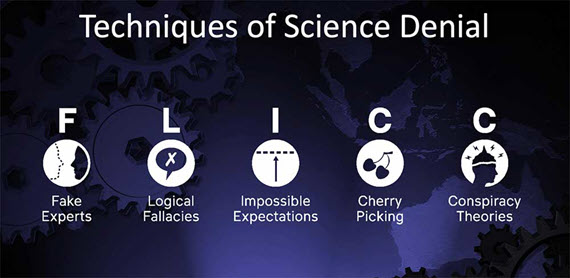
- Greenhouse effect has been falsified
Bob Loblaw at 00:32 AM on 29 March, 2025It's also worth noting that the word "trap" is barely used at all in the OP that we are commenting on. In the Basic tab, it appears twice. Once in relation to comparing the earth (with an atmosphere) to the moon (no atmosphere), and once in relation to the atmosphere trapping radiation. In the Intermediate tab, the word "trap" does not appear in the OP at all.
Reed Coray's complaint about overly-simplified explanations of "trapping heat" seem rather oddly placed under a blog post that gives a lengthy discussion of the greenhouse effect (which is of itself a poor term, as is explained in the OP!). Complaining that something should not be done when it does not occur in the OP starts to look like someone is complaining just for the sake of complaining.
The comments section here is intended to discuss the science presented in the original posts. This is explained at the top of the Comments Policy. As a new user, it behooves Reed Coray to actually read the posts he wants to comment on.
- Greenhouse effect has been falsified
Bob Loblaw at 00:12 AM on 29 March, 2025Reed Coray @ 180, 182...
Well, I'm pretty sure that OPOF's request for an easily understood term is not answered by an "explanation" that take some 270 words...
...but you harp on the claim that "heat can't be trapped". You go into a long monologue about the dynamics of energy transfer, the concept of dynamic equilibrium (although you do not use the word dynamic), etc. And you complain that simple explanations can be misleading or represent misinformation.
I hate to break it to you, but every simple explanation ever offered on any subject will require leaving out details. Any analogy offered to help explain a complex system to someone unfamiliar with those details wlil only be able to represent part of that complex system - the analogy will be similar in some respects, and wlll differ in others. The "simple explanation" will always be a starting point for a more detailed explanation.
For example, the "can't trap heat" argument could also be applied to any other system where energy is being added and temperature is rising. Let's take a pot on a stove, or a house heated by a furnace. Putting a lid on the pot makes the temperature rise faster. Closing the windows in the house makes the house get warmer (for the same furnace output). In each case, there is more thermal energy (AKA "heat") in the pot or house. In each case, a simplified description is that adding the lid or closing the windows "traps heat". In each case, there is more to it, but in each case the "traps heat" explanation is a reasonable starting point.
You admit that "an easily understood term" may not be possible. Yet you criticize the use of simplified explanations because they are incomplete. Every simple explanation is incomplete. Every simple explanation leaves something out, and therefore may be subject to misunderstanding (especially if someone is determined to misunderstand or misrepresent it). The same applies to complex explanations - also subject to leaving things out, possible misunderstanding or misrepresentation (especially if someone is determined to misunderstand or misrepresent it).
By setting a standard of "simple is misleading because it is simple", you are requesting perfection in the simplified presentation. This is what is known as setting impossible expectations, which is an unreasonable position to take. It is also a common one in the climate change discussion space:
Methinks thou doth protest too much.
- Climate skeptics have new favorite graph; it shows the opposite of what they claim
Evan at 20:30 PM on 26 March, 2025Great article!
The analogy I like to use to explain why the rate of warming is important is Speed Kills.
When exiting a freeway, you slow down from 60 mph (100 kmh) to rest in about 30 sec. This is a nice, reasonable rate of change. What happens if you speed up that rate of change by a factor of 100?
- Do Americans really want urban sprawl?
One Planet Only Forever at 06:34 AM on 22 March, 2025nigelj @9,
As Eric (Skeptic) has mentioned there is complexity and nuance on many aspects of this matter.
It is probably more accurate to say “...highrise apartment living ( define it as anything above about 7 floors) will have to be very high quality and thus quite expensive to entice some middle class people away from suburban living, with its privacy and your own garden etc. Some [p]eople put considerable value on that.”
Many people ‘need’ less expensive ways of living. In the case of ‘car sprawl based development’ a lot of what was built is of little use to those people, but they pay for it because they have ‘no real choice’. Offering those people the choice of smaller less expensive housing - like affordable, but well-built, apartments that are 7 stories or less - could make ‘single family homes with big yards’ less valued if there were more lower cost alternatives.
In addition to opposition to actions that would reduce potential benefit from more fossil fuel use, the 'loss of potential value' of already built single family homes with yards would explain the misleading misunderstanding fuelled opposition to the Glenmore Landing development by councillors for other areas of Calgary (refer back to my comment @6).
Note that the council member for the community that the Glenmore Landing development affected, where it would be built, supported the development because her community member feedback was Not-NIMBY. The community supported the development. Other council members opposed it, and they repeated misleading misunderstandings as the reason for their opposition.
- Do Americans really want urban sprawl?
One Planet Only Forever at 05:52 AM on 22 March, 2025Eric (skeptic) @7,
Thanks for the response. I generally agree with your observations. However, there are some minor clarifications I would make.
Regarding $10,000 per year for car ownership:
The energy costs are indeed highly variable. However, they are only a part of the costs. A fuller understanding of the costs of car ownership is presented by RateHub.ca - What is the total cost of ownership for a car? That evaluation concludes that the average cost in Canada is $1370 per month = $16,500 Cdn per year (~ $11,500 US). The costs include the following in addition to annual fuel and maintenance costs:
- Vehicle purchase costs (loan interest or lease costs) and depreciation of value at end of use considerations
- Non-annual maintenance (items like tire replacement, brake and timing belt replacement, specialty fluid flushes and replacement)
- Licensing/registration
- Parking (at work or at an apartment)
- Insurance (a significant part of the cost)
Regarding roads:
‘Car sprawl’ cities cover larger areas per capita (they have lower population density). That requires more length of roads and other public systems per capita. Calgary has 1.4 million people living on 825 square km. For comparison, Copenhagen, considered to be reasonably walkable, is 1.4 million living on 180 square km. The length of public infrastructure items in Copenhagen is likely about 1/4 the lengths (and costs) required by Calgary.
Regarding ‘Investors’ vs ‘Speculators’:
People who buy a property that they do not intend to live in can be called ‘investors’ or ‘speculators’. The same goes for people buying stocks or being venture capitalists. They are ‘investors who are speculating’ about the amount of benefit they will get from their actions. That is different from someone who ‘invests’ in a fixed interest deposit - no speculation in that action, except for speculating that it will be better than ‘riskier’ investment options. Note that the 2008/9 financial crisis was due to speculation that home-buying with balloon mortgages would be a good investment.
Regarding sustainability of the condos being built:
The consequences of the temptation to save money on the initial build is a concern. But the shoe-boxes in question wold be the same problem even if they are better-built than the average new high-rise building.
Regarding having to use a car to get a loaf of bread or a coffee:
The point being made is that in a walkable community you can walk to get a small amount of groceries. And there would be a local coffee shop (or two) you can walk to for a visit with friends (and you could walk to your friend’s place for a visit). Being able to walk to a diversity of shops and services, and even walk to work, would be possible in a walkable community.
- Climate's changed before
Bob Loblaw at 23:39 PM on 18 March, 2025Brainscientist @ 902:
As pointed out by Eclectic in 903, and in the moderator's comment on your comment, there are many resources where you can find out more about the topics you opine on. Here at Skeptical Science, you are expected to provide some sort of reference to claims. Sadly, your comment is short on supporting information.
You can find much information here, using the Search function on the upper left of each page, or by looking at the many topics that are presented in the Most Used Climate Myths (also linked to in the upper left of each page).
You start with an empty assertion that people "...never discuss the fact the [sic] the climate changed dramatically in the last 880ka.". "Never" is an awfully strong assertion. You say that, in spite of the fact that the Intermiediate tab of the post you are responding to has a graphic (Original source Wikimedia) showing earth temperatures over the past 500 million years. Here is the graphic again:
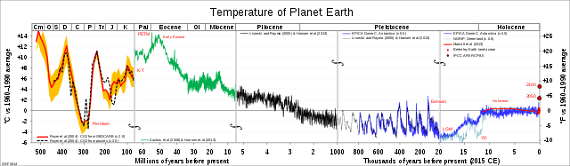
Your claim of "never" is so easily refuted that it makes one wonder just what sources of information you have been using.
You also use the "never" word in your third paragraph, where you say "...when in the past there has NEVER been an ocean level above 20m from present and most are less than 8m." Again, let's make use of some graphics from Wikipedia, where there is a page on Past sea level. That page has the following graphic:

Your claim of "never" includes the 542 million year period covered in that graph - unless, of course, you have some sort of special meaning for "never". For most of us, the definition of "never" is probably similar to that found in Wiktionary: "At no time; on no occasion; in no circumstance."
FYI, the peak in that graphic (400m) is a wee bit higher than your claim of 20m. Unless you also have your own definition of the mathematical meaning of "above 20m".
Skeptical Science has a nice page on the Younger Dryas.
If you really, honestly "..would like to know why..." then (as Eclectic and the moderator have pointed out) you should start with some reading (or videos such as the Potholer ones Eclectic has mentioned). Whatever sources you have been looking at appear to have seriously led you astray.
...and when you make assertions about observations or analysis, then please provide some sort of references to the sources of the material you have used to inform your opinions. Without references, all you have is empty opinions.
- Climate's changed before
Eclectic at 13:07 PM on 18 March, 2025Brainscientist @902 :
You can find a vast amount of information and analysis at this SkepticalScience website, if you like reading for self-education.
For instance, the world temperatures (per proxy) show no evidence of the 'pair of "nuclear Winters" [sic]' that you mention occurring 'in the last 250 years' [unquote]. Perhaps you got that from a very unreliable source.
# Now, there have been some slight "dips" in world temperatures during the last 600 years ~ apparently caused by a combination of clusters of volcanic eruptions plus some Grand Solar Minima . . . but even these "dips" have been (globally) less than 0.5 degreesC. And even at the height of the USA/USSR Cold War panics, no-one much was afraid at the thought of a post-apocalyptic Nuclear Winter chilling effect of less than 0.5 degreesC.
And if you don't like reading but prefer viewing , then you can get a bigly amount of education by viewing the YouTuber "potholer54" who has a climate series of short videos (total 71 videos currently) that are both easy-going and mildly humorously presented. You will enjoy them, I'm sure ~ as they educate by debunking many of the absurd unscientific memes which the science-deniers so often recycle.
You will also be amused by the videos' Comments sections, where some protesters (against climate science) bring up some bigly moronic assertions. One of the most recent of these, in past months, has been commenter "OldScientist" who often copies-and-pastes his own comments. He is quite clueless about science and logic. But he is entertaining ~ if you enjoy Schadenfreude.
- Climate's changed before
Brainscientist at 07:12 AM on 18 March, 2025All of the fear mongering about Humans changing the climate never discuss the fact the the climate changed dramatically in the last 880ka.
The Younger Dyras Impact event was AFTER the climate had warmer dramatically.
Every scientist FUNDED talks about the oceans rising 300 feet when in the past there has NEVER been an ocean level above 20m from present and most are less than 8m.
There have been 16 cataclysms that could have easily destroyed advanced civilizations, we have also had a pair of "nuclear Winters" in the last 250 years.
We might be able to track asteroids but Younger Dryas appears to be a comet impact.
The earth has had higher levels of CO2 before are we so omniscient to know Our CO2 is the end of mankind. <yes, I have heard this bit of fear mongering from scientists).
I would like to knwo WHY the temperatures changed so dramatically on what appears to be a fairly regular but NOT in sync with any astronomical- earth wobble et al.
The impact event appears to have killed the large fauna in NA, spread a layer of ash, ended Clovis, and we do have all this troubling evidence of advanced and large populations in SA.
Fossil Fuels are made from life forms that used to be on the surface.
Exactly why should they not be brought up and put back into the mix?
I am a major skeptic of what is looking like fear-mongering science.
- Sabin 33 #17 - Does low-frequency noise from wind turbines cause 'wind turbine syndrome'?
RedRoseAndy at 23:13 PM on 26 February, 2025I invented a method that has made all wind turbines silent before Covid, I have not heard a climate skeptic complaining of lound wind turbines for some years now. The money I got for my work was spent on shares whose dividends go to XR.
- Fact brief - Is sea level rise exaggerated?
TWFA at 03:55 AM on 17 February, 2025If we
[snip]
are the only reason sea levels are rising, please explain:

Global mean sea level anomalies (mm; blue) and carbon emitted (millions of tonnes; red) since the early 19th century. Reproduced from Fig. 4.1 of Curry (2018). [Sea level from Jevrejeva et al. (2014), carbon from Carbon Dioxide Information Analysis Center (CDIAC, 2014)].
Going back another century on sea levels with the same Jevrejeva data, instead of cutting it off at 1800 like most do for dramatic effect:
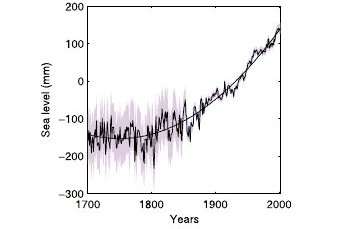
We see the sea levels were falling prior to the mid-18th century and came to a halt right about the time of the Boston Tea Party. Assuming the 46 tons of tea dumped overboard would make no difference in net displacement, and some other human forcing was required to overcome natural cycles and thermal inertia, what were we doing from, say, 1600 to 1750 to arrest the presumably naturally falling sea levels, bring them to a halt and then begin to raise them back up again by 1800, a century before our emissions amounted to anything?
Just curious, the engine of science is skepticism and this site encourages it, right?
- January sets an unexpected temperature record
PericoDelosPalotes at 00:40 AM on 7 February, 2025Afternoon,
I shall stick to replying to your questions as an assurance of following an on-topic conversation.
Glad to provide more data regarding the global cumulative expenditure and to put it into perspective
Here links for the ball park estimation:
https://www.climatepolicyinitiative.org/publication/global-landscape-of-climate-finance-a-decade-of-data/
https://www.climatepolicyinitiative.org/publication/global-landscape-of-climate-finance-2024/
https://www.climatepolicyinitiative.org/publication/global-landscape-of-climate-finance-2021/
Sector Approx. Annual Budget
U.S. Federal Discretionary Budget ~$2 trillion
Global Energy Investments ~$2.8 trillion
Global Military Spending ~$2.2 trillion
Global R&D Spending ~$2.4 trillion
European Healthcare Spending ~$2–2.5 trillion
Global AI/IT Spending (Cloud, AI, Cybers.) ~$2 trillion (forecasted)
Summary of the above and framing:
Current global Climate Change expenditure is in par with Energy investment or Military one GLOBALLY (around 2Trillion USD yearly).
Still, all the policies applied, the technologies developed and the actionables all row in the opposite direction (and I refer you to read the list of examples I provided in my previous post considered as unsupported barrage) to What I would consider aiming at the solving of an URGENT RISK.
I have been designing EV powertrains for over a decade in major Car OEMs, I know the reality of the technology from the
Horses mouth, I am not coming from watching a few denialist documentaries in YouTube.
2T USD budget is big words: only met by a few global sectors, economies or entities that can operate in that scale. Any Enterprise with that budget and such poor results would need a proper investigation or enquiry.
It is not that the climate change government policies has been weak, its even worse, they have been strong but in the opposite direction.
With due respect...maybe, there is a solid reason for people to be skeptical about Climate Change and policies applied.
- 2025 SkS Weekly Climate Change & Global Warming News Roundup #05
One Planet Only Forever at 03:57 AM on 5 February, 2025A supplement to my comment about the misleading Cenovus ad.
When the audio asks “But what if that system suddenly stopped working?” the video makes all the food, reusable bags, and the package disappear. The misleading implication is that other harmful petrochemical developments, like plastics and agrichemical, are essential needs that cannot be obtained by less harmful alternatives.
The ‘collective petrochemical misinformation effort’ is investigated and discussed in items listed in recent SkS Weekly News and Weekly Research.
In the 2025 SkS Weekly Climate Change & Global Warming News Roundup #03, the second item in the Public Misunderstandings about Climate Science category “New Study Shows How Fossil Fuel Sectors Create a Climate Denial Echo Chamber on Social Media” is about one of the ‘Open access notables’ on the Skeptical Science New Research for Week #3 2025: Networks of climate obstruction: Discourses of denial and delay in US fossil energy, plastic, and agrichemical industries, Kinol et al., PLOS Climate:.
Another New Research ‘notable’ in Week #3, Compartmentalization by industry and government inhibits addressing climate denial, Hendlin & Palazzo, PLOS Climate:, also investigates the way that ‘harmful interests join forces to collectively act for their harmfully obtained collective benefit’.
There is a tragic history of the collective gathering of pursuers of benefit by promoting misunderstandings, not just in business and politics (note how social conservatives and economic conservatives support or excuse each other's misunderstandings). Everybody loses when these (Us against all Others who are not like Us) collectives succeed in their misleading pursuits of perceptions of superiority relative to Others.
- At a glance - Is the CO2 effect saturated?
Bob Loblaw at 03:05 AM on 1 February, 2025sychodefender @ 34:
For feedbacks, they start as soon as any system change occurs. When CO2 rises, it take a bit of time for temperature to rise, and then once temperature rises, atmospheric water vapour will rise, which will have a greenhouse gas heating effect (after a bit of time...), etc.
...but I have left "a bit of time" undefined for the moment. There are many different factors that take varying amounts of time to respond to changes. MA Rodger's response @ 35 touches on several of these factors.
Obviously, day-to-day weather causes changes in temperature, which will cause day-to-day feedback effects, etc. When we talk in terms of climate, though, we are more interested in the persistent changes, and how factors relate over longer periods of time. We also often talk about averages over large areas, not local effects such as your back yard.
Taking MA Rodgers statement about "increased evaporation adds 7% H2O capacity for every +1ºC", we are talking about longer term effects - e.g. decades. You won't see this simple a relationship when discussing day-to-day local weather. This relationship is looking at global trends over decades.
We can't instantaneously double atmospheric CO2 in the real world (thankfully!), but we can in a climate model. Back in 1981, Hansen et al published a well-known paper on CO2 and climate that included an interesting diagram.
Hansen, J., Johnson, D., Lacis, A., Lebedeff, S., Lee, P., Rind, D., & Russell, G. (1981). Climate impact of increasing atmospheric carbon dioxide. Science, 213(4511), 957-966
They ran a computer model where they instantaneously doubled atmospheric CO2, and their figure 4 shows how energy fluxes changed over time.
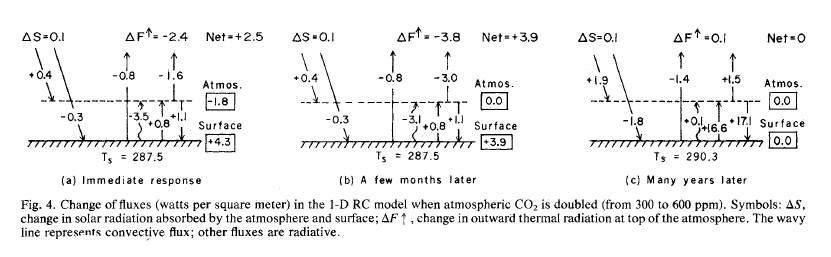
This is a somewhat complex diagram, so bear with me a bit.
- The first panel shows the immediate response. We see a very slight increase in atmospheric absorption of solar radiation, a larger reduction of IR loss to space, and some changes in the radiation, thermal, and evaporation fluxes between the surface and atmosphere.
- A lot of things are now "out of balance", so changes will occur.
- Notice that the change in IR loss to space (ΔF) is -2.4 W/m2. Combined with the change in solar (ΔS = 0.1), we get a net change of +2.5. This is the "climate forcing" that MA Rodger refers to. This is what drives the overall warming of the earth-atmosphere system.
- The atmosphere is the fastest to respond to these energy changes, because it does not require a lot of heat to warm up air. Land will heat up more slowly, and oceans even slower than land.
- In the middle panel, we see what is happening "a few months later". The atmosphere has restored its local balance, but the surface has not - so the whole system is still out of balance. Surface temperature (Ts) is still the same as it was at the start.
- The net climate forcing is now +3.9 (similar to the 3.7 number MA Rodger states in comment 35. Different models will vary slightly on what this number should be.)
- The atmosphere has now had a chance to warm - and get more humid. So now, we see the effects that include the feedback.
- With water vapour feedback now active, the net global imbalance has increased from +2.5 to +3.9. Roughly 50% larger than if there was no feedback.
- The last panel is "many years later". The entire system has balanced again.
- The atmosphere has a net balance of zero.
- The surface has a net balance of zero.
- The whole system has a net balance of zero.
- ...but note that many of the internal energy fluxes are different from what they were before CO2 was doubled.
- Absorbed solar has change for both the atmosphere and surface. Total net solar (ΔS) has only increased by 0.1, but where it is absorbed is different - more in the atmosphere and less at the surface.
- IR loss rates to space have changed. Net change (ΔF) is only 0.1 (to balance the change in ΔS), but again we see that contributions from the surface and atmosphere have changed.
- IR exchanges between the surface and atmosphere have changed. The climate is warmer, so IR fluxes have increased in both directions.
- Convective fluxes (thermal and evaporation) between the surface and atmosphere have changed slightly.
- ...and surface temperature is now 2.8C warmer... (Global warming!)
- ...so we are living in a different climate, with many changes. A new equilibrium, but one that looks quite different from what we are used to.
Hopefully this is not too hard to follow. As stated before, climate is a complex system. It gets quite difficult to to isolate changes in one part from another. Looking at one part can help understanding - but you do need to be careful about over-emphasizing what you see in that one part (and missing another important part). Much of what you can call "contrarian" positions involves over-simplifying the system, to the peril of leaving out parts that do matter. You're doing the right thing by asking questions.
- Sabin 33 #13 - Is solar energy unreliable?
michael sweet at 04:19 AM on 29 January, 2025Dr. Andrew Dressler posted today on how any amount of renewable energy in your utility bill saves you money. His post is easy to read. It would be a good OP here at Skeptical Science.
At the end of the post he discusses why you hear all the time that renewable energy is expensive. He claims the fossil fuel industry is lying to try to protect their market share.
- At a glance - Is the CO2 effect saturated?
Bob Loblaw at 01:39 AM on 29 January, 2025sychodefender @ 30:
The ultimate limiting factor for warming induced by greenhouse gas increases is the infrared radiation emitted to space from the upper part of the atmosphere. As the earth-atmosphere system heats up (primary a surface effect in the case of greenhouse gases) more IR is emitted to space, and (hopefully) eventually balances again. Think of it in stages:
- Earth is in a stable climate, with a stable (over years or decades) temperature. Energy absorbed from the sun is balanced by IR losses to space.
- Something causes that equilibrium to go out of balance. In the case of greenhouse gases, the direct factor is a reduction in the IR loss to space.
- Now, absorbed solar exceeds IR losses, so we are adding energy to the earth-atmosphere system.
- The net energy increases causes some part of the system to warm up. That energy cascades through the system in a variety of forms (radiation, thermal energy, evaporation/condensation).
- After a while (many years), the system evolves to a point where IR losses to space increase enough so that we reach a new balance with absorbed solar.
- Once a new balance is achieved, we have a (new) stable climate again. In the case of doubling CO2, this new stable climate will be a surface temperature that is a few degrees warmer than it was before.
So, ultimately, the ability to regain equilibrium requires that the system respond to a point where IR loss to space - from the upper part of the atmosphere (you'll often see "TOA" to indicate "Top of Atmosphere") can rebalance the energy absorbed from the sun. In a stable climate, you can have short-term shifts away from equilibrium, but this "energy balance with space" will keep pulling the climate back to its stable position - kind of like a marble rolling around in the bottom of a round bowl.
So, next let's think about feedbacks, such as the "CO2 warming increases water vapour, increases warming, increases water vapour" go-on-forever loop. SkS does have a lengthy discussion of that topic, on this thread here, but let's take a quick look at it now.
- In climate science terms, the water vapour effect you describe is called a positive feedback. A system change in one factor causes a change in another factor that adds to the initial change.
- If the initial change is an increase, a positive feedback will cause more increase.
- ...but if the initial change is a decrease, a positive feeback will cause more decrease.
- Positive feedbacks do not necessarily lead to values that increase forever. As long as the feedback multiplier is small enough, a new equilibrium will still be reached.
- "Small enough" is anything less than 1.
- If the initial change is 1, and the feedback adds another 0.5, then the next time through the sycle we'll only add 0.5*0.5 = 0.25, and the next time will only add 0.25*0.5 = 0.125, etc.
- This will stop increasing once it reaches a total change of 2.
Let's look at this graphically. The following image shows 10 time steps with eight different feedback multipliers.
- For all curves the initial change from time 0 to time 1 is a system change of 1 (you can think of it as temperature, but the math doesn't care what it represents.)
- For time 1 to time 2, we add another change of 1*feedback multiplier.
- an increase of 0.1 for a multiplier of 0.1.
- an increase of 0.2 for a multiplier of 0.2.
- etc.
- The figure shows feedback multipliers ranging from -0.5 to 2.

Note some key features in the figure:
- For a multiplier of 0, there are no further changes after time step 1. The system change has already reached a new equilibrium and remains constant forever.
- For a multiplier of 1, we see a continuous linear increase. We add another 1 at each time step.
- For a multiplier of 2, we see an accelerating, exponential increase over time. Not a good place to live.
- For all multipliers between 0 and 1, we can see that the rate of increase tapers off and a new equilibrium is reached after 10 time steps.
- ...but that new equilibrium is higher for higher feedback multipliers.
- For multiplier 0.5, note that the final result is an increase of 2.
- This one is closest to our known climate system feedbacks - the direct effect of CO2 is roughly doubled by feedbacks such as water vapour and snow/ice.
Note that I threw in a multiplier of -0.5, too. This is a negative feedback, opposing the initial change. The final change is 0.67, not 1.0.
- In a real world, the negative feedback would not wait until the initial change of 1.0 happens - all feedbacks kick in as soon as any change occurs. You'd see smooth curves, not the jumps we see in the figure. The -0.5 curve would just gradually increase from 0 to 0.67 in the first few time steps.
Also, note that you can find out more about these issues by using the search box on the SkS web page (upper left), or by looking at the Most Used Myths list (linked below the search box and social media emblems).
- Sabin 33 #12 - Do solar panels work in cold or cloudy climates?
Bob Loblaw at 02:09 AM on 24 January, 2025Upstream, in comment 4, I talked about some of the aspects of solar panel installation and orientation. Words are nice, but pictures are often better, so I've graphed out some data to show some difference between clear/cloudy, winter/summer, and horizontal/tilted measurements of solar radiation.
The following graphs are a continental location, at about 50°N latitude.
All radiation graphs show five different measurements:
- The "Direct" measurement is "direct normal" - an instrument pointed directly at the sun, with a narrow field of view.
- "Diffuse" is the radiation on a horizontal surface of just the sky - direct sun blocked.
- "Global" is a full sky view (direct plus diffuse) on a horizontal surface.
- "Titled" is also direct plus diffuse, but at a 50° tilt to the south, so it sees some sky and some ground.
- "Reflected" is the same type of instrument as "Global", but upside-down so it sees all the solar radiation being reflected off the ground surface.
The first graph is a clear day at the beginning of January. Direct radiation peaks at over 900W/m2, and diffuse radiation is less than 100W/m2. Because the sun is low in the sky, the global reading is much less than the direct - peaking slightly over 300 W/m2. The tilted sensor, though, peaks at over 800 W/m2 - not only is it pointing much closer to the sun, but it also sees a lot of ground that is very bright. The reflected reading peaks at over 200W/m2 - the ground is snow covered, reflecting about 75% of the global signal, so much brighter than the deep blue sky of the diffuse signal.

Clearly, a tilted solar panel would produce much more power than a horizontal one. We can see why when we look at the solar elevation angle (how high about the plane of the panel the sun is located). This graph shows the elevation above a horizontal surface (global instrument) and tilted surface. The sun is barely 20° above the horizon of the horizontal sensor, but is over 60° above the tilted sensor's "horizon". Note that the daylight period is only about 8 hours - elevation>0° for the horizontal view. Even though the titled sensor has an elevation >0° for much longer, those "extra" hours mean nothing, as the view of the sun is blocked by the earth!

The next day, cloud moved in. Direct radiation is zero, except for a brief period in early afternoon when the clouds thinned enough to let a bit of direct sun through. The four other lines are, from highest to lowest, tilted, Global and Diffuse (virtually tied), and Reflected. With no direct sun, and a snow-covered surface that reflects most of the solar radiation, there isn't much difference between the horizontal and tilted readings.

Note that for the horizontal sensor (global) the cloudy day is not much lower than the clear day. It peaks around 250W/m2, compared to a little over 300W/m2 on the clear day.
What about summer? Here is a "mostly" clear day in early July. Direct beam peaks only slightly higher than in January, but global radiation is much higher because of the higher solar elevation. The titled sensor peaks a little higher than global - it's tilt is no longer much of an advantage over the global sensor, and the portion of ground it sees is now dark (reflecting only about 20% of the global). Diffuse is again <100W/m2.

Daylight is now more like 16 hours, though, so daily totals will be quite different from January. We also see something odd in the tilted sensor - it peaks higher than the global (horizontal) sensor, but in early morning and late afternoon, it sees less than the global sensor. In fact, at the extremes it looks like it is only seeing the diffuse radiation - no direct.
We can understand this by looking at the solar elevation again. Note that for the titled sensor, the sun "rises" much later and "sets" much earlier (elevation <0°) than for the global sensor. What is happening is that the sun rises in the NE and sets in the NW, so it is actually behind the tilted sensor, not in front of it.

And lastly, we'll look at a cloudy summer day, right on the summer solstice. We do see some direct sun getting through in the afternoon, but we can see the cloudy period that covers most of the day. We see a substantial reduction in global before noon local time (compared to the clear day). After 12pm, we see a higher value for global as the cloud thins and a bit of direct radiation makes it through the clouds. During the cloudy period, the tilted sensor is not much different than the global one - both are seeing the same diffuse radiation.

So, hopefully this helps illustrate some of the complexities related to solar panel installation and orientation. To refer back to the OP - no, cloudy skies does not mean "no solar energy". The OP is correct - the myth is busted.
This is only one location, and a few days of data. And this level of data is not readily available for most locations. But it does illustrate that installation may be dependent on local factors such as amount of cloud, type of cloud, timing during the day, etc.
- Fact brief - Can CO2 be ignored because it’s just a trace gas?
Bob Loblaw at 08:39 AM on 19 January, 2025Noel:
An illustration of why ppm is a bad set of units to look at the radiative effects of CO2 forms part of the discussion in this blog post I did a few years ago. (To toot my own horn.)
https://skepticalscience.com/from-email-bag-beer-lambert.html
- At a glance - Is the CO2 effect saturated?
Charlie_Brown at 05:30 AM on 19 January, 2025sychodefender @18 and @22
The band saturation effect does have a diminishing logarithmic curve as explained by Bob Loblaw and as shown in Fig. 6a of Zhong & Haigh 2023. But the rate of modern global warming has not diminished to being negligible. Your descriptors of the effect: "distinct leveling off" and "surely can only have a very slow impact on warming" are misleading toward an incorrect conclusion.
I described the main problem with Kubicki, et al., above @16.
I described the main problem with Wijngaarden & Happer in “Is the CO2 effect saturated?” @716, page 29, Oct 5, 2024.
- At a glance - Is the CO2 effect saturated?
Bob Loblaw at 06:54 AM on 18 January, 2025Now for the question posed in #22, about the logarithmic effect of CO2.
There is more than one place in the CO2/climate system where we see logarithmic relationships.
The first place is in the fundamental aspect of the absorption of IR radiation by CO2 (or other greenhouse gases, such as methane). This is described mathematically by Beer's Law, which you can read about on Wikipedia, or by reading this post I made here at SkS about three years ago.
- In non-mathematical terms, the absorption of radiation by a given thickness of air occurs as a proportion of the radiation. If that thickness of air absorbs 10% of the radiation, it will absorb 100W/m2 out of 1000W/m2, but only 10W/m2 out of 100W/m2.
- So, if you start out with 1000W/m2, and absorb 100W/m2, you're left with 900 W/m2.
- But when that 900W/m2 passes through the next identical layer, only 90W/m2 is absorbed, and 810W/m2 is passed on.
- ...and in the next layer, 81W/m2 is absorbed, and 729 W/m2 is passed on.
- ...and so on.
- And this sequence is a logarithmic relationship.
- Although you never get to 0W/m2, after enough layers you do get to the point where it is essentially 0 for all practical purposes. At this point, you can say "with all those layers, absorption has reached a saturation point".
Those "skeptical" of the CO2 effect on climate focus on this "many layers already absorb all the IR" case and then argue "adding more CO2 will not absorb any more". They are wrong.
The catch is that this "saturation" idea only applies when you look at IR radiation that started in the beginning and passed through all those layers. There are two issues with this:
- Even if all the radiation is absorbed by many layers, adding CO2 will change how much was absorbed in layer 1, or layer 2, etc. Thus we are still changing where in the atmosphere the radiation is absorbed.
- This will alter the energy flows in the diagram I posted in the previous comment.
- This diagram shows how changing the absorption rate changes the amount absorbed in the earlier layers. (The diagram comes from this post, which I mentioned earlier.)
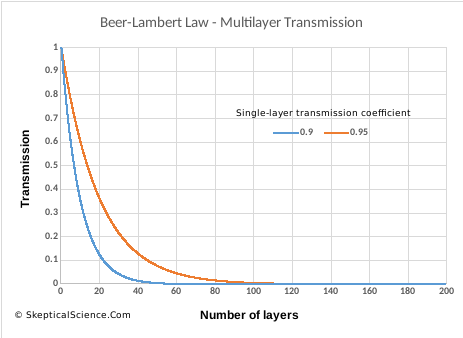
- The second issue related to what other commenters have said, that "skeptics" seem to ignore: that the atmosphere itself is emitting more IR radiation.
- Even though less and less of the original radiation entering layer 1 (closest to the surface, if we are thinking of our earth-atmosphere system) reaches the upper layers, constant emission of IR radiation locally (i.e., at that height) is replacing at least some of the IR radiation that was absorbed.
- The local emission depends on local temperature (the kinetic energy source)
- The local emission will be half upwards, and half-downwards, which means that it is now harder for that energy to reach a point where it can be lost to space (greenhouse effect discussion in previous comment).
There is another important place where a logarithmic relationship is seen. In Beer's Law, we talked about a layer containing something that absorbs IR radiation. What happens to the absorption ratio if we double the amount of CO2?
- We might think it doubles the amount of absorption, but this is only the case for low concentrations.
- At higher concentrations, the amount of absorption will not quite double
- ...and at yet higher concentrations, the absorption will not quite not quite double, etc.
- ...so we see a "law of diminishing returns".
- Eventually, at very high concentrations, there will be very little additional absorption. Again, we can call this "saturation".
- ...but current atmospheric CO2 concentrations are a loooong way from reaching this "saturation" point. We're a little over 400ppm now, and we'd need to get to concentrations several times higher before "saturation" is reached.
- From our starting point at 300ppm, we'll see 2-5C rise when we double to 600ppm, and then another 2-5C rise if we double again to 1200ppm, so we can see the logarithmic relationship.
- ...but a climate with 1200ppm of CO2 will not be a pleasant place compared to what we have now. The logarithmic decreasing effect will not save us from a very different world.
Whenever you see a "saturation" or "logarithmic" argument, you need to try to understand which version someone is claiming. The key error in all of them is that they are isolating one small part of a complex system and ignoring other parts that are affected by increasing CO2. Only by including the complex relationships among all the parts of the system can you determine the warming effects of CO2.
- Nobody’s insurance rates are safe from climate change
One Planet Only Forever at 05:38 AM on 18 January, 2025Eric (skeptic),
Goats were used in 2024.
County of LA Fire Department - Goat Grazing post (linked) opens with the following:
On Thursday, August 15, 2024, the County of Los Angeles Fire Department (LACoFD) was joined by several media outlets in a demonstration showcasing the use of 150 goats and sheep for effective vegetation management near Helispot 69 Bravo in Topanga.
Topanga is the region immediately west of Pacific Palisades.
Also, you state "But I have no weather risk here in rural Virginia." Do you have a scientific reference for your confidence that your region will remain 'weather risk free'? I notice that the regions of North Carolina hit by Helene were less less than 200 miles from the less populated parts of Virginia. With the tracks of hurricanes and their remnants changing due to climate change, hopefully you are correct about your region remaining impact free in the future.
- Nobody’s insurance rates are safe from climate change
One Planet Only Forever at 13:04 PM on 17 January, 2025Erik (skeptic),
The link to your graph using FRED - StLouisFed works.
I note, however, that the graph in the article is ‘relative to inflation’. What that means is not clear (the methodology is not described). But the following appears to confirm the reliability of the graph in the article based on the FRED graphs not being inflation adjusted (note that because of the significant increase in the Home insurance premiums later in 2024 the month chosen in the FRED graph makes a difference in how the values work out):
- The CPI inflation from 2008 to 2024 was 46% (many sources checked – some indicate 1.47). So $1.00 in 2008 is equivalent to $1.46 in 2024.
- The FRED Car insurance premium index went from 125.4 in June 2008 to 216.3 in June 2024. So the increase relative to 2008 was 216.3/125.4=1.725. Relative to inflation it increased by 1.725/1.46=1.18 (18%).
- The FRED Home insurance premium index went from 161.1 in June 2008 to 247.8 in June 2024. So the increase relative to 2008 was 247.8/161.1=1.538. Relative to inflation it increased by 1.538/1.46=1.054 (5.4%). For Sept 2024 the index was 259.0. So the increase relative to Sept 2008 (162.4) was 259.0/162.4=1.595. Relative to inflation the increase would be 1.595/1.46=1.092 (9.2%).
Those values appear to be in line with the end points of the lines on the graph in the article.
- At a glance - Is the CO2 effect saturated?
Bob Loblaw at 11:13 AM on 17 January, 2025sychodefender at 18:
What is your point? All the authors you mention have serious problems in their analysis, so you won't find their results given any credence in the IPCC summaries.
There is no such thing as "the IPCC models". The IPCC reports are a review of the scientific literature, so any models they discuss are models that are developed by individual scientists or groups. Those scientists cooperate on model comparison studies. RealClimate keeps a permanent page on CMIP model comparison results.
There is no need for climate science to come up with a "more recent finding or mechanism" to refute that list of authors, as those authors do not refute the previously-existing understanding that explains current warming (and predicts future warming). Since the old understanding isn't broken, it doesn't need fixing.
Also note that these "at a glance" posts include a link to full rebuttals of the myth, at the bottom of the post (Click for further details), above the list of other rebuttals.
- Skeptical Science New Research for Week #1 2025
Bob Loblaw at 02:08 AM on 15 January, 2025Yes, Michael and nigel (comments 49, 50) - those other sources support Wallace et al, not refute it.
David-acct, in comment 45, uses my quote from the paper (in comment 44) as an indication that the authors admit the study was "not robust". Let's look again at the key part of the phrase I quoted:
...it is possible that the deaths that our study data did not include may disproportionately occur among individuals registered with a particular political party...
It may, or it may not. To assume that it does is a classic case of confirmation bias. To answer the may/may not question, you'd actually have to obtain the extra data on deaths that Wallace et al were not able to obtain from the sources they used. And then you would have to analyze that data to see if the association between excess deaths and party affiliation is different from the one that Wallace et al found in the data they looked at. And if it is different, is it different enough to affect the overall results.
Note that in the same quote I provided in 44, Wallace et al indicate:
Although overall excess death patterns in our data are similar to those in other reliable sources, such as the Centers for Disease Control and Prevention National Center for Health Statistics data...
So Wallace et al have looked at other sources to see if there are indications that their data might have issues (and they have not found evidence that this is the case).
David-acct would prefer that we believe - as he does - that the "missing" data is a problem. Even though David-acct does not have access to that missing data, and has provided absolutely no evidence or analysis to indicate that those missing data would paint a different picture (i.e., they would have a different statistical distribution from the Wallace et al data that covers 83.5% of deaths in the US).
Of course, we have no idea (i.e., no evidence to support an argument) as to why David-acct is hugely skeptical of these results. His "analysis" presented here is extremely weak. Hypothetical reasons for such resistance could include any or all of the following, which are all varieties of confirmation bias:
- An extreme reluctance to accept the possibility that individual Republicans have been making worse choices than Democrats about their health care.
- An extreme reluctance to accept that people who are making worse choices about their health care can be labelled as Republicans.
- There is a subtle, but important, difference between this possibility and the first one I listed.
- An extreme reluctance to accept that Covid was (and still is) a serious illness that can cause death (i.e., isn't just "another mild flu").
- An extreme reluctance to accept that vaccination is a safe and effective tool in reducing the serious effects of infectious diseases such as Covid.
- A serious reluctance to accept that government-led action in response to community issues (such as health care) can sometimes lead to a better life for its citizens.
- ...or many more...
Note that all of the above fall into the class of "I don't like the results or implications, so there must be something wrong with the study". Conclusions first, analysis later. (Or no analysis, just fling mud at the study.)
And even if we were able to determine what motivates David-acct, it would be an error to extend that to a community level. To do that, we'd need to collect and analyze data...
...and to get back to the OP and the paper listed there, this is what Ecker et al said in their abstract:
Public Significance Statement
This article refutes claims that misinformation is an insignificant issue. Through a critical literature review, we demonstrate that misinformation represents a nontrivial part of the information environment and can causally and adversely influence people’s beliefs, decisions, and behaviors. We clarify through our discussion why misinformation continues to be a significant problem that should not be ignored by communicators and policymakers.
To use a classic cartoon from the Christian Science Monitor:
- Is Nuclear Energy the Answer?
Philippe Chantreau at 03:40 AM on 11 January, 2025I also noted an inconsistency between posts #365 and 367 above:
In # 365, the following quote from Wikipedia is cited: "France's nuclear reactors comprise 90 per cent of EDFs capacity and so they are used in load-following mode and some reactors close at weekends because there is no market for the electricity."
In # 367, this comes back as: "the plants shut down during the highest demand periods during the summer and on weekends. Fossil fuels make up what nuclear fails to generate." That would be the very opposite of what the previous quote says: not following the load.
The reason why some plants are tuned down and/or taken off line is indeed the one in #367, i.e. they are used in load following mode. They are not "shut down" during the highest demand period, they are ramped up, that much is clearly visible in the data. As I have pointed before, the eCO2mix data shows that peak demand is, in the vast majority of cases, associated with peak nuclear production.
Furthermore, fossil fuel use in the generation mix in France is very limited. Oil and coal are almost negligible. Gas is marginal and, to my knowledge, used because of its very fast reaction time. Wind is very well developed: on the morning of January 1st, gas was at 1.8GW, when total wind production was close to 19GW (more than 10 times higher). Compare that to Texas, a leader in the US for wind electricity, where production peaks around 10GW on windy summer days.
Looking at the end of December and the beginning of January so far, I see that the share of gas is lower than wind, and the total amount exported is greater than the share of gas. Looking at longer periods, it is apparent that the overall share of wind power over time is larger than gas. France certainly can't be accused of being a bad actor in limiting the carbon emissions of electricity production in Europe. The European grid is highly interconnected and synchronous (except for the UK), even extending into North Africa; there are a lot of international factors involved in France's total production and level of export. I am skeptical of the claim that the exploitation of their nuclear plants is uneconomical.
In any case, achieving a carbon intensity per kWh that is a factor of 10 lower than neighboring countries, while retaining affordable rates is not a bad result. Despite high amounts of fuels used for road transportation, France has per capita CO2 emissions lower than Denmark, Germany, Finland or Italy. Sweden does better but, like Norway or Quebec, they are in a very privileged position for hydro generation; still, about 30% of their production is from nuclear.
That being said, the long term future needs serious planning. France's existing nuclear power plants can not last for ever. Much has been said of the outages of 2021/22. Some of it was valid, and some of it was spin. One could say that they showed a safety system that works, a grid resilient enough to withstand the outages, and problems that could be detected and solved.
Nevertheless, it must be acknowledged that the 30-50 year horizon demands solutions. I don't know that renewables can be increased to the 50+GW they would have to produce. That is way above my pay grade.
- Skeptical Science New Research for Week #1 2025
michael sweet at 01:29 AM on 9 January, 2025My links are not working today. This is the link
- Skeptical Science New Research for Week #1 2025
michael sweet at 01:27 AM on 9 January, 2025Somehow my link was incorrect.
Here is the original post to David-acct
- Skeptical Science New Research for Week #1 2025
michael sweet at 01:23 AM on 9 January, 2025David-acct:
You have never responded to my analysis of raw data you provided that you claimed showed nuclear reactors in France did not shut down on the weekends. I asked these questions:
"Several question about this raw data occured to me.
1) You state clearly that the data shows no nuclear power stations were shut down. Please explain why the power generated on the weekend is so much less than the power generated on Thursday. How does this show that no power stations were shut down over the weekend? It appears to me that about 6 of 31 power stations (20%) were turned off.
2) On both days they are generating more power at night when power is generated at a loss than they are generating during the day when the price of electricity is much higher. Can you explain why the "always on" nuclear plants generate less power during the most expensive part of the day than they do when electricity is cheapest?
This example proves beyond doubt that examining cherry picked factoids without any analysis is a complete waste of time. Please do not cite raw data any more. You need to cite analysis of data that filter out gross errors"
In a scientific discussion you do not get to abandon the discussion when it is proven that your claims were simply uninformed BS. Please respond with your answers to my questions about your raw data.
I note that in the current discussion here you have again been shown to make false claims about " raw data". These examples prove that citing raw data is a complete waste of everyones time.
It appears to me that David-acct cites raw data hoping that no one will check his false claims since it is time consuming to analyze the data. Bob Loblaw had to read the citation and then read the supplementary data to find out that David-acct had made false claims. I also wonder if he is reposting misinformation from other sites.
David-acct often cites misinformation in his posts here at Skeptical Science.
- The forgotten story of Jimmy Carter’s White House solar panels
One Planet Only Forever at 06:17 AM on 4 January, 2025Eric (skeptic) @5,
Regarding your point that “Some cost per metric ton of CO2 seems appropriate.” There are many other ‘externalities’ to be considered in order for EROI evaluations to not result in unsustainable harmful developments. But I will limit my response to carbon pricing and include points regarding the 1970s.
The appropriate carbon pricing value depends on the circumstances being evaluated. An example evaluation is provided in the Queen’s Gazette’s: The Conversation - “Carbon pricing alone is not enough to meet Paris Agreement targets”: By Sean Cleary, Queen's University, and Neal Willcott, Queen's University, December 20, 2023. It includes the following:
“We found that while carbon pricing on its own could limit global warming to 2.4 C, the global price would have to rise dramatically and rapidly to accomplish this. The price would have to start at $223.31 per tonne in 2023 and increase to $435.55 per tonne by 2045.
“While such an abrupt global policy change is unlikely, the price would not need to be so high if it was accompanied by other measures, including regulations that provide clarity and stability regarding green investments, clean technology subsidies and financing mechanisms (such as those facilitating transition investing by companies).”
Note that the above pricing is in Canadian dollars. And the evaluation’s methodology would result in an even higher pricing, and/or more significant other measures, being needed to achieve a 1.5 C limit. For comparison, the IPCC evaluation indicates (based on Google’s current AI summary) that the carbon price required to limit the harm to 1.5 C is US$170 (~ CAN$230) by 2030 and US$430 (~ CAN$590) by 2050.
However, it is important to understand that a correction of what has developed is required. And earlier and more significant ‘effective harm limiting action’ reduces the required magnitude of future corrective actions. So, an appropriate carbon price for starting the correction in the 1970’s would be lower. However, it could be argued that in the 1970’s there was an understandable possibility of limiting the harm done to be below 1.0 C. And achieving a lower level of future harm would require higher pricing. And most important is understanding that to properly develop sustainable improvements the developed actions, and corrective actions, need to be effectively harmless. A related essential understanding is that reducing undeserved (obtained in ways that are harmful) perceptions of superiority or advancement is ‘not harmful’. That objective understanding would require even higher pricing and more significant ‘other measures’, even in the 1970s.
The real challenge is getting people to appreciate that what has been developed is massively harmful and undeniably unsustainable (proven by the Stockholm University: Stockholm Resiliency Centre’s evaluation of Planetary Boundaries - linked here). In many cases the developed perceptions of superiority are massively undeserved. And the magnitude and required rate of the required corrections of developed perceptions of superiority and advancement increases as the required corrections are delayed by successful misinformation campaigns promoting misunderstandings and limiting awareness.
- The forgotten story of Jimmy Carter’s White House solar panels
One Planet Only Forever at 07:46 AM on 3 January, 2025Eric (skeptic),
A complete focus on EROI would have merit if the socioeconomic-political system is effectively governed by the pursuit of increased awareness and improved understanding of what is harmful and that constant learning is diligently applied to limit the development of harmful activities and to rapidly fully repair and make amends for any damage done. Also, the people penalized for benefiting from the harm done should not be able to influence how much they are required to do to repair and make amends for the harm done that they benefited from (they could potentially justifiably lose more than the benefit they obtained from the harm done). Note that people who did not benefit from the harm done would have their ‘repair and adaptation’ fully funded by those who benefited from the harm done.
The issue of climate change is a powerful example of what happens when ‘the system is not effectively governed by learning to be less harmful and more helpful to Others’. There has been an understandable massive failure of the ‘marketplace focused on EROI’ to effectively responsibly self-govern to avoid being harmful. Plus there has been an understandable failure of external governing of the marketplace to effectively limit harm done and make those who benefited the most from the harm done do the most mitigation and neutralizing of damage done. Also, there has been a failure to have those who benefited most from the unavoidable future damage done responsibly and equitably do the most to help all others adapt to the future harm.
The major problem is misunderstandings, especially the mistaken belief that the economic and political games produce better results when there is more freedom of action. The potential for success through misleading marketing and the related misunderstandings and lack of awareness make it very unlikely that ‘free-pure competition for perceptions of superiority’ will be effectively responsibly self-governed.
I would support EROI if all risks of harm are more than adequately included in the evaluation, and the evaluation is not done by the people who hope to benefit.
So, the bottom line is that I am very skeptical of a simple limited focus on EROI because the conditions required for that self-interested short-term narrow-view focus to not produce harmful results are highly unlikely to freely be developed and sustained. In fact, the evidence indicates that there is significant misleading marketing effort against the development of the required conditions.
- Sabin 33 #8 - Will solar development destroy jobs?
michael sweet at 08:31 AM on 28 December, 2024David-acct,
The op cites publications by acknowledged authorities that support the claim that renewables end up with many more jobs at the same time they have lower energy costs. Your unsupported response "I doubt it" is out of order. If you want to claim the op is incorrect you must provide references that support your claim.
I note that many peer reviewed papers like Jacobson et al 2022 make the same claim. I have never seen an analysis that finds less jobs from renewables. Fossil supporters simply say they disagree without any analysis or data Opinions without supporting data are worthless on a scientific site like Skeptical Science. The fact that there are already more renewable jobs than coal when we must dramatically enlarge renewables tells the whole story!
- Fact brief - Are we heading into an 'ice age'?
nigelj at 05:04 AM on 23 December, 2024The Time magazine cover from 1977 featuring a photo of a penguin with the headline, “How To Survive The Coming Ice Age” was a fake:
apnews.com/article/fact-check-time-magazine-global-climate-fabricated-cover-944714514495
In the 1970s a small number of scientists thought there might be a flat or cooling trend in coming decades but the majority of published research around the 1940s - 1970s predicted there would be a global warming trend in coming decades (which there was)
skepticalscience.com/ice-age-predictions-in-1970s.htm
I actually did a couple of papers in physical geography at university back in the early 1980s. One of the textbooks was Atmosphere ,Weather and Climate by Barry and Chorley, a 1971 edition, and the chapter on climate change did not say the scientific community was predicting a coming cooling trend or ice age. It said global temperatures had been flat from the 1940s to 1970, and it was uncertain what would happen in the coming decades. I still have this textbook.
- Fact brief - Are we heading into an 'ice age'?
AdriantheHistorian at 02:01 AM on 23 December, 2024Skeptical Science asks that you review the comments policy. Thank you.
[snip]
The New Ice Age was Promoted and a 'Fact' back in the 1970's to get President Nixion to Create the EPA. Enviromental Protection Agency.
https://www.bing.com/ck/a?!&&p=a708972a8ba8ce15990b406eec8dd8eeef261a471c38752311e038ee709c5666JmltdHM9MTczNDgyNTYwMA&ptn=3&ver=2&hsh=4&fclid=1c8ee8b9-4b23-6ade-3488-fbd14a996bb8&u=a1L2ltYWdlcy9zZWFyY2g_cT1waWN0dXJlcytzaG93aW5nK3RpbWUrbWFnYXppbmUrY292ZXJzK3dpdGgrdGhlK25ldytpY2UrYWdlJnFwdnQ9cGljdHVyZXMrc2hvd2luZyt0aW1lK21hZ2F6aW5lK2NvdmVycyt3aXRoK3RoZStuZXcraWNlK2FnZSZGT1JNPUlHUkU&ntb=1
- Fact brief - Are we heading into an 'ice age'?
AdriantheHistorian at 01:32 AM on 23 December, 2024Skeptical Science asks that you review the comments policy. Thank you.
[snip]
TODAY!......... Climate Shift. ..??.. DID the “NEW ICE AGE”, Climate Fanatics of the 1970’s CAUSE the so-called, “Climate Shift” Crises of Today?
(Scientists say sprinkling diamond dust into the sky could offset almost all of climate change so far — but it'll cost $175 trillion)
Story by Sascha Pare 12-19-2024
Sprinkling diamond dust into the atmosphere could offset almost all the warming caused by humans since the industrial revolution and "buy us some time" with climate change, scientists say.
[This is Funny as the ''Climate Craze'' back in the 1970's was the New Ice Age..... Yes ''they'' said that Pollution (partials) were being thrown up into the upper atmosphere and causing the suns light to be reflected back into space., This was causing a New Ice Age to destroy the Earth.
Note; To STOP this New Ice Age, the USA went 'seriously' into protecting the 'Environment' way back in the 1970's with President Nixon signing the Environmental Protection Act (EPA) into law.
Today the USA only produces as much steel as it did in 1950, this is as an example of those EPA efforts.
High Gas Prices?.. EPA will Not allow a New Oil refinery to be built in America.
Etc. Etc.
And this is also a major reason for the loss of Millions of very good paying jobs, I might add. 'clean', comes with a very steep 'price'.]
Continued.
New research indicates that shooting 5.5 million tons (5 million metric tons) of diamond dust into the stratosphere every year could cool the planet by 1.8 degrees Fahrenheit (1 degree Celsius) thanks to the gems' reflective properties. This extent of cooling would go a long way to limiting global warming that began in the second half of the 19th century and now amounts to about 2.45 F (1.36 C), according to NASA.
The research contributes to a field of geoengineering that's looking for ways to fight climate change by reducing the amount of energy reaching Earth from the sun.
https://www.msn.com/en-us/weather/topstories/scientists-say-sprinkling-diamond-dust-into-the-sky-could-offset-almost-all-of-climate-change-so-far-but-it-ll-cost-175-trillion/ar-AA1w6MuP?ocid=msedgntp&pc=HCTS&cvid=2dfb5c2f1669448799854ec819ce98bf&ei=43
- Stop emissions, stop warming: A climate reality check
One Planet Only Forever at 06:01 AM on 20 December, 2024AdriantheHistorian @4,
In addition to reviewing the comments policy, the SkS home page helpfully offers 3 big boxes near the top for people who are relatively unaware or lack a reasonable understanding of the issue:
- Newcomers, start here
- History of Climate Science
- The Big Picture
A very helpful part of the Newcomers, start here page (linked here) is the section: Good starting points for newbies.
After becoming more familiar with the issue you should understand and appreciate the lack of legitimacy, lack of merit, lack of value, of the beliefs you shared in your comment @4.
Obvious questions about constantly pumping massive amounts of diamond dust, or other materials, into the atmosphere are:
- How sustainable is the activity? (how long could it be done?)
- Who will pay for the action? (the people who are the richest today because of the past pumping of ghgs into the atmosphere should)
- What potential harm could be caused? (any potential for harm to be caused by an attempt to counteract another harmful action points back to the need to stop the original harmful action - not add harm by claiming it is the way to deal with harm done)
- Stop emissions, stop warming: A climate reality check
AdriantheHistorian at 01:36 AM on 20 December, 2024Skeptical Science asks that you review the comments policy. Thank you.
[snip]
TODAY!......... Climate Shift. ..??.. DID the Climate Fanatics of the 1970’s CAUSE the Climate Crises of Today?
Funny as the ''Climate Craze'' back in the 1970's was the New Ice Age..... Yes ''they'' said that Pollution (partials) were being thrown up into the upper atmosphere and causing the suns light to be reflected back into space., This was causing a New Ice Age to destroy the earth.
(Scientists say sprinkling diamond dust into the sky could offset almost all of climate change so far — but it'll cost $175 trillion)
Story by Sascha Pare 12-19-2024
Today those same people (Rainmakers) are selling yet another climate ''Crises''.
Note; To STOP this New Ice Age, the USA went 'seriously' into protecting the 'Environment' way back in the 1970's with President Nixon signing the Environmental Protection Act (EPA) into law.
Today the USA only produces as much steel as it did in 1950, this is as an example of those EPA efforts.
High Gas Prices?.. EPA will Not allow a New Oil refinery to be built in America.
And this is also a major reason for the loss of Millions of very good paying jobs, I might add. 'clean', comes with a very steep 'price'.
Even IF the ‘Clean’ is ONLY here and all that pollution was just Moved to China, along with all the Jobs.
Good thing we don’t use the same Air as the Chinese. Otherwise it would ALL have been a waste of time and Money.
TODAY!......... Climate Shift. ..??.. DID the Climate Fanatics of the 1070 CAUSE the Climate Crises of Today?
(Scientists say sprinkling diamond dust into the sky could offset almost all of climate change so far — but it'll cost $175 trillion)
Story by Sascha Pare 12-19-2024
Sprinkling diamond dust into the atmosphere could offset almost all the warming caused by humans since the industrial revolution and "buy us some time" with climate change, scientists say.
New research indicates that shooting 5.5 million tons (5 million metric tons) of diamond dust into the stratosphere every year could cool the planet by 1.8 degrees Fahrenheit (1 degree Celsius) thanks to the gems' reflective properties. This extent of cooling would go a long way to limiting global warming that began in the second half of the 19th century and now amounts to about 2.45 F (1.36 C), according to NASA.
The research contributes to a field of geoengineering that's looking for ways to fight climate change by reducing the amount of energy reaching Earth from the sun.
https://www.msn.com/en-us/weather/topstories/scientists-say-sprinkling-diamond-dust-into-the-sky-could-offset-almost-all-of-climate-change-so-far-but-it-ll-cost-175-trillion/ar-AA1w6MuP?ocid=msedgntp&pc=HCTS&cvid=2dfb5c2f1669448799854ec819ce98bf&ei=43
- CO2 effect is saturated
Bob Loblaw at 01:11 AM on 7 December, 2024I have been staying out of this, to let the moderators try to control the situation, but CallItAsItIs's latest diatribes continue to make the same basic mistakes that he started with, so I"ll attempt once more to point out his main errors.
The moderator reposted the Trenberth Energy diagram in response to comment 827. I had previously discussed this diagram in comment 772, over a week ago. CallItAsItIs is under the illusion that no energy enters the atmosphere except via radiation. In the diagram, we see 17 W/m2 entering the atmosphere from the surface via "thermals", and 80 W/m2 entering the atmosphere via "evapotranspiration". These values are not zero.
- The "thermal" part of this is heat transfer by conduction, as a hot(ter) ground or water surface heats the cool(er) air over that surface. No radiation is involved.
- The "evapotranspiration" part of this is the movement of energy as a result of the evaporation (or sublimation) of water (liquid or solid) at the surface (or from plants - "transpiration"), the movement of water vapour into the atmosphere, and the condensation (or sublimation) of that water vapour back into liquid (or solid), releasing the latent heat of vaporization back into thermal energy. No radiation is involved.
- These energy transfers from the surface into the atmosphere are important.
CallItAsItIs continues to misunderstand the importance of non-radiative energy transfers in the atmosphere, by saying they don't matter, as they just redistribute energy, not adding it. He's wrong about adding it, but he is also wrong about the importance of redistributing it.
- When looking at a layer of the atmosphere, its temperature (and any changes to that temperature) is a response to any source of energy from layers above and below it that gets converted to thermal energy within that layer. It does not matter whether that energy gets there because of radiation, conduction, condensation, etc.
- Things that add thermal energy to a layer include:
- absorption of radiation (IR or solar)
- bring warm are into the layer and move cooler air out (convection)
- conduction (can be ignored except directly at the surface, since convection is far more important)
- condensation of water vapour (when the water vapour was evaporated elsewhere and carried into this layer by convection - i.e., move moist air in, replacing drier air).
- Things that remove thermal energy from a layer include:
- emission of radiation (that then leaves the layer)
- convection (move warm air out of the layer, replace it with cooler air)
- evaporation of water (and moving the vapour out of the layer)
- Whenever convection moves energy from one layer to another (thermal or in the form of latent heat in water vapour), that will have an effect on the emission of IR radiation within that layer.
Now, let's take another look at CallItAsItIs's misunderstanding of the Schwarzchild equation and Kirchoff's Law. Again, previously posted, we have Schwarzschild's equation:
This is a differential equation, telling us the change in radiation in a layer (infinitely thin, only ds units thick, as Calculus is wont to do).
- If dIλ is >0, the layer is gaining energy via radiation at this wavelength.
- If dIλ is <0, the layer is losing energy via radiation at this wavelength.
There are two terms in it (in the middle form):
- The first is the emission of radiation, according to Planck's law.
- The second is the absorption, related to Beer's Law.
...but we have not really talked about what all the variables mean. Copying from the Wikipedia page:
n is the number density of absorbing/emitting molecules (units: molecules/volume)
σλ is their absorption cross-section at wavelength λ (units: area)
Bλ(T) is the Planck function for temperature T and wavelength λ (units: power/area/solid angle/wavelength - e.g. watts/cm2/sr/cm)
Iλ is the spectral intensity of the radiation entering the increment ds with the same units as Bλ(T)
Let's make a few points:
- Emission requires knowledge of the layer temperature. Any energy flow that affects temperature (not just radiation absorption) will change the emission rate.
- Absorption does not have a temperature term.
- The two terms will only balance at one specific temperature. Any other temperature will lead to an imbalance - i.e., dIλ will not equal zero.
- "Any other temperature" can and wll occur when there are other energy transfers besides radiation. This is why CallItASItIs is wrong,wrong, wrong, when the thinks that other energy transfers are not important.
- We also notice that both the emission and absorption terms include the variable σλ - the "absorption cross-section".
- How does an "absorption" term end up in the emission calculation? Because of Kirchoff's Law.
- Kirchoff's Law does not say that absorption = emission. It just says that the efficiency of absorption is equal to the efficiency of emission.
- CallItISsItIs gets it wrong, wrong, wrong when he thinks Kirchoff's Law requires that every absorbed photon must be immediately emitted again.
- Absorbed photons add there energy to the local thermal energy.
- Emitted photons take their energy from the local thermal energy.
- The two processes are largely independent, linked only through thermal conditions, of which radiation absorption is only one part.
- And thermal conditions depend on absorption of other wavelengths, not just the wavelength that we are currently looking at using Schwarzschild's equation.
Although CallItAsItIs seems to accept that Schwarzschild's equation is reasonable, he rejects Kirchoff's Law, in spite of the fact that Schwarzschild's equation has Kirchoff's Law as one of its essential parts. In order to reject Kirchoff's Law he throws out bogus "laws of thermodynamics" and "thermal equilibrium" claims that have been criticized many times:
- Conservation of energy must include all energy transfers - not just radiation, and especially not just an isolated wavelength of radiation.
- Kirchoff's Law is applicable when we have local thermodynamic equilibrium.
At this point, it is clear that CallItAsItIs suffers from two major intellectual issues:
- He does not understand the details of individual bits he reads.
- He does not understand how these individual bits are related to each other.
I don't think there is much more we can do help him understand. The resistance is extremely strong.
- CO2 effect is saturated
Philippe Chantreau at 06:37 AM on 5 December, 2024The Feldman et al (2015) paper, published in Nature, shows the values obtained from modeling based on radiative transfer physics (which do not belong to anybody and can't be called "mine" or "theirs"), and it shows how that compares to actual measurements. They match.
If CallItAsItIs argument is that everyone else gets the physics wrong, then the following questions arise:
How do the "wrong" physics led to theoretically predicted values confirmed by measurements?
Can we have references to papers published in serious journals that outline these correct, more complete physics?
Are there LBLRTMs that integrate these "different' physics and produce usable results, the kind that the USAF would trust in their IR weapon guidance and other systems (like with MODTRAN and HITRAN)?
What is producing the increased downwelling IR radiation?
Without answers to these, I'm skeptical.
- 2024 SkS Weekly Climate Change & Global Warming News Roundup #48
AdriantheHistorian at 23:44 PM on 2 December, 2024As this is your first post, Skeptical Science respectfully reminds you to please follow our comments policy. Thank You!
Funny as the ''Climate Craze'' back in the 1970's was the New Ice Age..... Yes ''they'' said that Pollution (partials) were being thrown up into the upper atmosphere and causing the suns light to be reflected back into space., This was causing a New Ice Age to destroy the earth.
Today those same people (Rainmakers) are selling yet another climate ''Crises''.
Note; To STOP this New Ice Age, the USA went 'seriously' into protecting the 'Environment' way back in the 1970's with President Nixon signing the Environmental Protection Act (EPA) into law.
Today the USA only produces as much steel as it did in 1950, this is as an example of those EPA efforts.
High Gas Prices?.. EPA will Not allow a New Oil refinery to be built in America.
And this is also a major reason for the loss of Millions of very good paying jobs, I might add. 'clean', comes with a very steep 'price'.
Even IF the ‘Clean’ is ONLY here and all that pollution was just Moved to China, along with all the Jobs.
Good thing we don’t use the same Air as the Chinese. Otherwise it would ALL have been a waste of time and Money. - CO2 effect is saturated
Bob Loblaw at 02:12 AM on 2 December, 2024One more post for the moment. I alluded in my previous comment that to examining the effects of changing CO2 or other aspects of climate modelling, one needs to "combine the local aspects of Schwarzschild’s equation into a series of equations that links many layers of the atmosphere - and also includes other forms of energy transfer besides radiation".
One such study was the work of Manabe and Strickler (1964). Their figure 1 provides a useful illustration of what goes on inside such a model:
What we see is the results of four model runs, where atmospheric temperature changes over time. At the initial time, temperature is set to a somewhat arbitrary uniform temperature. Radiative transfer equations are used to evaluate the upward and downward fluxes (both IR and solar). At each altitude/layer in the model the energy balance is calculated, and the result is used to move to the next time step.
- If the layer is gaining energy, it will warm.
- This is a net change: energy coming in from or going out to the layers above and below.
- If the layer is losing energy (net), it will cool.
- The calculations continue until all layers show no further change. They have reached thermal equilibrium.
- Just doing the radiative transfer calculations once is not enough - you have to look at how they change with height (layer to layer), and then determine how they change over time (warming, cooling).
On the left, we see results if only radiative transfer occurs. There are two model simulations: one from a cold atmosphere, and one from a warm atmosphere. We see that it does not matter if the model started cold or warm - it converges on a common temperature profile.
The diagram on the left produces a tropospheric temperature profile that is too steep - a profile that would lead to extreme convection and cannot be sustained in a fluid atmosphere. On the right, we see the results when convection is added in, limiting the temperature profile. In essence, convection increases energy movement from the surface upward, so less needs to be transferred via radiation. More efficient energy transfer leads to the same total energy moving along a smaller slope (T vs. h) in the temperature profile.
What we also see on the right, is that such a model does a pretty good job of predicting global mean atmospheric temperature profiles. The model is verified by data.
A very similar model was used by Manabe and Wetherald 1967. Earlier in this discussion, I included their figure 16:
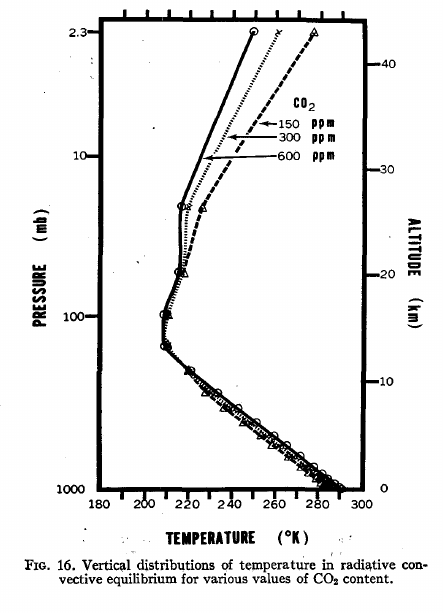
Notice that adding CO2 does not cause warming - oh oops, well, not at the top of the daigram. In the stratosphere, increasing CO2 leads to cooling. It's only when you get to the lower troposphere and surface that you see substantial warming.
So, when CallItAsItIs claims he can prove that CO2 can't cause warming, he does this by completely ignoring most of the physics.
- CO2 effect is saturated
Bob Loblaw at 06:03 AM on 29 November, 2024Charlie_Brown @ 787:
CallItAsItIs has not shown much proclivity for following links and reading material people have pointed him to. (He doesn't even seem to read much of what people say in comments to this thread.)
Anyway, more to the point, since figure 3 in your guest post is a figure that is "available on the internet", you can easily re-use that figure and insert it into a comment, just like any other figure that is "available on the internet". I did this earlier for the Trenberth diagram, which is used on another SkS page.
The link to your figure is:
https://skepticalscience.com/pics/AtmosphericRadiationModel-Fig3-1200px.jpg
...and I can insert it here using the little "tree" icon on the Insert tab of the editor:
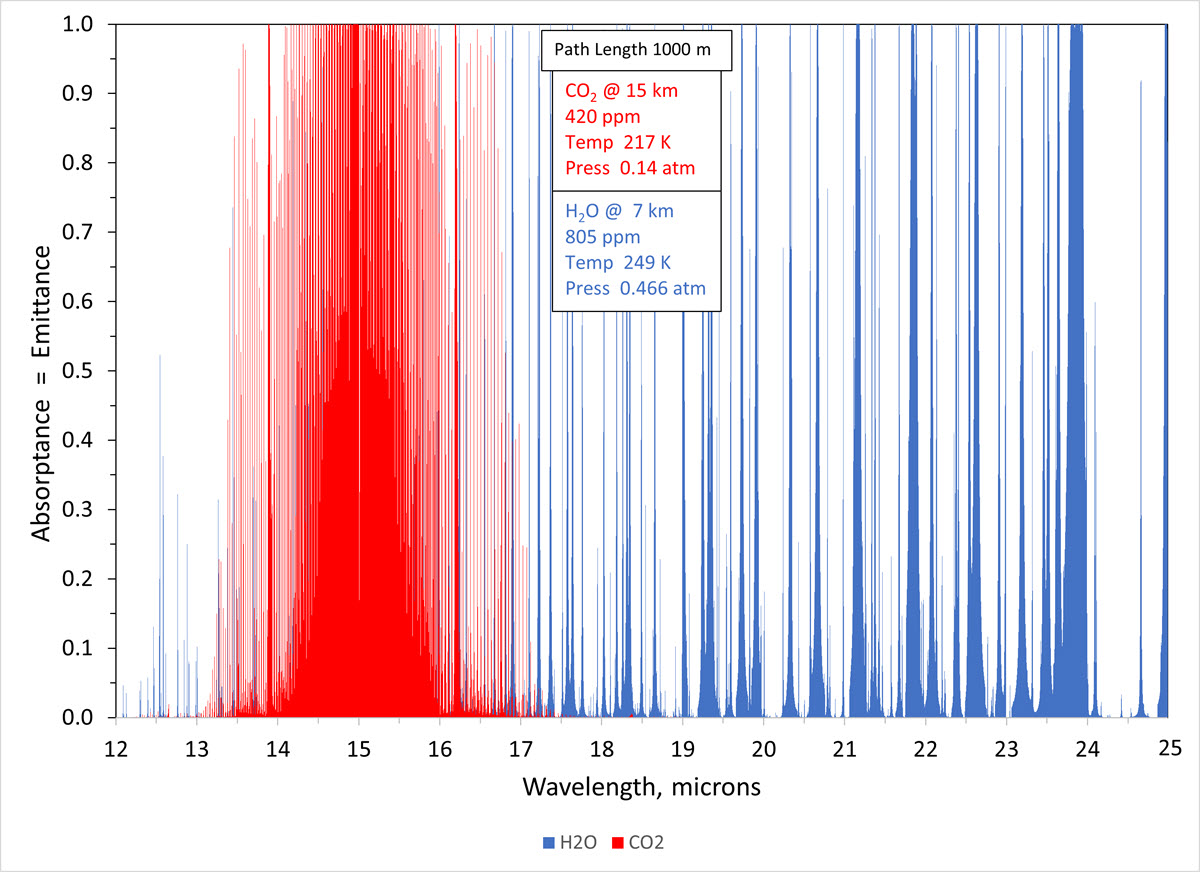
(In this case, I used the Appearance tab on the "insert Image"dialog box so that I could limit the display width to 500 pixels. This avoids breaking the web page formatting with large pictures.)
- CO2 effect is saturated
Eclectic at 17:41 PM on 28 November, 2024CallItAsItIs :-
Absolutely no need to apologize for an "almost" double posting. After all, it did provide opportunity for a tad of humor.
[ If you happen to double-post in future, then simply do an additional brief post asking the Moderator to make one deletion at his early convenience. ]
Also ~ while our friend Michael Sweet is skeptical about your bona fides as a genuine poster . . . that is ultimately a matter for an umpire's decision by Moderators, who may (or may not) expunge the posts of clumsier trolls or of those whose crackpot ideas are expressed in a repetitive tiresome manner.
Some crackpots simply do a "drive-by" series of posts on SkS and then disappear ~ others will later phoenix themselves. But we hope they will then revise & renovate their contrarian arguments into something of at least 25% merit. # Sadly, I have never encountered a phoenix who manages to show that all the mainstream scientists are wrong. Yet we live in hope that AGW will someday prove to be a mistaken concept, eh.
I am still eating my popcorn, CallItAsItIs , while I wait for you to introspect about Motivated Reasoning. And I suspect that some of the reason you are here in this thread, is that the strictly rational part of your intellect is quietly hoping that the powerful emotional/non-rational part of you will be brought into agreement with the climate expert physicists. ( Ain't human psychology interesting ! )
- CO2 effect is saturated
Bob Loblaw at 06:40 AM on 28 November, 2024Congratulations, CallItAsItIs. You actually have some sort of access to a textbook that covers "radiometery", and you know how to look in an index.
I am familiar with Petty's book, although It is not one that I have on my personal bookshelves.
I'll see your Petty, and raise you a Wallace and Hobbs, "Atmospheric Science, an Introductory Survey" (Beer's Law discussed on pages 296-297), a Pierrehumbert "Principles of Planetary Climate" (Beer's Law discussed in chapters 4 and 5), a Liou "An Introduction to Atmospheric Radiation" (which has 6 sections listed in the index for the Beer-Bouguer-Lambert law), and an Oke "Boundary Layer Climates" (also multiple references in the index).
All of those four books are ones that I do have on my personal bookshelf.
And if you want to see what else I know about Beer's Law, you can read this post:
https://skepticalscience.com/from-email-bag-beer-lambert.html
Yes, Beer's Law applies to individual wavelengths/frequencies. I challenge you to find a single reference that supports your argument that "conservation of energy must hold for each frequency independently of the others."
You see, Beer's Law says nothing at all as to what happens to energy that is absorbed when photons disappear within the volume of air it includes. As far as Beer's Law is concerned, the energy simply disappears along with the photon. To apply "conservation of energy" principles, you need to include where that energy goes - which you repeatedly fail to do.
- CO2 effect is saturated
Bob Loblaw at 23:28 PM on 26 November, 2024CallItAsItIs @ 749:
Yes, we need to get some basics straight. You say:
In this problem, we are trying to assess warming of the atmosphere due to IR radiation eminating from the surface of the earth. This earth-emitting IR is estimated as a blackbody at about 288 deg. K, although we do consider it to be adjustable.
For energy conservation, we must take this to be the only source of energy causing addtional warming to the entire atmosphere.
...and at this point, you have the basics horribly, horribly wrong. Energy conservation applies to all forms of energy. There is no "energy conservation" that applies solely to IR radiation. Energy is conserved in a system that obtains all energy as solar radiation, and emits the same amount of energy solely as IR radiation. When you isolate one form or another, there is absolutely no requirement that solar energy be conserved, or IR energy be conserved.
From this basic misunderstanding on your part, you have created a cartoon physics that bears no resemblance to reality.
You then continue with:
The term thermal radiation is used to denote the distribution of EMR when thermal equilbrium is reached.
This, frankly, is "not even wrong". Try reading Wikipedia's page on thermal radiation. The opening paragraph starts with:
Thermal radiation is electromagnetic radiation emitted by the thermal motion of particles in matter. All matter with a temperature greater than absolute zero emits thermal radiation.
Since you can't even get the basics right, the rest of your argument is completely illogical.
As for Eclectic's reference to the Trenberth energy diagram, here it is. Note that the only "conservation of energy" rules that applies is to the entire diagram as a whole - not the individual components (IR, solar, etc.)
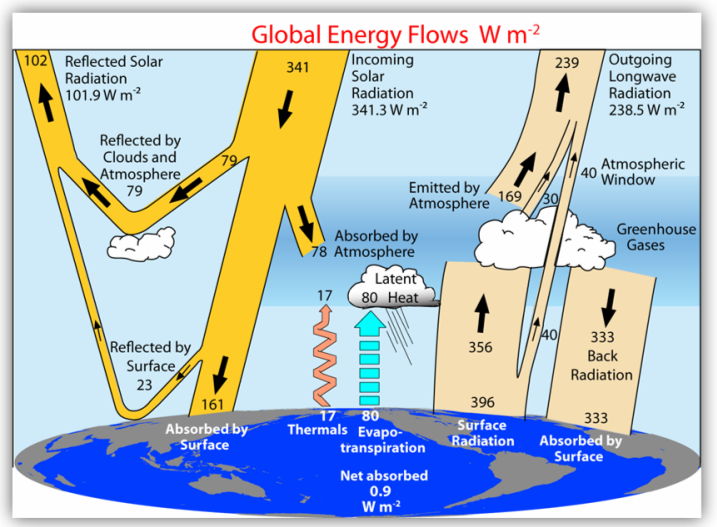
- 20 fact briefs published in collaboration with Gigafact!
prove we are smart at 07:44 AM on 14 November, 2024What the heck, thought I'd do the quiz even knowing I would know that stuff now. Well, I got number 15 wrong and am so glad I did!
I was eventually led back to here- skepticalscience.com/argument.php?p=1&t=162&&a=297 you can learn so much from the informed comments. By the time I read the first 25 comments of that decade old post I had my information- In fact a link from number 25 commenter led me here- www.amazon.com/The-Alchemy-Air-Scientific-Discovery/dp/0307351793 ( looks like a good read)
Surprising facts and scientific knowledge, gotta luv Skeptical Science.
- Models are unreliable
Bob Loblaw at 06:26 AM on 12 November, 2024Syme_Minitrue @ 1332:
Your comment contains several misunderstandings of how models are developed and tested, and how science is evaluated.
To begin, you start with the phrase "If a hypothesis should be considered proven..." Hypotheses are not proven: they are supported by empirical evidence (or not). And there is lots and lots of empirical evidence that climate models get a lot of things right. They are not "claimed to be true" (another phrase you use), but the role of CO2 in recent warming is strongly supported.
In your second and third paragraphs, you present a number of "alternative explanations" that you think need to be considered. Rest assured that none of what you present is unknown to climate science, and these possible explanations have been considered. Some of them do have effects, but none provide an explanation for recent warming.
In your discussion of "parameters", you largely confuse the characteristics of purely-statistical models with the characteristics of models that are largely based on physics. For example, if you were to consider Newton's law of gravity, and wanted to use it to model the gravitational pull between two planets, you might think there are four "parameters" involved: the mass of planet A, the mass of planet B, the distance between them, and the gravitational constant. None of the four are "tunable parameters", though. Each of the four is a physical property that can be determined independently. You can't change the mass of planet A that you used in calculating the gravitational pull with planet B, and say that planet A has a different mass when calculating the attraction with planet C.
Likewise, many of the values used in climate model equations have independently-determined values (with error bars). Solar irradiance does not change on Tuesday because it fits better - it only changes when our measurements of solar irradiance show it is changing, or (for historical data prior to direct measurement) some other factor has changed that we know is a reliable proxy indicator for past solar irradiance. We can't make forests appear and disappear on an annual basis to "fit" the model. We can't say vegetation transpires this week and not next to "fit" the model (although we can say transpiration varies according to known factors that affect it, such as temperature, leaf area, soil moisture, etc.)
And climate models, like real climate, involve a lot of interconnected variables. "Tuning" in a non-physical way to fit one output variable (e..g. temperature) will also affect other output variables (e.g. precipitation). You can't just stick in whatever number you want - you need to stick with known values (which will have uncertainty) and work within the known measured ranges.
Climate models do have "parameterizations" that represent statistical fits for some processes - especially at the sub-grid scale. But again, these need to be physically reasonable. And they are often based on and compared to more physically-based models that include finer detail (and have evidence to support them). This is often done for computational efficiency - full climate models contain too much to be able to include "my back yard" level of detail.
You conclude with the question "Can you adjust them so that you get a good fit with historical data, and good predictive capability at a significantly lower, or even completely excluded CO2-dependency?" The answer to that is a resounding No. In the 2021 IPCC summary for policy makers, figure SPM1 includes a graph of models run with and without the anthropogenic factors. Here is that figure:
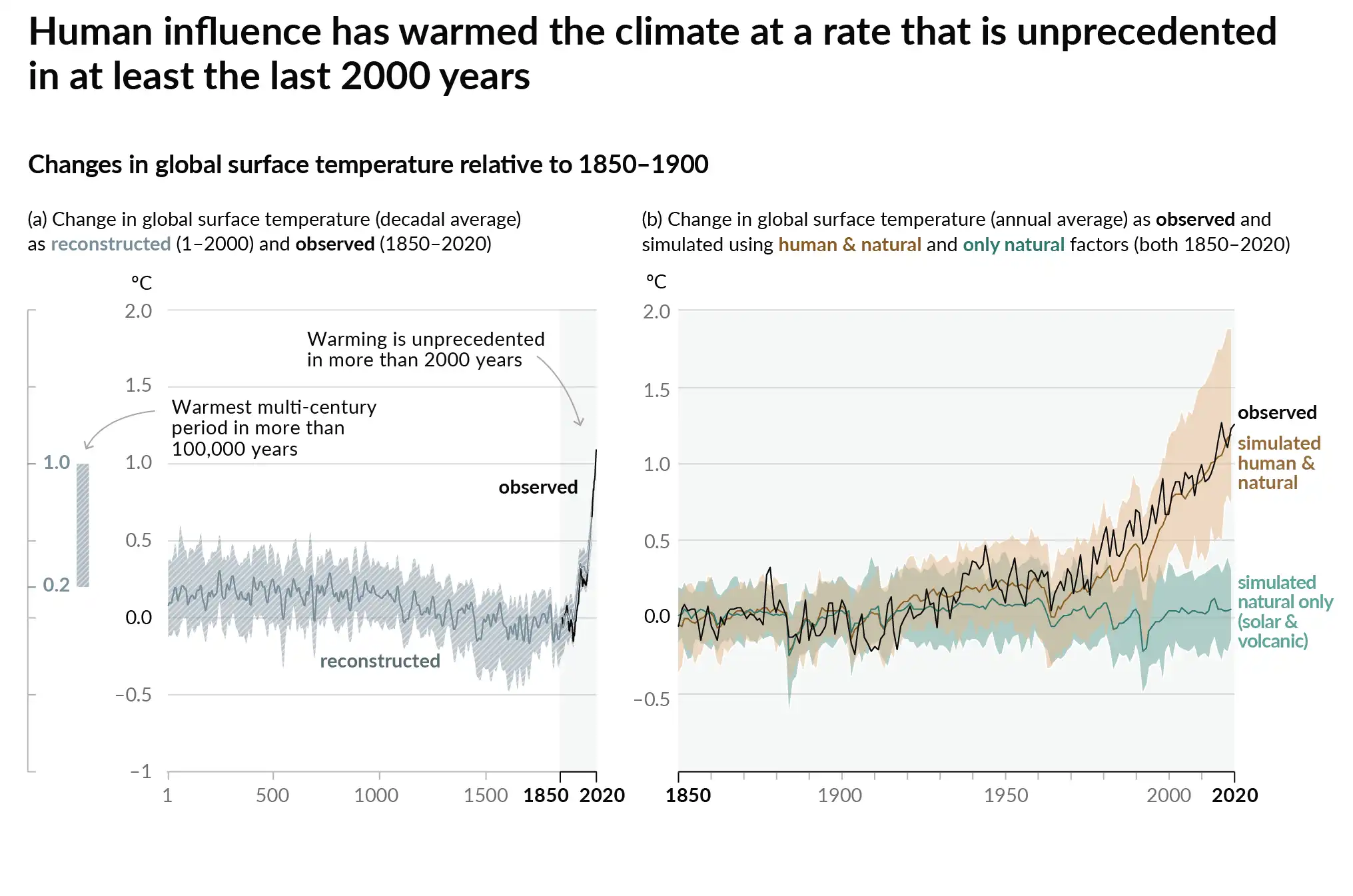
Note that "skeptics" publish papers from time to time purporting to explain recent temperature trends using factors other than CO2. These papers usually suffer from major weaknesses. I reviewed one of them a couple of years ago. It was a badly flawed paper. In general, the climate science community agrees that recent warming trends cannot be explained without including the role of CO2.
- Fact brief - Is there an expert consensus on human-caused global warming?
prove we are smart at 07:33 AM on 10 November, 2024Thanks Evan for providing that link to understand in a simple way some climate truths.
The ability and resolve to learn the why of it all is a losing battle. The internet can give us Skeptical Science but not teach us equity.
Seems to me, critical thinking has caved in to populist media messaging. The swing to the right in many western countries has reached a new peak in the consumer driven on steroids the USA.
"The forest was shrinking, but the trees kept voting for the axe; for the axe was clever and convinced the trees that because his handle was made of wood, he was one of them."
Perhaps I will think this again- It seems to be a law of human nature that some people only notice things when they suffer personally.
- CO2 lags temperature
Eclectic at 07:56 AM on 25 October, 2024JBomb @672 :
There's more than half a century of scientific investigation showing that CO2 causes warming. And yet you yourself have been unable to find anything of that?
Permit me to be skeptical about your "agnosticism".
Perhaps you have wandered onto an inappropriate website ~ you would be happier trying WattsUpWithThat website (where over half the participants are "agnostic" about the mass of evidence that the globe is warming at all).
- Skeptical Science New Research for Week #41 2024
Bob Loblaw at 01:17 AM on 12 October, 2024cctpp85 @ 1:
Is that comment directed towards a specific part of the OP, which covers new research? If not, it is off-topic here, and you should use the search function to find a thread where it is on-topic.
In addition, you are extremely short on details as to your methodology. Your graph (based on the legend) appears to mix surface temperatures with 850mb temperatures. Why? What are your data sources? How is your analysis done? Your opinion about your version bears little weight if nobody else knows how you arrive at your results.
You have previously been warned (on this thread) about our inability to read your mind, and your unwillingness to engage with people asking questions. Please do not repeat that pattern.
- Just have a think: Arctic Sea Ice minimum 2024. Three degrees Celsius warming now baked in?
Eclectic at 12:50 PM on 27 September, 2024Jim Hunt @2 ,
you were, two or three days ago, crossing swords with the amiable skeptics at WUWT blog, about Arctic ice.
It seems they feel that a sort-of flat-lining of minimum Arctic sea-ice extent during the past decade . . . is a disproof of the contemporary reduction in Arctic sea-ice volume . . . which in turn demonstrates that there will be no further ice melt as sea-level continues to rise ~ the ongoing rise which in turn disproves that global warming is occurring. (If I have understood their argument correctly.)
And since global warming is not continuing, despite rising measurements by worldwide thermometers, then the whole AGW thing is a hoax and can be ignored.
Or something like that.
And if Plan Denial eventually crumbles, then the WUWT skeptics will develop "concepts of a plan" to deal with the non-problem. [Please excuse contemporary 2024 political joke.]
- The doom spiral
Mal Adapted at 07:14 AM on 18 September, 2024Hi, Andrew,
I'm not on X, but I saw this fresh post by you here! Do you know why DNS lookup currently fails for theclimatebrink.com?
$ nslookup skepticalscience.com 8.8.8.8
Server: 8.8.8.8
Address: 8.8.8.8#53
Non-authoritative answer:
Name: skepticalscience.com
Address: 192.73.240.141
$ nslookup theclimatebrink.com 8.8.8.8
Server: 8.8.8.8
Address: 8.8.8.8#53
Non-authoritative answer:
*** Can't find theclimatebrink.com: No answer
I first noticed it about an hour ago.
TIA.
Your Bulldog, Mal
- Climate change is making us sick, literally
RedRoseAndy at 20:33 PM on 13 August, 2024As this is your first post, Skeptical Science respectfully reminds you to please follow our comments policy. Thank You!
- CO2 lags temperature
Bob Loblaw at 10:28 AM on 7 August, 2024Charlie Brown @ 669:
One needs to be careful about referencing Henry's Law when it comes to CO2. CO2 does not just dissolve in water - it ends up dissociating and forming carbonic acid. This complicates the solubility equations.
SkS has a very good series on ocean acidification - in 20 parts. The 9th part discusses Henry's Law. The entire series is summarized in the 19th and 20th posts in the series.
- 2024 SkS Weekly Climate Change & Global Warming News Roundup #29
One Planet Only Forever at 04:05 AM on 6 August, 2024Responding to nigelj @12, particularly regarding skepticism of Trump’s denial of knowledge of Project 2025.
Trump winning appears likely to result in increased amounts of harmfully biased and noisy leadership judgment, especially if New Right Republicans win control of the House and/or Senate in addition to their already potentially very long lasting harmfully biased majority influence on judgments by the Supreme Court (SC).
This July 16, 2024, Inside Climate News article “Trump’s Environmental Impact Endures, at Home and Around the World” presents the legacy of actions by New Right Republicans last time they ‘owned’ the Presidency. And a significant part of that legacy is the ways the current day SC has continued to make harmful noisy biased judgments against everybody who is concerned about the future of humanity and learns to be less harmful and more helpful to Others.
Passionately held emotionally-based opinions can be aligned with better understanding that is developed through unbiased investigation and thoughtful consideration of how to be less harmful and more helpful to others. But in many cases the pursuit of better understanding results in changes and corrections that conflict with established passionately held opinions. Tragically, instead of learning, many people are easily convinced, susceptible to being conned into believing, that they are victims of attacks on their passionately held harmful misunderstandings.
The truth about what Trump will try to do if he is elected President appears to be exposed by this July 27, 2024, NPR article “Trump tells Christian voters they 'won't have to vote anymore' if he's elected”. Trump appears ready to try to lock in passionately held irrational misunderstandings as ‘what rules in the US’. The following quote appears to be Trump’s honest promise (in brackets are my clarification of more specific understanding regarding over-generalized terms misleadingly used by Trump).
"Trump also urged (fundamentalist anti-learning) Christians to turn out for him ahead of Election Day, calling it the "most important election ever." He added that if elected, (fundamentalist anti-learning) Christian-related concerns will be "fixed" so much so that they would no longer need to be politically engaged.
""You won’t have to do it anymore. Four more years, you know what? It’ll be fixed, it’ll be fine. You won’t have to vote anymore, my beautiful (fundamentalist anti-learning Caucasian only-English speaking) Christians," he said."
That harmful promise by Trump is in addition to the additional harms his leadership would inflict on climate science understanding.
The New Republicans definitely appear determined to promote harmful misunderstanding to “fix” things in their favour on many important issues (like they “fixed” the SC) to the detriment of Others, especially to the detriment of all the future Others.
Paraphrasing nigelj's last sentence: Its all consistent with the New Right Republican interests in resisting learning to be less harmful and more helpful to Others.
- 2024 SkS Weekly Climate Change & Global Warming News Roundup #29
One Planet Only Forever at 07:04 AM on 25 July, 2024I agree with the comments made by nigelj, Cleanair27, and Bob Loblaw.
I would add that part of the 2025 weapon of mass destruction is “The Seven Mountain Mandate” (link to Wikipedia here). Note that many prominent New Right (Wikipedia link here) Republicans have chosen to promote the Seven Mountain Mandate.
And, building on nigelj’s @1 suggestion that “we need to come back to some of the core problems we face as a society, and why this lead to the administrative state”, I would add the need to collectively effectively address anti-intellectualism (wikipedia link here), particularly the dislike for ‘learning to be less harmful and more helpful’ that applies to denial and attacks on climate science.
The core problem of the popularity of anti-intellectualism is an understandable threat to social democracy. Anti-intellectualism claims that emotional instinctive beliefs are superior to the results of rigorous skeptical investigation and thoughtful consideration.
A clear recent example of the harmful popularity of anti-intellectualism is Michael Gove’s, a misleading promoter of Leave in the Brexit referendum, declaration that “Oh we’ve had enough of experts”. His “we” was only himself and easily impressed anti-learning types.
The Wikipedia item regarding anti-intellectualism is quite informative. But the Nature Human Behaviour article “Anti-intellectualism and the mass public’s response to the COVID-19 pandemic” includes the following helpful description with my addition in [ ]:
“People tend to be persuaded by speakers they see as knowledgeable (that is, experts), but only when they perceive the existence of common interests [when the expert’s statement supports their preferred belief and interests]. Some groups of citizens, such as ideological conservatives, populists, religious fundamentalists and the like, may see experts as threatening to their social identities. Consequently, they will be less amenable to expert messages, even in times of crisis.”
Origins or causes of anti-intellectualism can be complex. Protestants opposed to being dictated to by The Vatican educated experts are an example. But evangelists also used it against established Protestant groups. However, it is clear that there have always been, and always will be, some anti-intellectualism.
It is important to understand that everyone can choose to learn to not be anti-intellectual. Nobody is ‘born to be, and destined to be, intractably anti-intellectual’. Being anti-intellectual is a ‘learned behaviour’.
In Alberta, I encounter many non-religious people who are selectively anti-intellectual and resist learning about climate science. They really dislike the related importance of rapidly ending the harmful impacts of fossil fuel use and making amends for the damage done. I also encounter many religious people who are more open-minded regarding climate science and the required corrections of what has developed and making amends for damage done.
There are many examples that highlight anti-intellectualism attacks on ‘climate science and the need to rapidly end the harmful impacts of fossil fuel use’. Al Gore presented this ‘problem in America’ in his 2007 book “The Assault on Reason”. In that book Gore presents many ways that the New Right Republicans make-up misleading attacks on evidence-based and reasoned understanding that ‘is not in common with their interests’.
A detailed explanation of the source/cause of anti-intellectualism in America was presented by the originator of the term ‘anti-intellectualism’, Richard Hofstadter, in his 1963 book “Anti-Intellectualism in American Life” (Wikipedia link here). In the 1700s anti-intellectual evangelism grew quicker in the US than organized established religions. That anti-intellectual revolution of religion extended into secular aspects of society, with business interests becoming engaged with evangelical interests in the 1800s.
The need for the welfare state to address the unjust inequities (marketplace failures) of freer misleading marketplace capitalism in America, free to fail to investigate the potential for harmful results and free to misleadingly excuse or deny that harm has been done, fuelled growth of anti-intellectualism beyond the Protestant-Evangelical anti-intellectual religious movements.
I will end my comment with an edited quote from the Hofstadter’s Introduction, Chapter 2, Section 4, with my inserts in [ ]. Note the ending lists targets (supporters) of anti-intellectual misleading politics that will look very similar to today’s New Right-wing targets of unjustified attack. Being anti-climate science is a major part of the New Right-wing anti-intellectual agenda because it connects to other anti-intellectual targets of attack.
“Compared with the intellectual as expert, who must be accepted even when feared, the intellectual as ideologist is an object of unqualified suspicion, resentment, and distrust [Now even the expert can be dismissed, disrespected, and attacked by the misleading New Right]. The expert appears as a threat to dominate or destroy the ordinary individual, but the ideologist is widely believed to have already destroyed a cherished American society. To understand the background of this belief, it is necessary to recall how consistently the intellectual has found himself ranged in politics against the right-wing mind. This is, of course, no peculiarity of American politics. ...
“... if there is anything that could be called an intellectual establishment in America, this establishment has been, though not profoundly radical (which would be unbecoming of an establishment), on the left side of center. And it has drawn the continuing and implacable resentment of the right, which has always liked to blur the distinction between the moderate progressive and the revolutionary. ...
“... The truth is that the right-winger needs his Communists [unjustified made-up threats] badly, and is pathetically reluctant to give them up. ...
“... Had the [McCarthy] Great Inquisition been directed only against Communists, it would have tried to be more precise and discriminating in its search for them: in fact, its leading practitioners seemed to care little for the difference between a Communist and a unicorn. ...
“... The inquisitors were trying to give satisfaction [create misleading anti-learning attacks] against liberals, New Dealers, reformers, internationalists, intellectuals, and finally even against the Republican administration that failed to reverse liberal policies [like the Tea Party and Freedom Caucus radical factions in the Republican Party. What was involved, above all, was a set of political hostilities in which the New Deal was linked to the welfare state, the welfare state to socialism, and socialism to Communism. In this crusade Communism was not the target but the weapon, ...
“... The deeper historical sources of the Great Inquisition are best revealed by the other enthusiasms of its devotees: hatred of Franklin D. Roosevelt, implacable opposition to New Deal reforms, desire to banish or destroy the United Nations, anti-semitism, Negrophobia, isolationism, a passion for repeal of the income tax, fear of poisoning by fluoridation of the water system, opposition to modernism in the churches.”
- What’s next after Supreme Court curbs regulatory power: More focus on laws’ wording, less on their goals
One Planet Only Forever at 12:36 PM on 16 July, 2024David-acct @58,
The problem with industry 'experts' can be that they are expert at hiding evidence, failing to investigate potential harms, and making up misleading statements because they have interests that conflict with helping others learn to be less harmful and more helpful.
And the over-ruling of Chevron deference can be understood to be an unreasonable judgment for the reasons presented in many comments.
What you have said appears to ignore or deny the reality of the ways that pursuits of reward and status are known, more so now than when the Constitution was written, to create 'interests' that conflict with learning to improve a social system and correct its potentially unsustainable and harmful developments.
You also appear to believe that if it isn't explicitly 'conclusively provable to be against the current laws' it is totally OK. If that were true there would be no need for any new laws. That ignores or denies the reality of the many ways that competition for reward and status results in people doing things that are understandably unacceptable, but claiming it isn't able to be proven to be against the currently written laws (as they interpret them) so they can do as they please.
You should read Daniel Kahneman's book "Noise" that I refer to in my comment @48. The book includes extensive points about the potential problems of attempting to get improved, less biased and less noisy, judgments through rigid wording rather than clear guidelines open to improvement via input from helpful experts, skeptically questioning the input to be sure there is no conflicting interest influence.
More than 100 comments found. Only the most recent 100 have been displayed.

More than 100 comments found. Only the most recent 100 have been displayed.






THE ESCALATOR
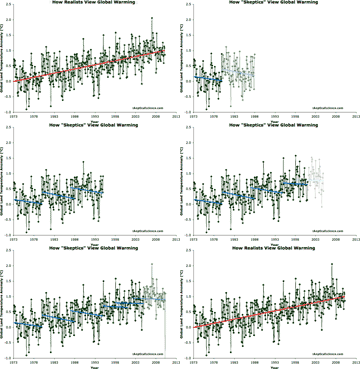
(free to republish)