



 Arguments







2025 in review - busy in the boiler room
Posted on 31 December 2025 by BaerbelW, Doug Bostrom
Quite a lot has been happening during 2025 but a good chunk of it is hidden away in our "boiler room" as we were working on a complete revamp of our homepage (see the sneak peek section below).
As in previous recaps, this one is divided into several sections:
 |
Scholarly publications
Several members of the SkS-team were lead- or co-authors of peer-reviewed and conference papers published during 2025. Here is a list of some of them:
Communication and Misinformation: Crisis Events in the Age of Social Media (pp. 163-179)
Sojung Claire Kim, Emily K. Vraga, John Cook, and Sydney Carver (Dec 2024). Exploring the influence misinformation has on public perceptions of the risk and severity of crisis events
Future trajectories of peatland permafrost under climate and ecosystem change in northeastern Canada
Yifeng Wang, Robert G. Way (February 2025). Peatland permafrost ecosystems include culturally and ecologically important habitats for plants and wildlife. Widespread degradation of palsas and peat plateaus suggests vulnerability of these landforms to climate warming, but ecosystem changes, including landscape greening due to shrub expansion and related changes in snow distribution, are also expected to impact permafrost persistence. In this study, a process-based one-dimensional transient model is used to simulate an ensemble of future ground temperature trajectories for seven palsa and two peat plateau study sites along the Labrador Sea coastline.[...]
Pilot Testing a French and Kinyarwandan Game to Improve Vaccine Attitudes and Misinformation Resistance in Rwanda
John Cook, Laetitia Nyirazinyoye, Michael Mugisha, Angelique Uwamahoro, Rukundo Jean Claude, Chelsey Lepage, Angus Thomson, Kathryn L. Hopkins, Wendy Cook (March 2025). Vaccine misinformation causes negative impacts such as decreased vaccine acceptance and reduced intent to get vaccinated. The association between susceptibility to vaccine misinformation and vaccine hesitancy underscores the need for interventions that increase public resilience against misinformation. One promising intervention is psychological inoculation, where recipients receive a “weakened form” of misinformation to build immunity to real-world misinformation. Misinformation is delivered in weakened form by exposing its misleading techniques. Cranky Uncle Vaccine is an interactive, digital game that applies inoculation theory, explaining facts about vaccines as well as the misleading techniques used to cast doubt on the facts. We document a pilot study testing the effectiveness of an East African version of Cranky Uncle Vaccine conducted in Rwanda.[...]
Climate warming impacts tuttuk (caribou) forage availability in Tongait (Torngat) Mountains, Labrador
Alexandra Johnson, Andrew Trant, Luise Hermanutz, Emma Davis, Michelle Saunders, Laura Siegwart Collier, Robert Way, and Tom Knight (March 2025). Tuttuk (caribou (Rangifer tarandus)) populations are in decline across Canada, making them a major conservation concern for Inuit of Nunatsiavut (Northern Labrador) and Nunavik (Northern Quebec). This study investigates changes to caribou forage over 14 years at two tundra sites in northern Nunatsiavut, Labrador.
Monitoring climate change impacts, Indigenous livelihoods, and adaptation: Perspectives from Inuit community of Hopedale, Nunatsiavut, Canada
Ishfaq Hussain Malik, James D. Ford, Ian Winters, Beverly Hunter, Nicholas Flowers, Duncan Quincey, Kevin Flowers, Marjorie Flowers, Dean Coombs, Christine Foltz-Vincent, Nicholas E. Barrand, and Robert G. Way (April 2025). The Arctic is at the forefront of climate change, undergoing some of the most rapid environmental transformations globally. Here, we examine the impacts of climate change on the livelihoods in the coastal Inuit community of Hopedale, Nunatsiavut, Canada. The study examines recently evolved adaptation strategies employed by Inuit and the challenges to these adaptations. We document changing sea ice patterns, changing weather patterns and the impact of invasive species on food resources and the environment. [...]
Information Integrity about Climate Science: A Systematic Review
E. Elbeyi, K. Bruhn Jensen, M. Aronczyk, J. Asuka, G. Ceylan, J. Cook, G. Erdelyi, H. Ford, C. Milani, E. Mustafaraj, F. Ogenga, S. Yadin, P. N. Howard, S. Valenzuela (eds.) (June 2025). The human response to the climate crisis is being obstructed and delayed by the production and circulation of misleading information about the nature of climate change and the available solutions. The findings of this study indicate that powerful actors—including corporations, governments, and political parties—intentionally spread inaccurate or misleading narratives about anthropogenic climate change. These narratives circulate across digital, broadcast, and interpersonal communication channels. The result is a decline in public trust, diminished policy coordination, and a feedback loop between scientific denialism and political inaction.
The Anti-Autocracy Handbook: A Scholars' Guide to Navigating Democratic Backsliding
Lewandowsky, S., Kempe, V., Armaos, K., Hahn, U., Abels, C. M., Wibisono, S., Louis, W., Sah, S., Pagel, C., Jankowicz, N., DiResta, R., Markolin, P., Schönemann, H., Hertwig, R., Crull, H., Mauer, B., Holford, D., Lopez-Lopez, E., & Cook, J. (June 2025). The Anti-Autocracy Handbook is a call to action, resilience, and collective defence of democracy, truth, and academic freedom in the face of mounting authoritarianism. It tries to provide guidance to scholars navigating the growing global trend of democratic backsliding and autocratization, in particular in the U.S.
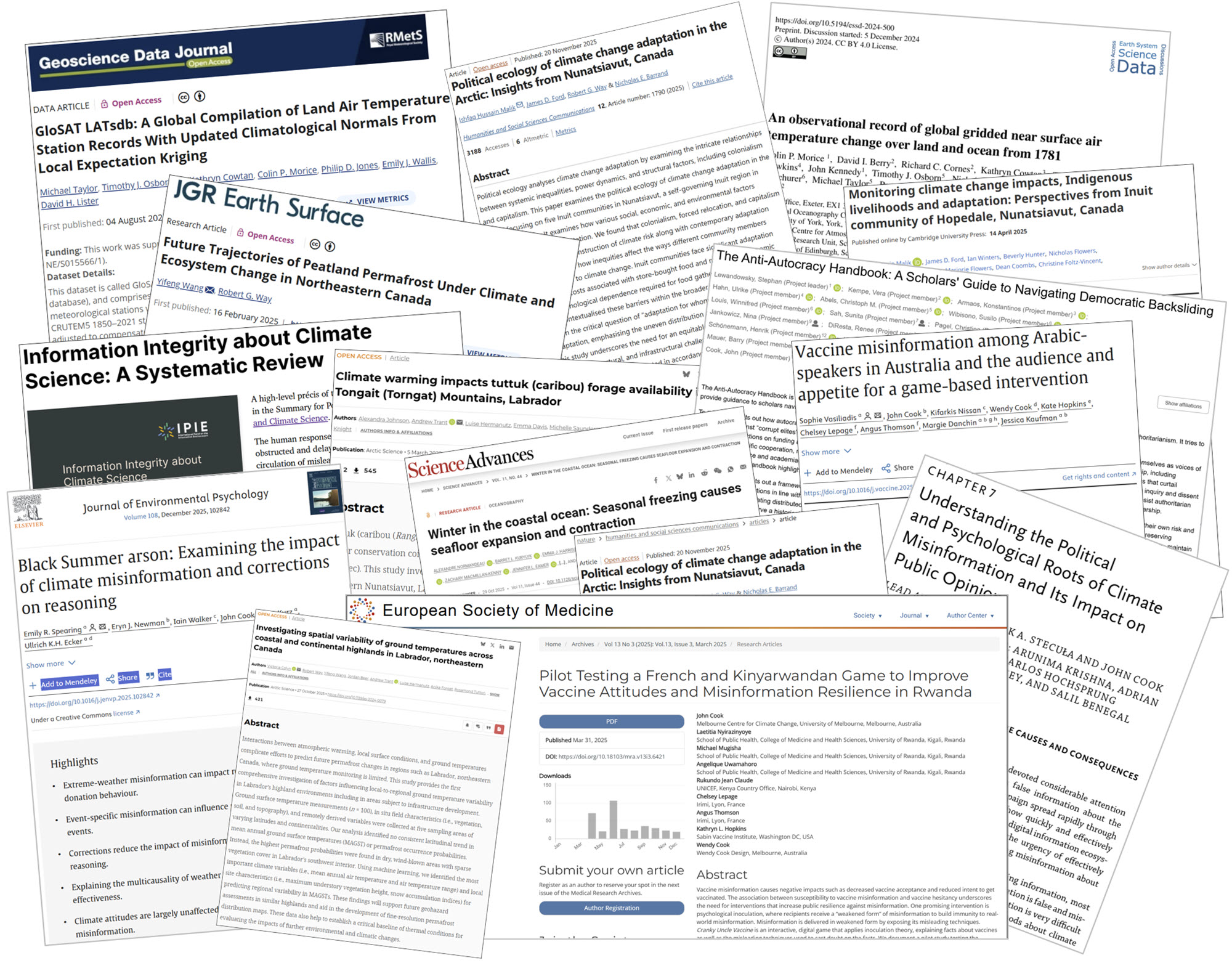
GloSAT LATsdb: a global compilation of land air temperature station records with updated climatological normals from local expectation kriging
Michael Taylor, Timothy J. Osborn, Kathryn Cowtan, Colin P. Morice, Philip D. Jones, Emily J. Wallis, David H. Lister (August 2025). This dataset is called GloSAT (Global Surface Air Temperature) LAT (land air temperature) sdb (station database), and comprises monthly mean temperature observations and climatological normals for meteorological stations worldwide.
Vaccine misinformation among Arabic-speakers in Australia and the audience and appetite for a game-based intervention
Sophie Vasiliadis, John Cook, Kifarkis Nissan, Wendy Cook, Kate Hopkins, Chelsey Lepage, Angus Thomson, Margie Danchin, Jessica Kaufman ( August 2025). Vaccine misinformation has been increasingly pervasive since the COVID-19 pandemic. It was a particular challenge among Arabic-speaking communities during vaccine roll-out. This study explored the content, context and mechanisms of vaccine misinformation beliefs and dissemination among the Arabic-speaking community in Victoria, to inform the adaptation of the Cranky Uncle – Vaccine (Arabic) online misinformation inoculation game.
Improving Vaccine Attitudes and Misinformation Resistance through Gamification: A Pilot Study in Kenya and Uganda
John Cook, Doris Njomo, Caroline Aura, Benson Munyali Wamalwa, Surangani Abeyesekera, Jacquellyn Nambi Ssanyu, Lydia Kabwijamu, Michael Ofire, Chelsey Lepage, Angus Thomson (preprint August 2025). Misinformation about vaccines poses a significant challenge to vaccination efforts, including in low- and middle-income countries. Pre-emptive strategies to neutralize the influence of misinformation have gained attention, with psychological inoculation theory found to be an effective framework. Digital games have emerged as engaging, cost-efficient, and scalable tools to implement inoculation interventions and promote health-related behaviors. The Cranky Uncle Vaccine game, co-designed in Uganda, Kenya, and Rwanda, and piloted in Kenya and Uganda, aimed to establish the effectiveness of Cranky Uncle Vaccine in increasing vaccine acceptance, intent to get vaccinated, and discernment between vaccine facts and fallacies, as presented in this paper. [...]
Investigating spatial variability of ground temperatures across coastal and continental highlands in Labrador, northeastern Canada
Victoria Colyn, Robert Way, Yifeng Wang, Jordan Beer, Andrew Trant, Luise Hermanutz, Anika Forget, Rosamond Tutton, Katryna Barone, Madison Power, Leah Fedder, Erin Rendell, Nicole Gaul, and Nhu Le (October 2025). Interactions between atmospheric warming, local surface conditions, and ground temperatures complicate efforts to predict future permafrost changes in regions such as Labrador, northeastern Canada, where ground temperature monitoring is limited. This study provides the first comprehensive investigation of factors influencing local-to-regional ground temperature variability in Labrador’s highland environments including in areas subject to infrastructure development.[...]
Winter in the coastal ocean: seasonal freezing causes seafloor expansion and contraction
Alexandre Normandeau, Barret L. Kurylyk, Emma J. Harrison, Haley D. Geizer, Genevieve Philibert, Robert Way, Christopher L. Algar, Zachary MacMillan-Kenny, Jennifer L. Eamer, Nicolas Van Nieuwenhove, Jordan B. R. Eamer,, Liz Pijogge, Frédéric Cyr, Ian Church, Eric Oliver, Michelle Saunders, and Audrey Limoges (October 2025). Seafloor mapping in polar regions has led to the recognition of landforms associated with subsea permafrost. Despite recent studies indicating rapid subsea permafrost degradation, information on seasonal seafloor changes remains limited. Here, we use time-lapse multibeam bathymetry (2021–2024) and bottom-water temperature data to reveal seasonal formation and degradation of small frost blisters (5 meters wide and 20 to 50 centimeters high) as ice forms within surficial sediments. [...]
Understanding the Political and Psychological Roots of Climate Misinformation and Its Impact on Public Opinion - Lead Authors: Dominik A. Stecula and John Cook / Contributing Authors: Arunima Krishna, Adrian Dominik Wójcik, Jean Carlos Hochsprung Miguel, Matthew Hornsey, and Salil Benegal (October 2025). Climate Obstruction: A Global Assessment is a new book from Brown University’s global Climate Social Science Network, for which a team of more than 100 scholars explored who’s blocking action on climate change and how they’re doing it. John Cook - founder of Skeptical Science and senior research fellow with the Melbourne Centre for Behaviour Change at the University of Melbourne - co-authored chapter 7 in the book titled "Understanding the Political and Psychological Roots of Climate Misinformation and Its Impact on Public Opinion". The book is available open access for download from the Climate Social Science Network.
Black Summer Arson: Examining the Impact of Climate Misinformation and Corrections on Reasoning
Emily R. Spearing, Eryn J. Newman, Iain Walker, John Cook, Tim Kurz Ullrich K.H. Ecker (November 2025). Highlights: Extreme-weather misinformation can impact reasoning and donation behaviour. Event-specific misinformation can influence reasoning about related events. Corrections reduce the impact of misinformation on climate-related reasoning. Explaining the multicausality of weather events increases correction effectiveness. Climate attitudes are largely unaffected by extreme-weather misinformation.
Political ecology of climate change adaptation in the Arctic: Insights from Nunatsiavut, Canada
Ishfaq Hussain Malik, James D. Ford, Robert G. Way & Nicholas E. Barrand (November 2025). Political ecology analyses climate change adaptation by examining the intricate relationships between systemic inequalities, power dynamics, and structural factors, including colonialism and capitalism. This paper examines the political ecology of climate change adaptation in the Arctic, focusing on five Inuit communities in Nunatsiavut, a self-governing Inuit region in northern Canada. It examines how various social, economic, and environmental factors intersect to influence adaptation. We found that colonialism, forced relocation, and capitalism are driving the historical construction of climate risk along with contemporary adaptation challenges, and showcase how inequities affect the ways different community members experience and respond to climate change. [...]
An observational record of global gridded near-surface air temperature change over land and ocean from 1781
Colin P. Morice, David I. Berry, Richard C. Cornes, Kathryn Cowtan, Thomas Cropper, Ed Hawkins, John J. Kennedy, Timothy J. Osborn, Nick A. Rayner, Beatriz Recinos Rivas, Andrew P. Schurer, Michael Taylor, Praveen R. Teleti, Emily J. Wallis, Jonathan Winn, and Elizabeth C. Kent (December 2025, revised manuscript). We present a new data set of global gridded surface air temperature change extending back to the 1780s. This is achieved using marine air temperature observations with newly available estimates of diurnal-heating biases together with an updated land station database that includes bias adjustments for early thermometer enclosures. These developments allow the data set to extend further into the past than current data sets that use sea surface temperature rather than marine air temperature data.
Conferences
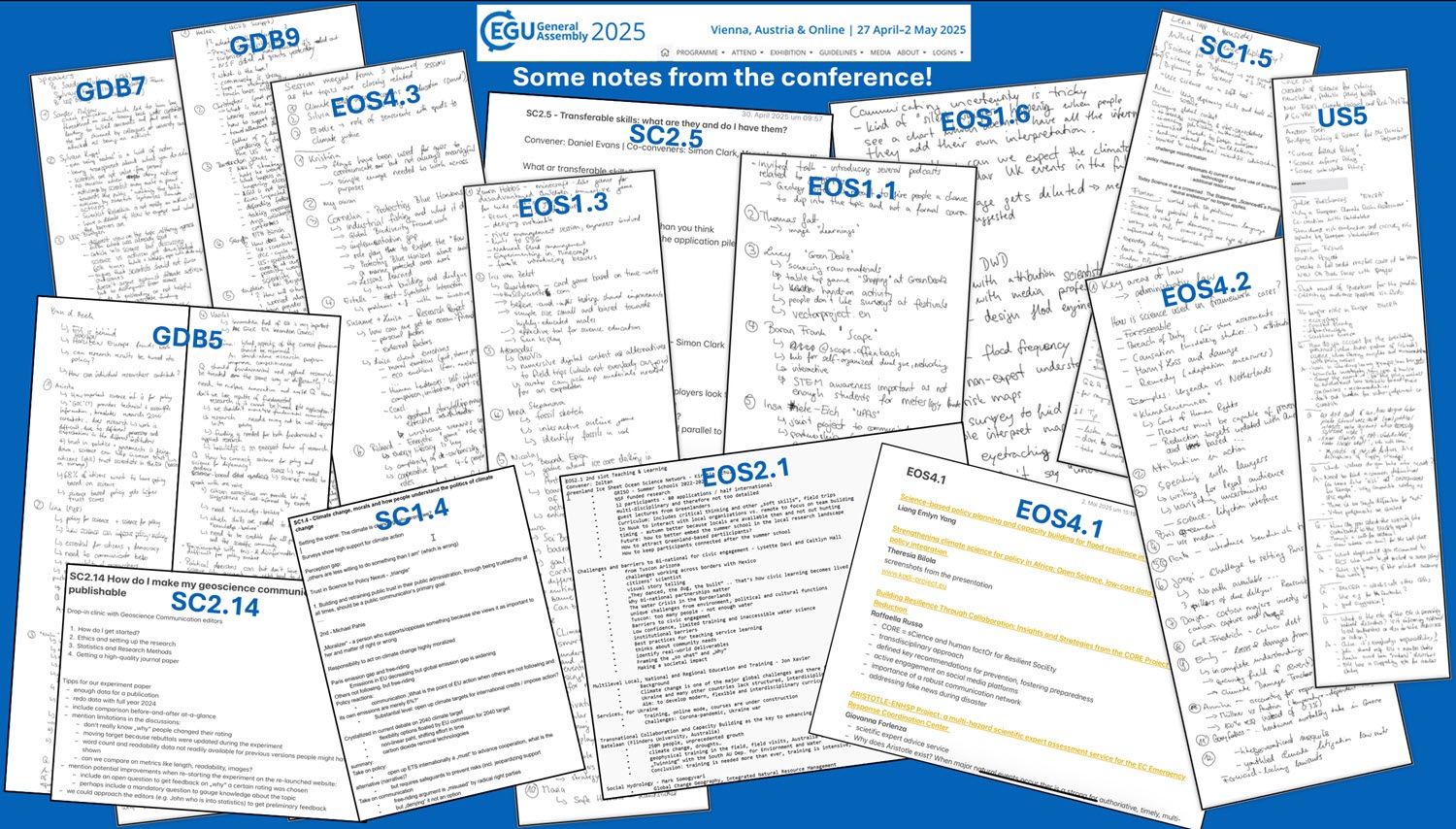
As in previous years, Bärbel Winkler participated in this year's General Assembly of the European Geosciences Union in Vienna from April 28 to May 2. As the week unfolded, Bärbel added to her "diary" on a daily basis leveraging the copious notes she took in the many sessions she attended. On Thursday, Bärbel gave a short talk about our collaborations with other websites and organizations, which you can read about in this companion article. On the last day of the conference she presented on our translation activities and challenges. You can read about the presentation here.
References for the two conference papers presented:
Winkler, B.: Collaborations between Skeptical Science and other groups to spread fact-based information, EGU General Assembly 2025, Vienna, Austria, 27 Apr–2 May 2025, EGU25-1439, https://doi.org/10.5194/egusphere-egu25-1439, 2025.
Winkler, B.: Making climate science more easily accessible by providing translations on Skeptical Science, EGU General Assembly 2025, Vienna, Austria, 27 Apr–2 May 2025, EGU25-1440, https://doi.org/10.5194/egusphere-egu25-1440, 2025.
Other Publications
As in previous years, members from our team published articles in other outlets:
Dana Nuccitelli wrote 11 articles for Yale Climate Connections which we also reposted on Skeptical Science. Ken Rice published 14 articles on his " …and Then There's Physics" blog.
Recorded Talks, Podcasts and other outreach activities
Several presenations, podcasts and interviews were recorded during the year and you can see some of them listed on our talks page:
| Month Day | Title and link | |
| January 16 | CCL webinar: data to Defend the Inflation Reduction Act (Dana Nuccitelli) | |
| February 20 | republicEN webinar part 1 - BUST or TRUST? The scientific consensus on climate change with John Cook | |
| February 27 | republicEN webinar part 2 - BUST or TRUST? The scientific consensus on climate change | |
| July 12 | EDMO Training Series on Climate Disinformation - Module 2: Responding to climate disinformation | |
| September 25 | Track Changes - Liars and blockers: The rising threat of climate disinformation and misinformation | |
| October 2 | CCL webinar: What Emission Reductions Did the Clean Energy Tax Credits Achieve? (Dana Nuccitelli) | |
| November 15 | CCL webinar: Fix Our Forests Act – from Skepticism to Support (Dana Nuccitelli) |
Projects
Cranky Uncle
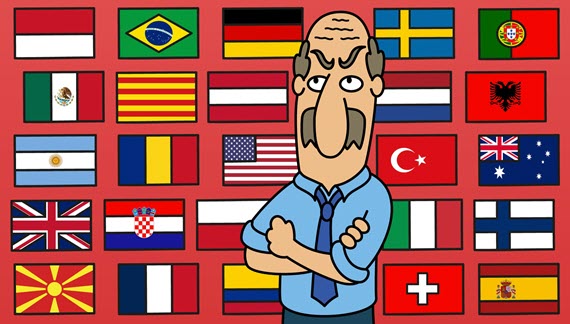
In March we added Catalan, Croatian and Indonesian and in October Polish to the Cranky Uncle game and the respective app stores. The game can now be played in 17 languages! Two more languages - Bulgarian and Greek - are still in the translation phase and we hope to announce their availability sometime in 2026. These translations were created by translator teams scattered around the globe and put together by the professional team of creative agency Goodbeast. The blog post about the Cranky Game's translations explains the game's history and goes into fascinating details of what all is involved with these translations and especially the "fun with ambiguities" the translator teams had! We also update it as new language-versions become available.
John Cook published an in-depth article in Skeptical Inquirer's special section titled Clear Thinking about Climate. In his article "The Cranky Uncle Game: A Way to Logic-Check Misinformation about Climate Change", John Cook argues that while traditional fact-checking is valuable, it often fails to address more insidious forms of misinformation like "paltering"—the use of true statements to create a false impression—and hidden logical fallacies. To bridge this gap, John Cook advocates for "logic-checking," a method that focuses on identifying the rhetorical techniques and flawed reasoning used to deny scientific consensus. He highlights the Cranky Uncle game as a practical application of this approach, using humor and "logic-based inoculation" to teach players how to spot common fallacies like cherry-picking and fake experts. By gamifying critical thinking, the initiative aims to build public resilience against climate denialism and equip individuals with the analytical tools necessary to navigate an increasingly complex information landscape.
Cranky Uncle Vaccine
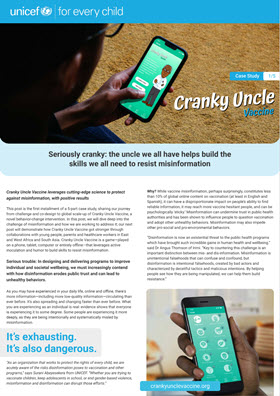
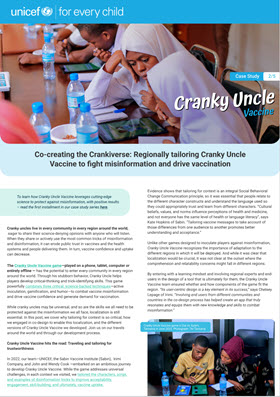
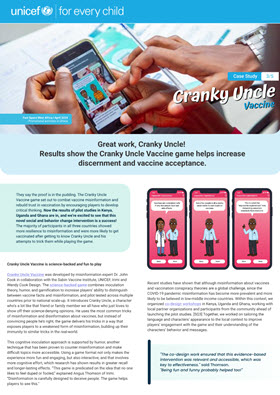
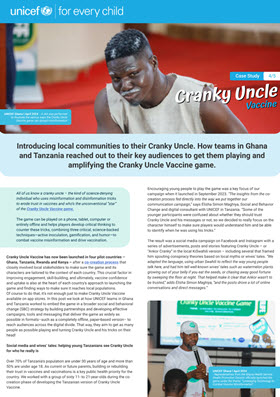
You can read about the Cranky Uncle Vaccine game on the UNICEF website where they are publishing a series of PDFs under the title Seriously Cranky: the uncle we all have helps build the skills we all need to resist misinformation.
Cranky Uncle Vaccine leverages cutting-edge science to protect against misinformation, with promising results:
In designing and delivering programs to improve individual and societal wellbeing, we must increasingly contend with how disinformation erodes public trust and can lead to unhealthy behaviors. On both online and offline platforms, there is more information — including more low-quality information — circulating than ever before. It is also spreading and changing faster than ever before. Evidence shows that the misinformation and disinformation that individuals experience on a daily basis affects individuals' vaccine acceptance and confidence. The Cranky Uncle Vaccine game leverages active inoculation, gamification, and humor to build the skills needed to resist misinformation.
Up to now, 4 of the 5 planned articles have been published and you can access them via the links below:
|
Case Study 1
|
Case Study 2
|
|
Case Study 3
|
Case Study 4
|
Some team news
Several members from our team have been very busy - and still are as of this writing! - in the boiler room of our website, preparing for a complete relaunch of Skeptical Science. We needed to scope all the functionality we currently have available, make decisions of what to take with us to the new website, what to leave behind, define the new admin area, have everything build, then test everything and provide feedback on the testing which requires re-testing later. On top of that, we also have to think about how to move our current content to the new backend, which is not quite as straightforward as it might seem because the database and tables have different setups so this requires quite some "prep-work" as well. Given what all is currently available on Skeptical Science you can most likely guess that this is quite a big and time-consuming task we have on our hands in addition to publishing content like blog posts or coordinating translation activities.
We added a sneak-peek on what you can be looking forward to sometime in 2026 to the outlook section below.
Website activities
Blog posts
Like last year, we determined the page views for our blog posts published during the year and ranked them from most to least viewed. The table below contains the top 25 arbitrarily cut off below 6,500 views. Apparent from the list is the continued popularity of our long-running series of the Weekly SkS New Research listing published by Doug Bostrom and Marc Kodack each Thursday, showing up 8 times (see below for some detailed stats). Somewhat surprising to us is still the popularity of the weekly news roundups, jointly created by Bärbel Winker, Doug Bostrom and John Hartz where 30 managed to garner over 4,000 views and 9 of those made it into the list.
New Research
Doug Bostrom and Marc Kodack churned out another 52 editions of our weekly Thursday feature New Research, listing newly published academic research articles as well as high quality government and NGO reports.
Extending contiguous coverage with no gaps since June of 2019, for 2025 our weekly climate research survey provided efficient connections to some 6,445 peer reviewed academic articles published in 375 journals.
The bottomline number for 2025 is disturbing; it reflects the first drop in publications since we’ve been producing this feature. We’ve not changed our local collection methods other than to add yet more journals to our scanning process. Accounting for all variables, one can easily posit a connection between this slump and the significant destruction of the US climate research community by the current US executive branch and refusal to obey congressional directions and authority. In wandering away from faithful and obedient execution of laws and directions promulgated by the US legislative bodies, this administration has silenced many valuable voices in the scientific community. A statistical effect of this degradation is of course to be expected. In the private sector a CEO flagrantly ignoring a board of directors and causing organizational harm in this manner would be dismissed, but in this context the path to correction must be more elliptical.
On a brighter note, for 2025 year-on-year open access publication showed another significant improvement, further helping to cement opportunities for understanding of climate science by the general public.
Once again illustrating the seamless nature of scientific progress and understanding, we note that 2025’s crop of academic reports rested on foundations provided by some 455,680 cited prior works. Each of this past year’s papers represent increments of progress on a continuum, the system working as intended.
For the government/NGO section of New Research, Marc Kodack sieved 807 climate-relevant reports from the torrent of information pouring from these sectors, assembled and published by over 600 organizations. Most of this product draws on academic research and represents a pipeline connecting public understanding and public policy with the cutting edge of our understanding of Earth’s climate and how we’re affecting its behaviors.
Rebuttals
We've been collecting daily rebuttal view statistics since January 2017 which allows us to do "some" analysis of which rebuttals are viewed most often and how the Top-10 evolve over time. For 2025, we looked at how the year compared to the three previous years for the 20 most viewed rebuttals. Because rebuttals had been viewed a lot last year, hardly any rebuttal managed to get more views during 2025, they all did better, however, than in 2023 as you can see in the stats below which include the data up to Dec 19, 2025. Six or seven rebuttals will most likely make it to (well) over 20K views during 2025 when all the numbers are in at the end of December. As explained in the next section, at least for some of the rebuttals the numbers will however be inflated due to recurring bot-activity.
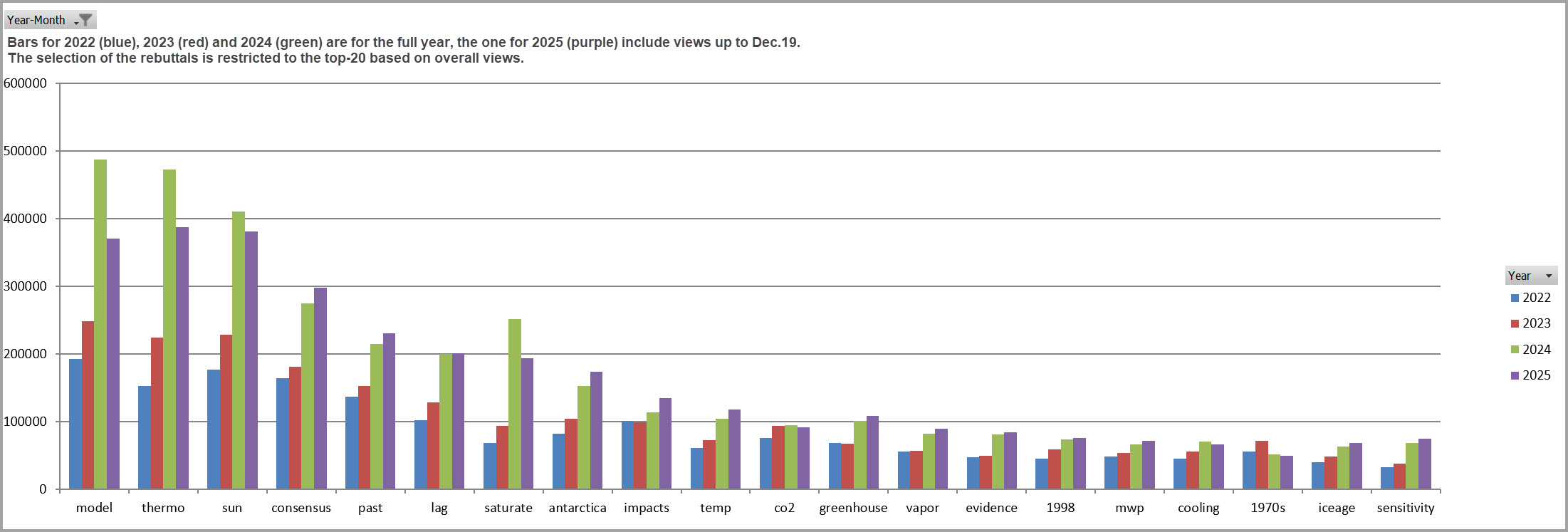
Year over year rebuttal views: Bars for 2022 (blue), 2023 (red) and 2024 (green) are for the full year, the ones for 2025 (purple) include views up to Dec.19. The selection of the rebuttals is restricted to the top-20 based on overall views (click image for larger view).
Mysterious spikes in the data
The composite image below shows just one example of a new phenomenon we’ve been dealing with, along with all other primary producers in the internet ecosystem. The graph shows access spikes for four of our rebuttals, and records the activity of only a single example of countless epiphytes and parasites now living on and feeding from sites such as Skeptical Science. We’re delighted to help large language models (LLMs) absorb “the best we know about climate,” but the training machinery being employed for this is enormously and embarrassingly clumsy and incompetent– and insatiably voracious. It’s a comical but potentially expensive story.
True to form, these LLM training agents often hallucinate URLs and pepper our server for retrievals of imaginary pages. Our system attempts to satisfy these requests but with literally hundreds of thousands of broken URLs being demanded per day, even delivering simple 404s becomes a serious and potentially expensive resource constraint. The other typical mode of AI training misbehavior is hundreds or often thousands of redundant retrievals by the same agent on the same day, the situation depicted in our exemplar graph here. Just logging these access attempts becomes a choking load for our system to swallow (and no, we’re not going to toss money at the problem for the benefit of billionaire speculators who can’t figure out how to wisely spend the money they already have).
Left unchecked, these flailing electronic imbeciles threaten to overwhelm us. Fortunately the very incompetence of the agents demanding imaginary or repetitious content delivery is the key to our salvation. For many reasons IP blocking isn’t an option here, but thanks to tell-tale access behaviors we’ve been able to employ regular expressions to identify defective training attempts very early in our web server’s processing chain. These are dropped without further attention or waste of resources, while the agent in play gets a bare-bones 418 response code identifying us as a teapot. Legitimately formed and non-duplicative accesses are of course politely dished up.
Perhaps with the promised arrival “real soon now!” of artificial general intelligence (AGI) the malfunctioning machinery will get a clue as to why so many teapots seem to be in circulation. In the meanwhile, we abide thanks to the true and human geniuses behind regular expressions and their implementation in software.
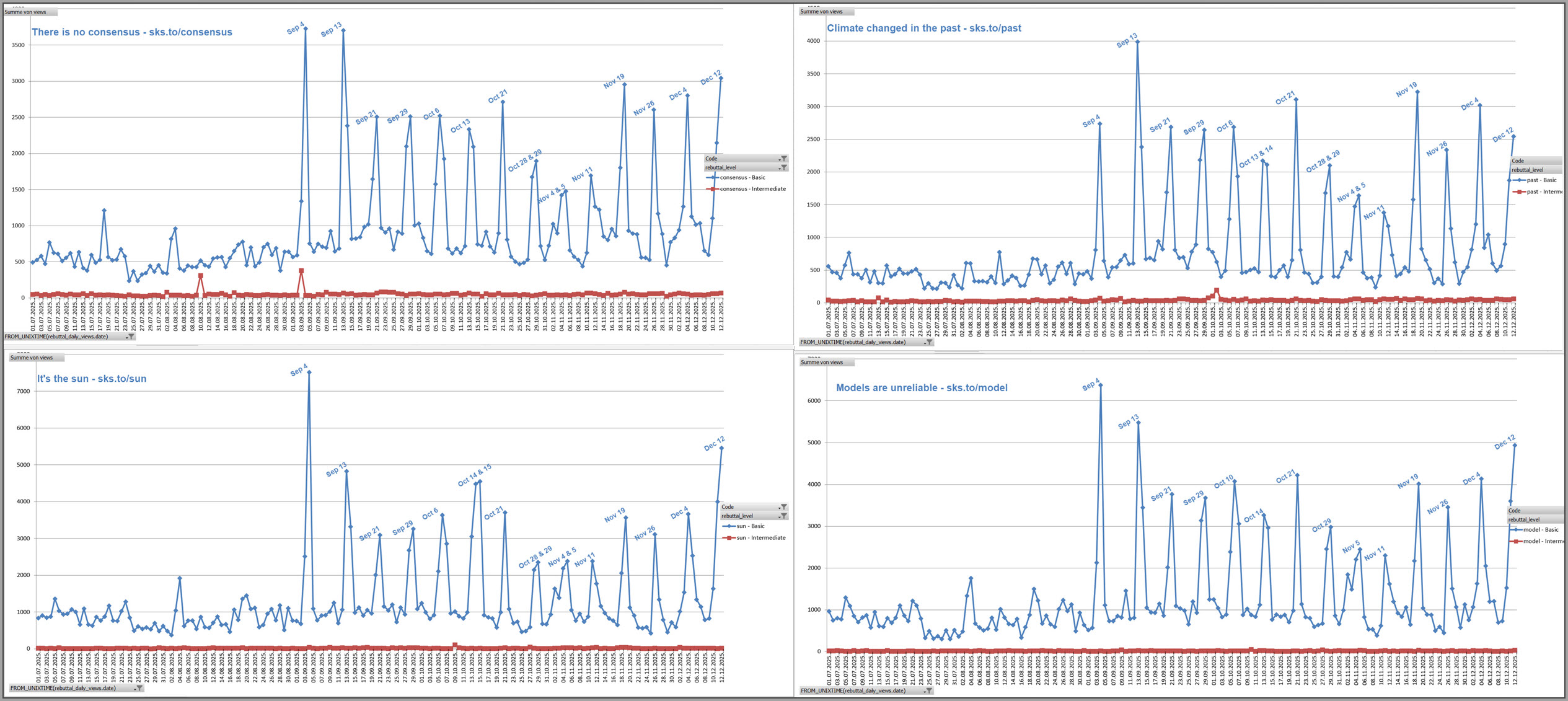
Top left: "There is no consensus" (highest peaks are >3500 views) / Top right: "Climate changed in the past" (highest peak is at 4000 views) / Bottom left: "It's the sun" (highest peak is well over 7000 views) / Bottom right: "Models are unreliable" (highest peak is over 6000 views)
Collaborations
Gigafact: Fact briefs
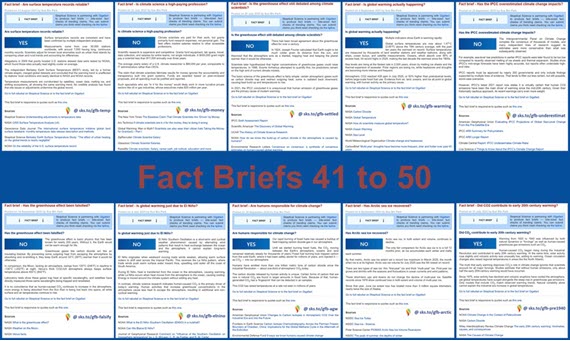
Fact briefs are short, credibly sourced summaries that offer “yes/no” answers in response to claims found online. They rely on publicly available, often primary source data and documents. We've been collaborating with Gigafact — a nonprofit project looking to expand fact-checking — to create and publish fact briefs since April 2024. We try to have a new fact brief out each week, but sometimes miss one due to time constraints. Regardless of that, we published fact brief #50 - Are humans responsible for climate change? - on September 30, 2025 and used this opportunity to write a short blog post about the current status of this project. See all of our published fact briefs on the Gigafact website.
In addition to having the fact briefs published as blog posts on Skeptical Science, they are now also available in a Youtube playlist which currently includes 5 videos, each simply scrolling through 10 fact briefs. The blog post Making fact briefs available as videos on Youtube explains the main purpose of these "videos": to have a means to link to fact briefs from Youtube-comments for quick debunkings where links to other sources usually causes the comment to disappear immediately.
Sabin Center for Climate Change Law: Rebuttals to renewable energy myths
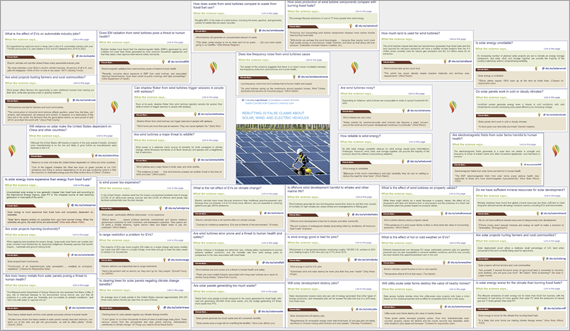
On June 13 we published the final of 33 blog post versions of the 33 rebuttals based on the report "Rebutting 33 False Claims About Solar, Wind, and Electric Vehicles" created by the Sabin Center for Climate Change Law at Columbia Law School. This concluded our successful collaboration with the Sabin Center which had kicked off in November 2024 when we launched the project with making all the rebuttals available at once. With this collaboration our thus far quite sparse rebuttal collection under the "It's too hard" category in our taxonomy increased considerably.
We've kept in touch in with the report's authors and have applied updates as needed to some of the rebuttals over the year. Most of these updates were related to changing links in order to avoid especially US-government resources becoming unavailable.
Translations
Handbooks
The Debunking Handbook 2020 became available in Basque in September. The handbook translations are possible because of generous offers from outside our team and the efforts of Bärbel Winkler to coordinate the work and Wendy Cook to transfer the translations into her layout files.
According to our download statistics it's apparent, that the various handbooks are still very popular. Based on available data, The Debunking Handbook was downloaded at least 72,000 times across all available languages with German (17,800+), English (14,200+), Spanish (9,100+), Portuguese (3,400+), Dutch (2,500+), Italian (2,100), French (2,000+), Swedish (1,900+), Polish (1,700+), Russian (1,500+), Bulgarian (1,500+), Turkish (1,500+) and Ukranian (1,500+) making up the bulk of the downloads.
The Conspiracy Theory Handbook was downloaded at least 59,000 times with English (14,600+), Italian (5,900+), Spanish (5,100+), German (4,900+), French (3,500+), Portuguese (3,100+), Polish (2,900+), Swedish (2,800+) and Greek (2,100+) making up the bulk of the downloads. In addition, The Consensus Handbook was downloaded at least 4,700 times all told in German, English and Portuguese. Also worth mentioning is that the at least somewhat dated Scientific Guide to Skepticism - published in 2010 - was downloaded more than 43K times in several languages (English, Spanish, German, French and Portuguese garnered 2,000+ downloads each). Many more downloads will have occured from other websites where we don't have data for.

Rebuttal translations
Dénes Monostori created 26 Hungarian rebuttal translations, adding to the 12 he had created the year before! Dénes had contacted us in 2024 via our contact form, offering to dedicate some time each week to this task. An interesting sidenote is, that Dénes's employer is granting 21 hours per year during working hours to support such volunteer activities. Quite a neat scheme to make volunteering easier for people! In addition, Ivan Marribas added 3 Spanish rebuttal translations and Bärbel Winkler updated 6 German rebuttal translations during the year.
The biggest chunk of new German rebuttal translations was however provided as part of a university project titled „Skeptical Science“ at the Institute for translations at the University Heidelberg under the guidance of Simona Füger and Nicole Keller. Students Julia Hellwig, Damianus Pawlak, Isabel Schmitt, Yasmin Speltz, Andrei Sumcov and Ulrike Weber translated the 33 rebuttals tackling renewable energy myths based on the report published by Sabin Center for Climate Change Law at Columbia Law School mentioned above. We had already mentioned the fact brief translations the students had provided earlier in last year's review article.
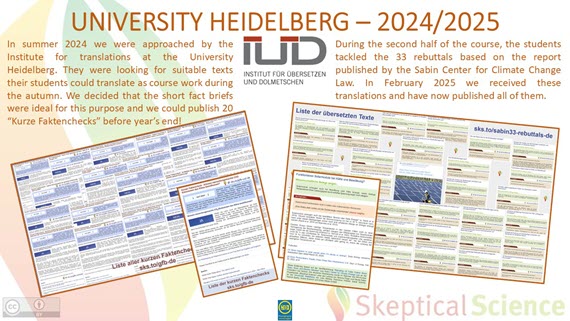
Fact brief translations into German
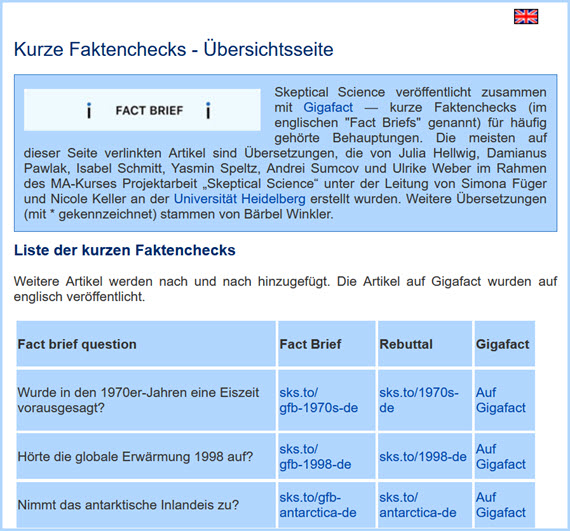
As mentioned in the Collaborations section above, we've been busy adding fact briefs in collaboration with Gigafact. Bärbel Winkler has (almost) managed to keep up with creating German translations soon after the English versions become available. It does help that the fact briefs are short - 150 words max in English - and that deepl.com is available to create quick first drafts of the briefs which then only need to be slightly improved before they can be published. All published translated fact briefs can be accessed via this list.
If you are interested to get involved with our various translation projects, please check out Join the Skeptical Science Translator Community! Is this something up your alley you’d like to help with? If your answer is 'Yes', then please let us know by filling out this short form. Bärbel Winkler will then be in touch to let you know about the next steps, depending on your preferences of where you'd like to get involved.
Social media
 |
Two years ago we decided to set up our own page on LinkedIn as we noticed that there had been a steady increase of climate-related discussions on the platform and that sharing information there can be quite effective. Since then, we've picked up 1070 followers and do see quite some engagement on our posts. In order to keep some "usual suspects" in check, we set up clear rules and share most articles with comments disabled but encouraging discussions on the relevant posts here on Skeptical Science. Please follow us on LinkedIn and tag us if you share any of our posts
 |
Our Facebook page has been doing fairly well with around 172,000 followers, but down a bit compared to 2024. We try to share 4 articles per day, selecting content focusing on climate science research or combatting misinformation. On Sundays we post the link to the News Roundup from the previous week, which - judging from the impressions it generates - is quite well received as are other semi-regular posts pointing readers at the weekly research listing or the latest fact brief published. Especially the shared fact briefs are doing pretty well with often garnering the most impressions, reactions and comments in a week. All told, we shared well over 1,400 articles, with Skeptical Science (>160), The Guardian (>120), Phys.org (>50), Inside Climate News (>50), Carbon Brief (>40), Grist (>40), Yale Climate Connections (>40), The Conversation (>40), The Climate Brink (>30) and The New York Times (>20) being the Top-10 sources. Most of the shared posts were in the categories of Climate Change Impacts (>370), Climate Policy and Politics (>320), Climate Science and Research (>140) and Public Misunderstandings about Climate Science (>110).
 |
Bluesky |
We are not quite as active on Bluesky as we'd like to be but we increased the number of followers from somewhat over 4,800 followers to over 6,000 as of this review. There's a constant trickle of new followers and sometimes a bigger influx when our handle gets shared by others. We hope to post as regularly as possible on Bluesky in 2026.
 |
Mastodon |
Our presence on Mastodon - where you can find us on the scicomm.xyz instance "tooting" as @SkepticalScience - is evolving and we now have about 2,600 followers there. Items we share on the platform get liked and "retooted" quite a bit. Due to time-contraints we haven't been active much over the last several months but plan to be change that going into 2026.
 |
X/Twitter |
On X/Twitter we still have ca. 20,600 followers, but - as we dislike what XTwitter has become - we let our account go dormant with no longer posting there and only use it to keep an eye on things every now and then.
 |
MeWe |
MeWe apparently got a "facelift" without us even noticing because there hadn't been any activity on the platform for months. It's therefore still rather likely, that we'll close shop and exit the platform in the not too distant future.
What to expect for 2026?
Most likely no shortage in climate myths to debunk ...
... if the first year of Donald J. Trump's 2nd term is any indication! So, at a guess, our pre- and debunking resources will be needed a lot more than hoped for in order to keep giving facts a fighting chance against misinformation!
When publishing last year's review article, we were hopeful that we could relaunch our website with a new look & feel and additional functionality sometime in 2025. Unfortunately - and not too surprisingly for such a project - we didn't make this ambitious goal. As of right now, we are still working through the different blocks of delivered functionality as mentioned in the team news section above. The good news is that things are taking shape and we can reveal a bit more about what you can be looking forward to. Below is an image about how a rebuttal will look like after the relaunch. We'll import the current content with our up to three rebuttal levels and the fact and myth statements. In addition - and if applicable for the myth - we'll then also show up to five fallacies employed by the myth.
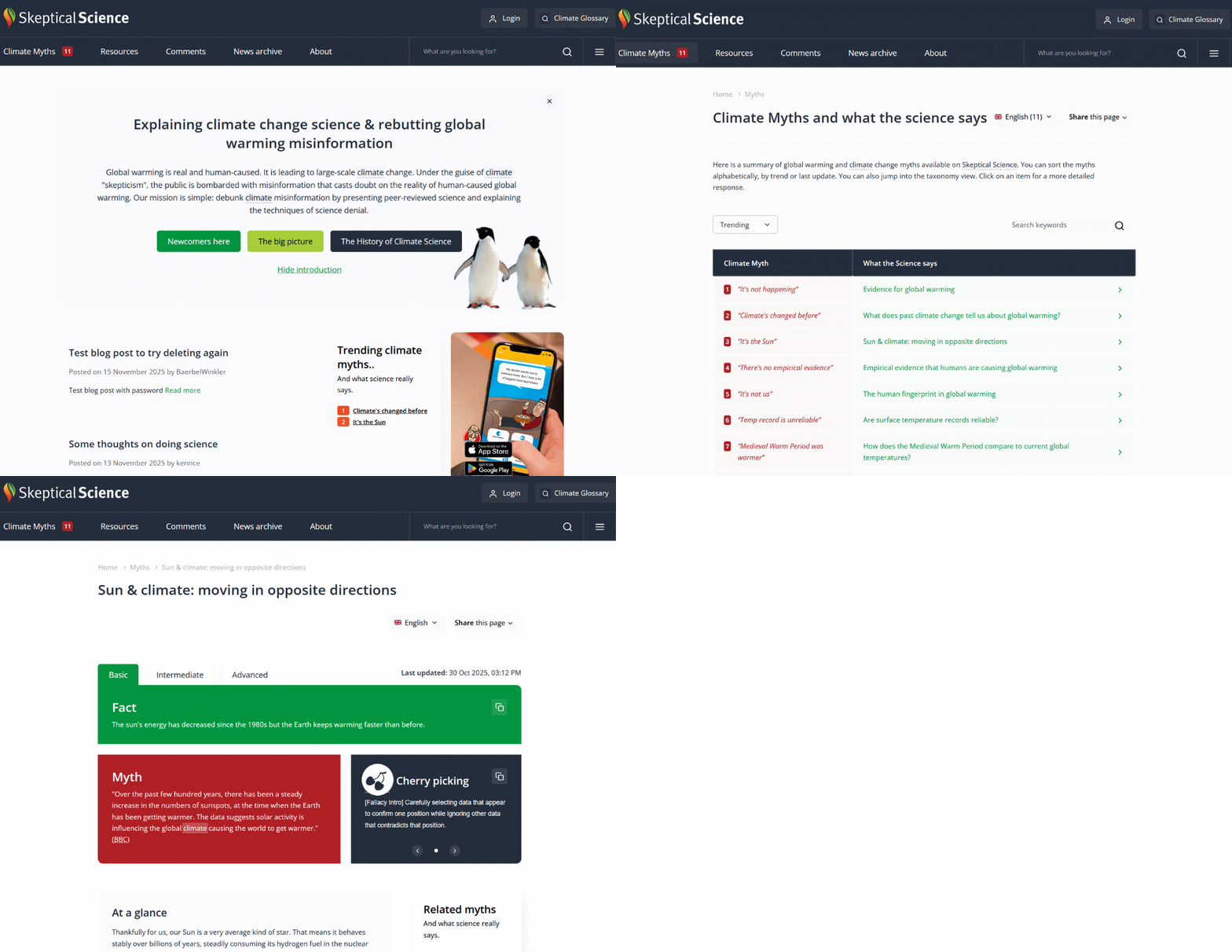
The animated GIF scrolls through three screens of how our website will look like after the relaunch. Included is the new homepge, the list of arguments and one rebuttal which now features - if applicable - the relevant FLICC-fallacies. Note: Details are bound to change between now (Dec 2025) and the actual relaunch!
We'll keep you posted about developments and also ask for your help as we get closer to the relaunch. We already identified some tasks where help will be needed because we for example will have more information for translated rebuttals than is currently available. Providing that information will require input from native speakers of many languages. We'll also need to go through some BETA-testing of the functionality and will be looking for volunteers familiar with the current functionality to help with that. If you already know that you'd like to get involved with this, please fill out this short form to let us know. We'll then be in touch as activities come up where we could do with some help.
Support the work we do
While we pride ourselves on running a highly efficient "all-volunteer" operation, the technical underpinnings of our internet-based publishing system require money for day-to-day operation as do some of our projects mentioned in this write up. You can help to propel Skeptical Science through another successful year of improving critical thinking skills as outlined below. For US taxpayers squeezing under the wire, contributions to Skeptical Science are tax-deductible.
 |
Skeptical Science is an all-volunteer organization but our work is not without financial costs. Contributions supporting our publication mechanisms from our readers and users are a critical part of improving the general public's critical thinking skills about science and in particular climate science. Your contribution is a solid investment in making possible a better future thanks to improving our ability to think productively, leading to better decisions at all levels of our climate change challenge. Please visit our support page to contribute. |
Translations of the FLICC-poster
| The FLICC-Poster is the result of a successful collaboration between Skeptical Science and our German partner website Klimafakten. It was first published in May 2020 and has been quite popular in English, German, Dutch, Portuguese, and Spanish since then. The creation of additional translations of the poster requires funding for professional design and layout work. You can contribute to that effort via the form provided on this page. |
 |
Translations of the Cranky Uncle Game
 |
The Cranky Uncle game adopts an active inoculation approach, where a Cranky Uncle cartoon character mentors players to learn the techniques of science denial. Cranky Uncle is a free game available on smartphones for iPhone and Android as well as web browsers. Even though the translations of the Cranky Uncle game are done by teams of volunteers, each language incurs costs for programming activities to get a language set up in the game. If you'd like to support Cranky Uncle "teaching" his science denial techniques in other languages, please use the dedicated form provided on this page to contribute. |
Thanks for reading and all the best for whatever 2026 has in store for us all!









Comments